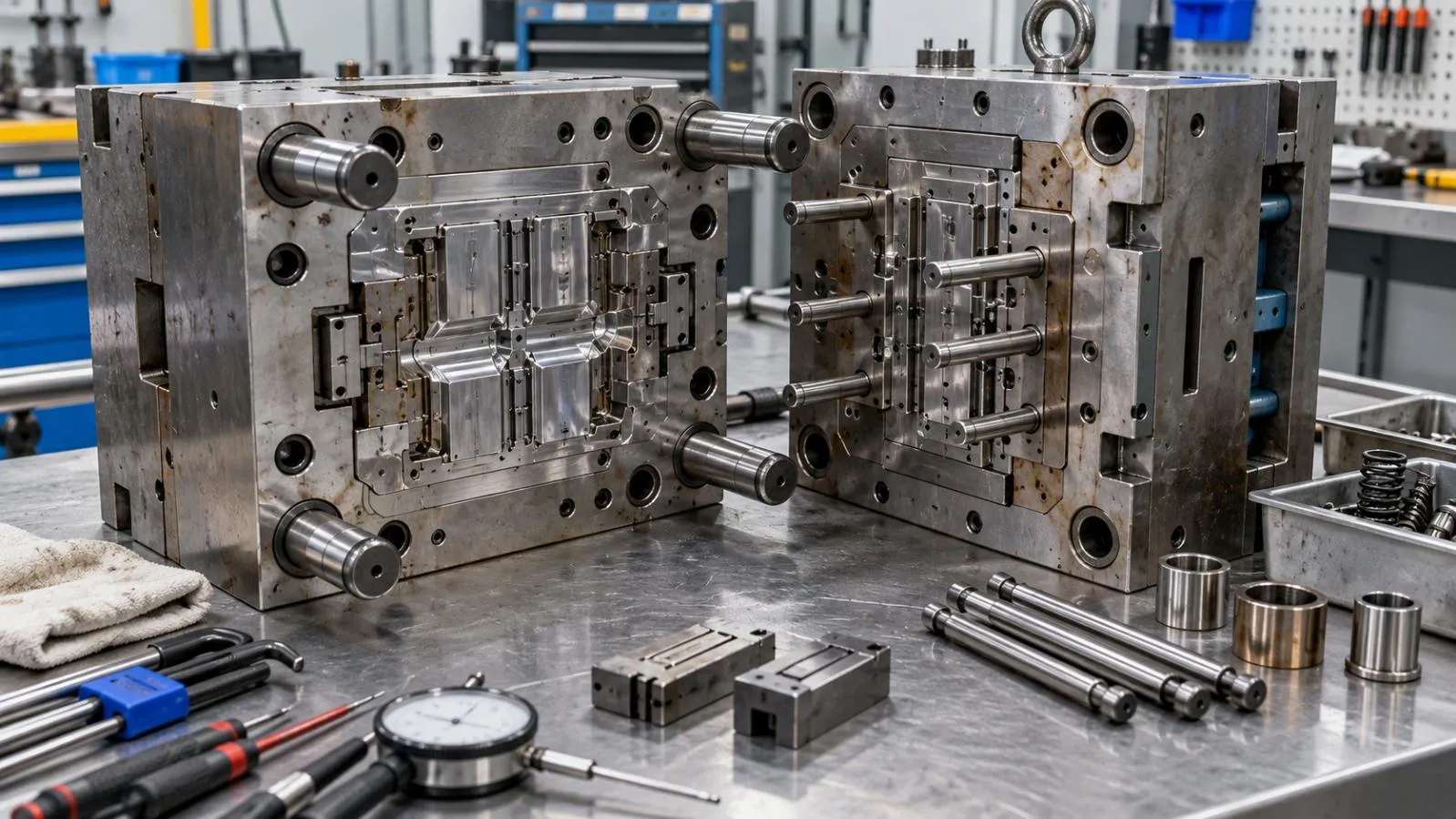
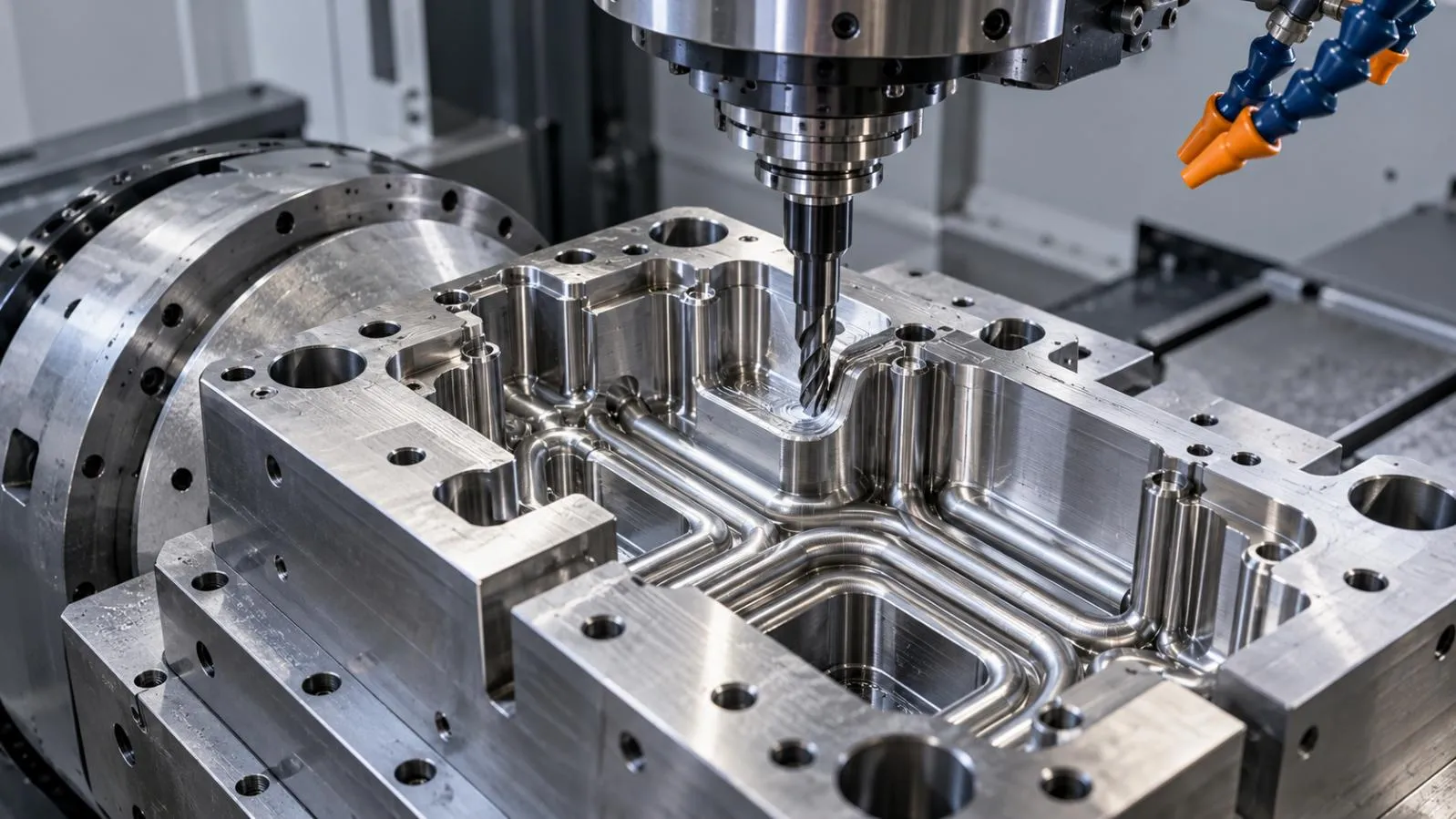
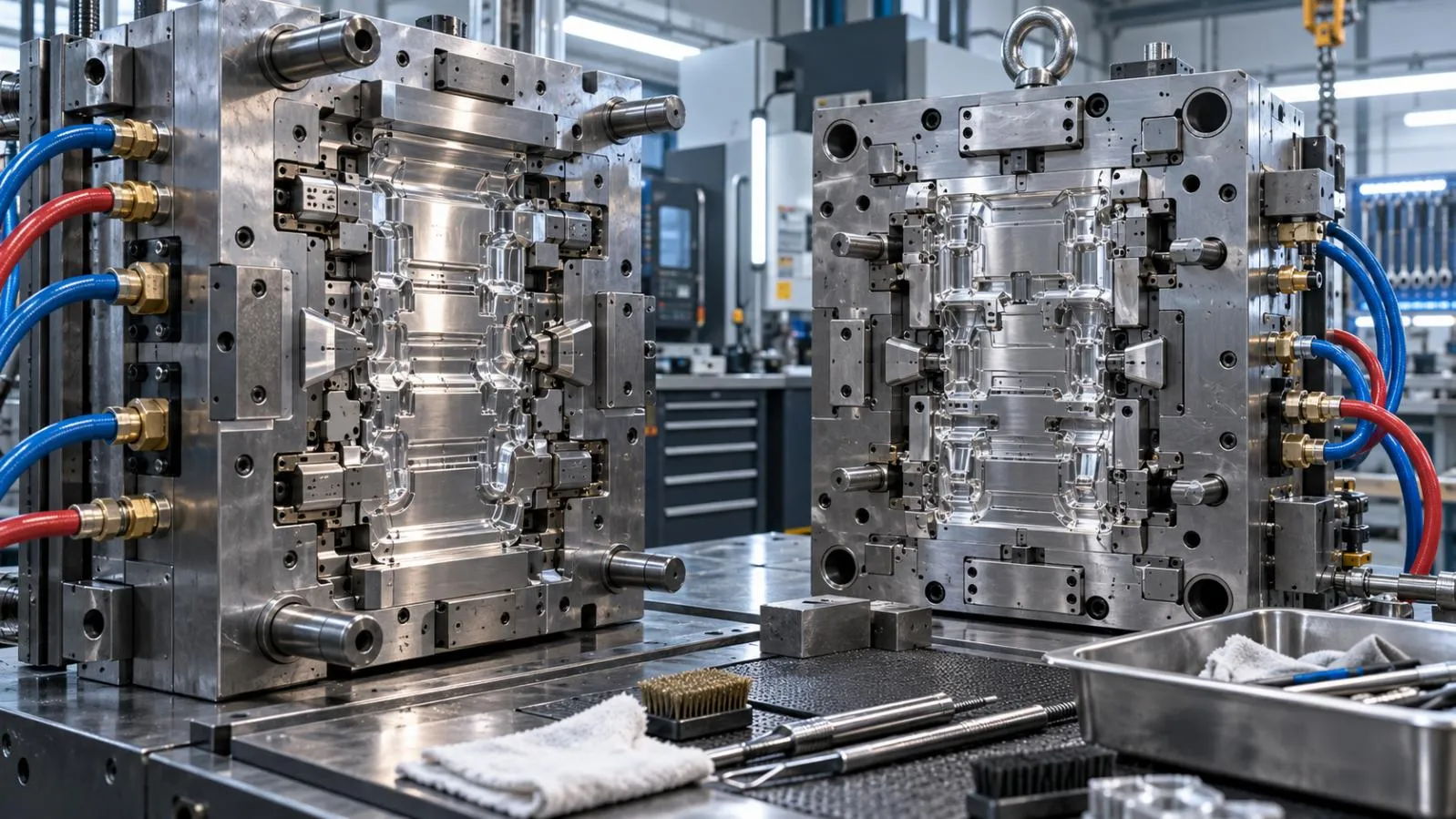
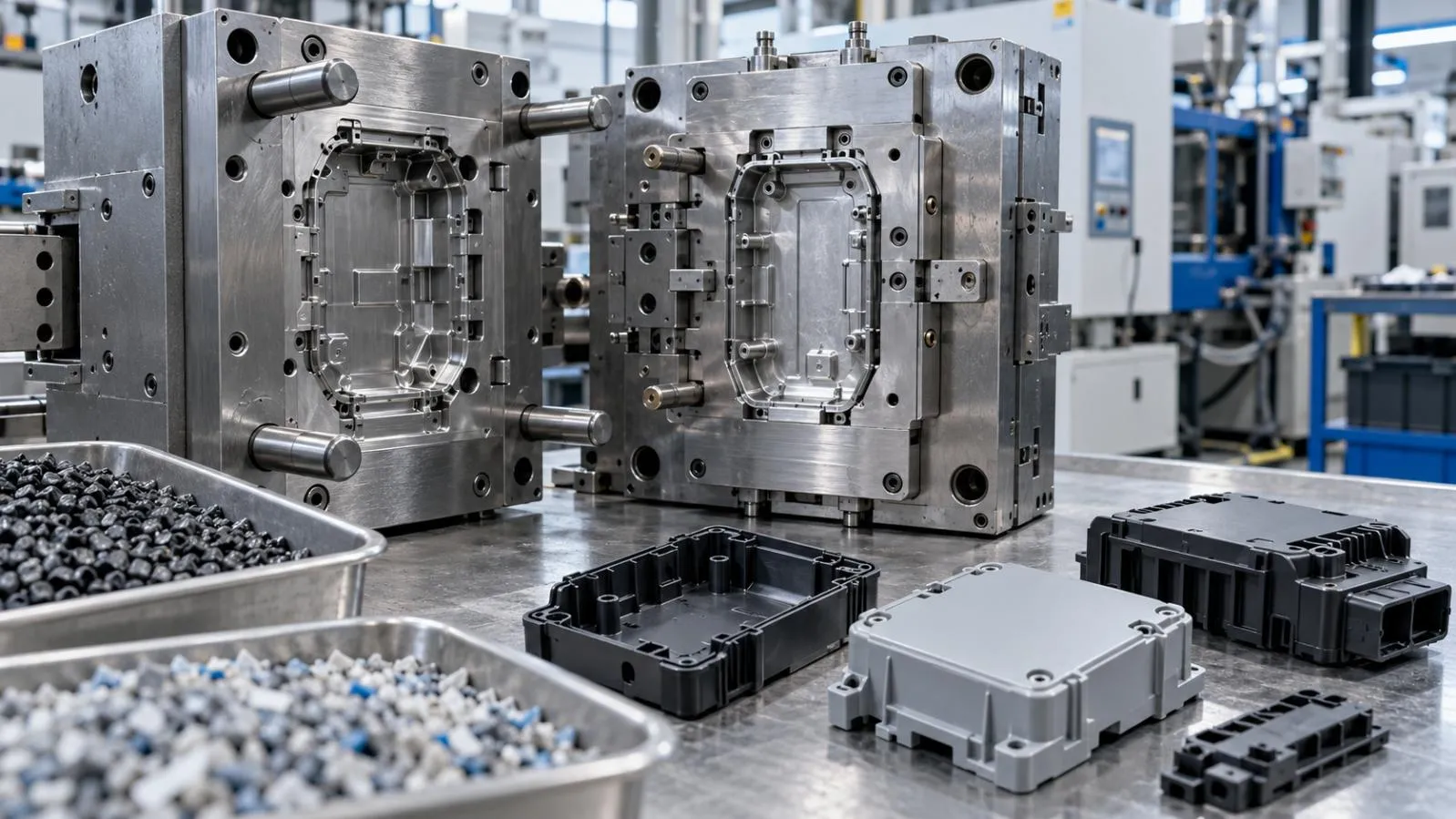
Rapid Tooling vs Production Tooling for Injection Molding

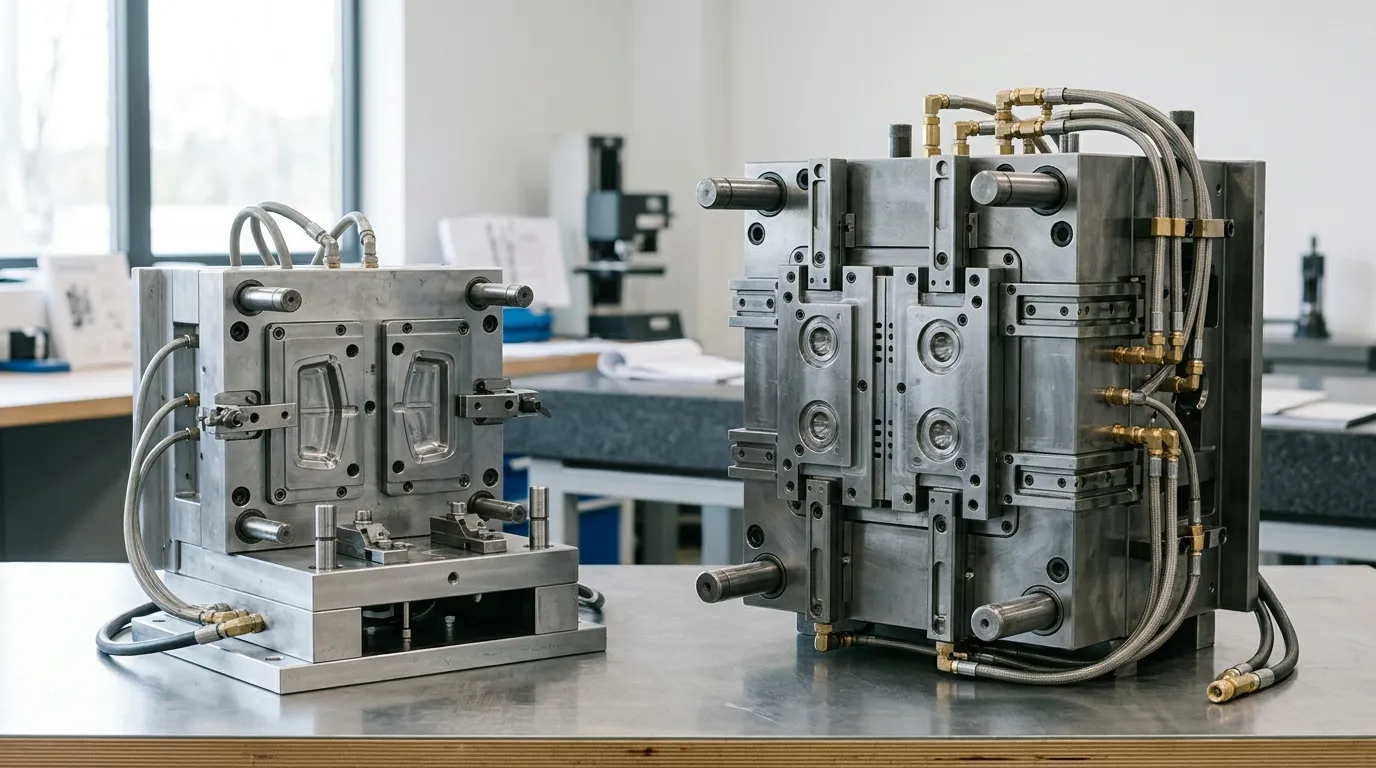
Table of Contents

- Rapid Tooling vs Production Tooling: Quick Comparison
- What Is Rapid Tooling for Injection Molding?
- What Is Production Tooling?
- Rapid Tooling vs Production Tooling by Decision Criteria
- When Is Rapid Tooling the Better Choice?
- When Is Production Tooling the Better Choice?
- Can Rapid Tooling Transition to Production Tooling?
- How to Choose Between Rapid and Production Tooling
- Questions to Ask an Injection Molding Tooling Supplier
- Frequently Asked Questions
- What is the difference between rapid tooling and production tooling?
- Is rapid tooling suitable for production parts?
- Is rapid tooling cheaper than production tooling?
- How long does rapid injection molding tooling last?
- Should I use rapid tooling or production tooling for low-volume injection molding?
- Can rapid tooling be used before production tooling?
- What is bridge tooling?
- Final Decision Summary


Rapid tooling is usually the better fit when you need molded parts quickly, expect design changes, or want to validate a product before committing to a long-life mold. Production tooling is better when the design is stable and the program requires sustained output, repeatability, or demanding materials and finishes. The right choice depends on volume, lifecycle, resin, geometry, quality, and schedule—not part count alone.
Rapid Tooling vs Production Tooling: Quick Comparison
| Criterion | Rapid tooling | Production tooling |
|---|---|---|
| Primary purpose | Design validation, functional testing, bridge production, or selected short runs | Stable, sustained production |
| Initial commitment | Generally lower or more flexible | Generally higher |
| Schedule priority | Faster tool fabrication and iteration | More extensive optimization and durability planning |
| Design flexibility | Better suited to designs that may still change | Best after design freeze |
| Tool life | Project- and material-dependent | Designed for longer service under defined conditions |
| Production fit | Prototypes, pilot runs, bridge production, and some low-volume programs | Repeated or higher-volume production |
| Quality considerations | Can produce functional molded parts, but wear and process capability must be assessed | Better suited to consistent long-term repeatability when properly designed and maintained |
| Best decision trigger | The project needs speed, learning, or flexibility | The project needs durability, repeatability, and lifecycle value |
Rapid tooling and production tooling use the same basic injection molding principle: molten plastic is injected into a mold, cooled, and ejected. The main difference is the tooling strategy. Rapid tooling prioritizes speed and lower initial commitment, while production tooling prioritizes service life, repeatability, and long-term production requirements.
Lead time, tool life, and suitable production volume vary with the mold design, tool material, resin, part geometry, molding conditions, maintenance, and supplier capabilities. No single part-count threshold determines the correct choice.
What Is Rapid Tooling for Injection Molding?
Rapid tooling is a mold or mold insert produced with a faster, more flexible approach than a conventional long-life production mold. It is commonly used when a team needs injection-molded parts before the product design or demand forecast is fully settled.
Rapid tooling may support:
- Functional molded-part validation
- Fit and assembly testing
- Product or market evaluation
- Design iterations before a final design freeze
- Pilot or bridge production
- Selected low-volume production programs
The exact method can vary. Some rapid tools use aluminum or other relatively easy-to-machine materials, while others may use pre-hardened steels, inserts, or specialized manufacturing methods. The material and construction should be selected according to the resin, geometry, temperature, surface requirements, and expected service conditions.
How rapid tooling differs from rapid prototyping
Rapid tooling should not be confused with rapid prototyping.
Rapid prototyping makes parts directly through processes such as 3D printing or CNC machining. Rapid tooling creates a mold so that parts can be produced through injection molding. This distinction matters because injection-molded parts can provide a more representative evaluation of the selected production resin, molding behavior, appearance, and assembly interfaces.
The best process depends on what the development team needs to learn. A prototype may be enough for an early fit check, while rapid injection tooling may be more appropriate for functional testing with a production-intended material.
Rapid tooling, prototype tooling, bridge tooling, and soft tooling
These terms are related, but they are not interchangeable.
- Prototype tooling is used to produce parts for development and validation.
- Rapid tooling describes a tooling approach that emphasizes speed, flexibility, or reduced initial commitment.
- Bridge tooling temporarily supports production while final production tooling is being completed, qualified, or brought online.
- Soft tooling can refer to lower-durability tooling materials or molds used in other casting and prototyping processes. It should not automatically be treated as the same thing as rapid injection tooling.
A supplier should define the proposed tooling method, material, expected service conditions, and limitations before quoting the project.
What Is Production Tooling?
Production tooling is designed for a stable injection molding program rather than only for early validation. It normally receives greater attention to durability, maintenance, process repeatability, cooling, ejection, gating, cavity configuration, and long-term part requirements.
Production tooling is generally considered when:
- The part design and resin are stable
- Demand is expected to continue over an extended period
- Dimensional or cosmetic repeatability is important
- The material may be abrasive or difficult to process
- Tool maintenance and repairability matter
- Replacing or redesigning the mold later would be costly or disruptive
Production tooling is not simply a larger or more expensive version of rapid tooling. It is a lifecycle decision. The mold must be designed around the expected resin, molding conditions, part geometry, quality requirements, maintenance plan, and production schedule.
Before committing to a long-life tool, teams should complete an appropriate dfm for injection molding review. This can identify issues involving wall thickness, draft, parting lines, gating, ejection, cooling, shrinkage, and other design factors that may affect the final mold.
Rapid Tooling vs Production Tooling by Decision Criteria
Upfront tooling cost and total lifecycle cost
Rapid tooling may reduce the initial tooling commitment, particularly when the design is still evolving or the required production quantity is uncertain. That does not mean it will always produce the lowest total project cost.
A realistic comparison should consider:
- Initial mold or insert cost
- Engineering and design changes
- Sampling and inspection
- Tool modifications
- Maintenance and repairs
- Possible tool replacement
- Transition to a production mold
- Requalification after a major tooling change
- Part cost over the expected program life
A production mold may require a greater initial investment but provide better lifecycle value when the product will be manufactured repeatedly for a long period. Conversely, a long-life production tool may be an unnecessary commitment if the design is likely to change or demand is highly uncertain.
For a broader breakdown of tooling, part, material, and project-cost factors, review how much does custom injection molding cost.
Lead time and total project schedule
Rapid tooling is attractive when the schedule is important because the tooling approach may reduce the time needed to reach initial molded parts. It can help a team test a design, prepare a pilot run, or support an early launch while longer-term decisions are still being made.
However, tool fabrication time is only one part of the schedule. Total project time may also include:
- DFM review
- Mold design
- Material selection
- Tool machining
- Sampling
- Dimensional inspection
- Tool corrections
- Process development
- Secondary operations
- Customer approval
A production tool may take longer to develop because it requires more extensive optimization for durability, cooling, cavity balance, automation, or long-term repeatability. A faster mold is not automatically the faster route to a reliable product launch if it creates later rework or validation problems.
Tool material and durability
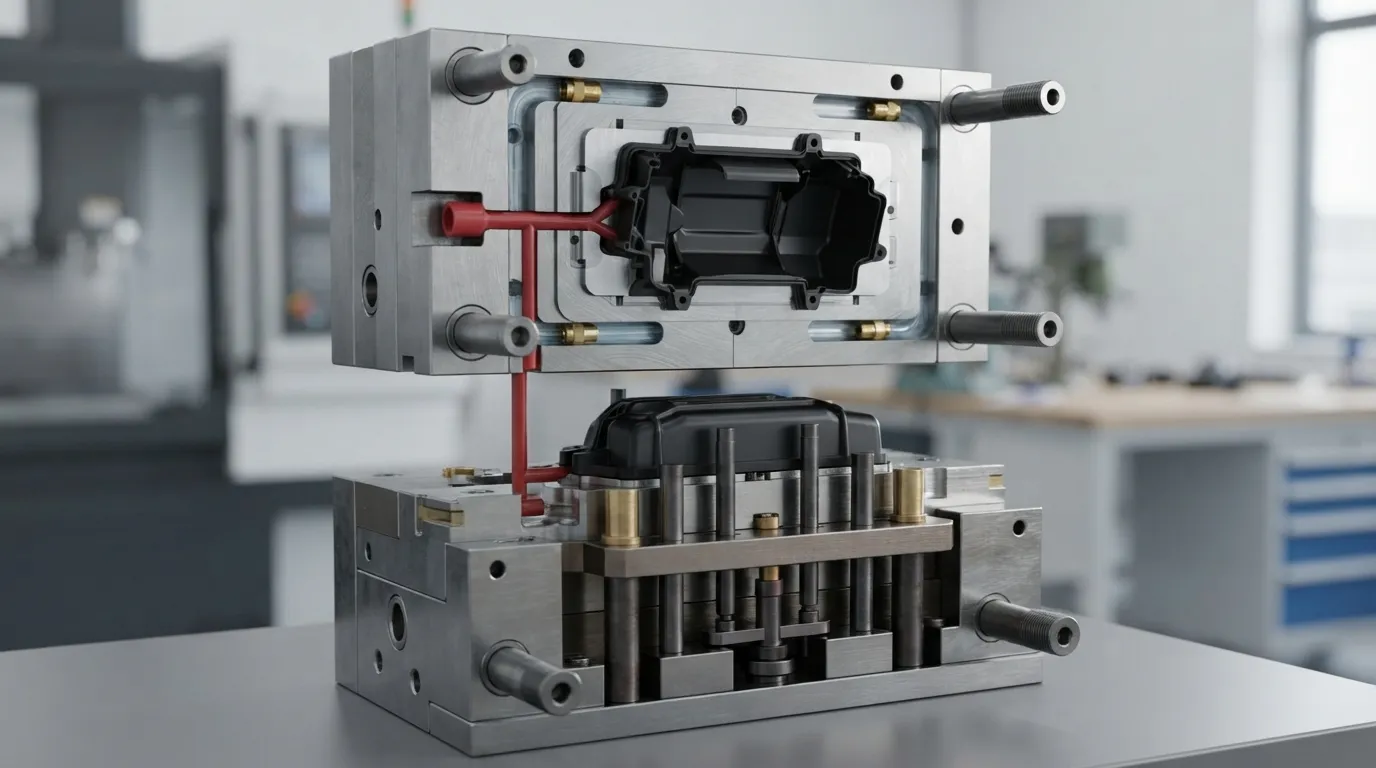
Tool material affects machinability, wear resistance, thermal behavior, surface finish, maintenance, and expected service conditions.
Rapid tooling may use aluminum, inserts, pre-hardened steels, or other materials selected for faster fabrication and the needs of a specific project. Production tooling may use more durable materials or treatments when the mold must withstand sustained production, abrasive resins, higher temperatures, or demanding cosmetic requirements.
The material should not be selected from a general rule such as “aluminum for low volume” or “steel for high volume.” The decision should consider:
- Resin type and additives
- Glass or mineral fillers
- Processing temperature
- Part size and geometry
- Expected production duration
- Required surface finish
- Cooling requirements
- Maintenance access
- Repair and replacement plans
Tool life and maintenance
There is no universal answer to the question, “How long does rapid tooling last?” Tool life depends on the tool material, resin, fillers, molding conditions, geometry, maintenance, and the quality level required throughout the program.
A rapid tool may be appropriate for a short run but less suitable for prolonged production if wear changes critical dimensions, appearance, venting, parting surfaces, or ejection performance. A production tool is normally planned around a longer service period, but it also requires inspection, cleaning, maintenance, and occasional repair.
Before accepting a tooling proposal, ask:
- What service conditions is the tool designed for?
- How will wear be monitored?
- Which components are replaceable?
- Who owns and maintains the mold?
- Are spare inserts or wear components recommended?
- What repairs can be completed without rebuilding the entire tool?
- How could maintenance affect production continuity?
Part quality, tolerances, and surface finish
Rapid tooling does not automatically produce low-quality parts. A well-designed rapid mold can produce functional parts suitable for testing or limited production. However, the tool’s design, material, cooling, venting, processing conditions, and wear must be appropriate for the required quality.
Production tooling may be a better fit when the program requires stable repeatability over an extended period, particularly for:
- Tight dimensional requirements
- Critical assembly interfaces
- High-gloss or cosmetic surfaces
- Thin or difficult-flowing sections
- Complex cooling requirements
- Large parts with significant shrinkage variation
- Abrasive or high-temperature materials
Quality is also influenced by the injection molding process, not only by the mold. The resin, machine, process window, inspection method, and operator controls all contribute to the final result.
Design changes and product maturity
Rapid tooling is generally more practical when the design may still change. A development team can use molded parts to uncover problems that are difficult to identify from CAD data alone, including warpage, sink marks, weld lines, fit issues, ejection problems, or unexpected appearance effects.
Production tooling is usually more appropriate after the following have been sufficiently validated:
- Final or near-final part geometry
- Resin and additive system
- Critical dimensions
- Assembly interfaces
- Gating and cooling approach
- Cosmetic requirements
- Inspection criteria
A rapid tool can still require costly modifications, so it should not be treated as completely risk-free. If major geometry changes are likely, the tooling plan should identify which changes can be accommodated and which would require new inserts or a new mold.
Production volume and product lifecycle
Volume is important, but it should not be used as the only decision rule. A better evaluation considers both the expected quantity and the product’s full lifecycle.
Review:
- Initial launch quantity
- Expected annual demand
- Number of product variants
- Forecast uncertainty
- Product lifetime
- Replenishment requirements
- Consequences of tool downtime
- Likelihood of future design revisions
For a genuinely limited program, low volume injection molding may make rapid or simplified tooling worth considering. But a low initial quantity may not remain low if the product succeeds. The tooling strategy should account for both current requirements and plausible future demand.
Resin, temperature, abrasiveness, and geometry
The selected plastic material can change the tooling decision significantly. Filled or abrasive resins may wear certain tool surfaces more quickly. High-temperature materials may place greater demands on the mold, cooling system, and process controls. Complex geometry may require slides, lifters, inserts, specialized ejection, or more involved cooling.
A project may need additional engineering review when it involves:
- Glass-filled or mineral-filled resin
- High-temperature engineering plastic
- Tight dimensional tolerances
- Large projected area
- Thin walls or long flow paths
- Deep ribs or difficult draft conditions
- High-gloss cosmetic surfaces
- Complex undercuts or moving components
When Is Rapid Tooling the Better Choice?
Rapid tooling is often the better direction when the project prioritizes speed, learning, or flexibility.
It may be appropriate when:
- The design is not fully frozen.
- Functional molded parts are needed for testing.
- Several design iterations are likely.
- Initial market demand is uncertain.
- A pilot run is needed before a larger commitment.
- Bridge production is required.
- The project needs a limited number of molded parts.
- The launch schedule is more important than maximum tool longevity.
Rapid tooling can also reduce the risk of committing too early to a final production mold. The team can validate key assumptions before investing in a tool designed for a longer service life.
It may be less suitable when the resin, temperature, geometry, finish, tolerance, or expected production duration creates excessive wear or process risk. The correct question is not simply whether the tool is fast to make, but whether it can produce acceptable parts for the intended stage of the project.
When Is Production Tooling the Better Choice?
Production tooling is generally the better direction when the design is stable and long-term production performance is the priority.
It is often justified when:
- Demand is sustained or the product lifecycle is long.
- The design and material have been validated.
- Consistent dimensions and appearance are important.
- The resin is abrasive or processed at a demanding temperature.
- The part requires complex cooling or ejection.
- Cosmetic requirements are stringent.
- Tool maintenance and repairability are important.
- Replacing a temporary mold would disrupt supply.
- The long-term part cost matters more than the lowest initial tooling cost.
A production mold should be designed around the complete manufacturing requirement rather than only the part shape. Mold design development should account for the expected resin, process, cooling, ejection, maintenance, inspection, and future production needs.
Can Rapid Tooling Transition to Production Tooling?
Yes. Rapid tooling can serve as a validation or bridge stage before production tooling, but the transition should be planned from the beginning.
What rapid tooling can validate
A rapid tool may help confirm:
- Part fit and assembly
- Functional performance
- Appearance and surface requirements
- Critical dimensions and interfaces
- Resin behavior under representative molding conditions
- Initial process assumptions
- Early customer or market response
- Short-term production requirements
What still needs confirmation before production tooling
Before commissioning a production mold, confirm:
- The final CAD model and revision status
- The approved resin and additive system
- Gating, cooling, and ejection requirements
- Critical tolerances and inspection methods
- Cosmetic specifications
- Expected production quantity and product life
- Tool ownership and maintenance arrangements
- Required validation or approval activities
- Whether the rapid-tool design can be adapted or whether a new design is more appropriate
A production mold should not simply copy a rapid tool if the production requirements are substantially different. A different cavity layout, cooling strategy, automation plan, parting line, or tool material may be necessary.
When a direct tool transition may not be appropriate
A new production-tool design may be preferable when:
- The rapid tool used a different part revision.
- The production resin contains different fillers or additives.
- The required tool life is substantially longer.
- Production tolerances or cosmetic standards are more demanding.
- The rapid tool revealed unresolved design or processing problems.
- The final program requires different cavity counts or automation.
- Cooling or ejection must be redesigned for sustained operation.
How to Choose Between Rapid and Production Tooling
Use the following questions before requesting tooling quotations:
- Is the part design stable enough for a long-term mold?
- What must be learned before design freeze?
- Which resin and filler system will be used?
- What tolerances, surface finishes, and cosmetic standards apply?
- What quantities are expected over the entire product lifecycle?
- How important is the launch schedule?
- How costly would a later tool replacement or redesign be?
- Will the project need bridge production?
- What maintenance and repair expectations apply?
- What information does the supplier need to recommend tool construction?
Tooling selection is one part of the wider Custom Manufacturing: Processes, Benefits, and Applications (inferred) decision. The mold must fit the part, material, process, inspection plan, supply schedule, and commercial objectives.
Questions to Ask an Injection Molding Tooling Supplier
Before approving a tooling plan, ask the supplier:
- Which tooling approach do you recommend, and why?
- What tool material is proposed?
- What service conditions is the tool designed for?
- How will the selected resin affect wear?
- What tool-life expectation applies to this specific geometry and material?
- What DFM issues need to be resolved first?
- How are samples inspected and approved?
- Which design changes can be accommodated?
- Who owns and stores the tool?
- Who is responsible for maintenance and repairs?
- Are replacement inserts or wear components available?
- What tolerances and surface finishes can be supported?
- Can the tool support bridge production?
- What would change if the project later moves to production tooling?
- Which items are included in the tooling quotation?
These questions help separate a suitable tooling strategy from a quote based only on initial price or promised speed.
Frequently Asked Questions
What is the difference between rapid tooling and production tooling?
Rapid tooling prioritizes faster fabrication, design iteration, functional validation, or limited production. Production tooling prioritizes sustained output, durability, repeatability, maintenance, and lifecycle performance. The best choice depends on the project’s design maturity, material, geometry, quality requirements, volume, and schedule.
Is rapid tooling suitable for production parts?
It can be suitable for short runs, bridge production, pilot programs, or selected low-volume applications. Its suitability depends on the resin, tool construction, geometry, tolerances, surface finish, expected service duration, and maintenance plan. It should not be assumed to match a production mold in every long-term requirement.
Is rapid tooling cheaper than production tooling?
Rapid tooling may have a lower initial tooling commitment, but it is not always cheaper over the full project lifecycle. Design changes, maintenance, replacement, limited tool life, and a later transition to production tooling can affect total cost. A production mold may provide better lifecycle value when demand and design are stable.
How long does rapid injection molding tooling last?
There is no universal answer. Tool life depends on the tool material, resin, fillers, processing conditions, part geometry, maintenance, and required quality level. A supplier should provide a project-specific assessment rather than relying on a generic cycle-count claim.
Should I use rapid tooling or production tooling for low-volume injection molding?
Low volume often supports considering rapid tooling, but quantity alone is not enough. Also evaluate design stability, material, quality requirements, launch timing, product lifecycle, forecast uncertainty, and the cost of replacing or upgrading the mold later.
Can rapid tooling be used before production tooling?
Yes. It can be used to validate the part, resin, process, fit, function, appearance, and early demand before a production mold is commissioned. The team should define which assumptions must be confirmed before moving to long-life tooling.
What is bridge tooling?
Bridge tooling is temporary tooling used to support production while final production tooling is being developed, qualified, repaired, or brought online. It can help maintain supply during a product launch or transition, but its suitability depends on the required quantity, quality, material, and schedule.
Final Decision Summary
Choose rapid tooling when speed, design learning, flexibility, or limited and bridge production is the main priority.
Choose production tooling when the design is stable and long-term repeatability, durability, demanding materials, or lifecycle economics matter most.
When the project sits between these cases, compare both options using the actual resin, part geometry, tolerances, surface requirements, expected lifecycle, production forecast, maintenance plan, and launch schedule. A project-specific engineering review is safer than choosing from a fixed volume threshold.
- PREV: Null
- NEXT: Null

Yijiang is a professional custom manufacturing partner specializing in large-scale injection molding and precision mold development. We support global clients in automotive,
in large-scale injection molding and precision mold development. We support global clients in automotive,


Get a quote from the China’s #1 CNC Machining Services.
Ready to get started? Connect with us today!
 Talk to Our Team