Injection Mold Modification for Better Cooling: When Are Conformal Cooling Inserts Worth It?

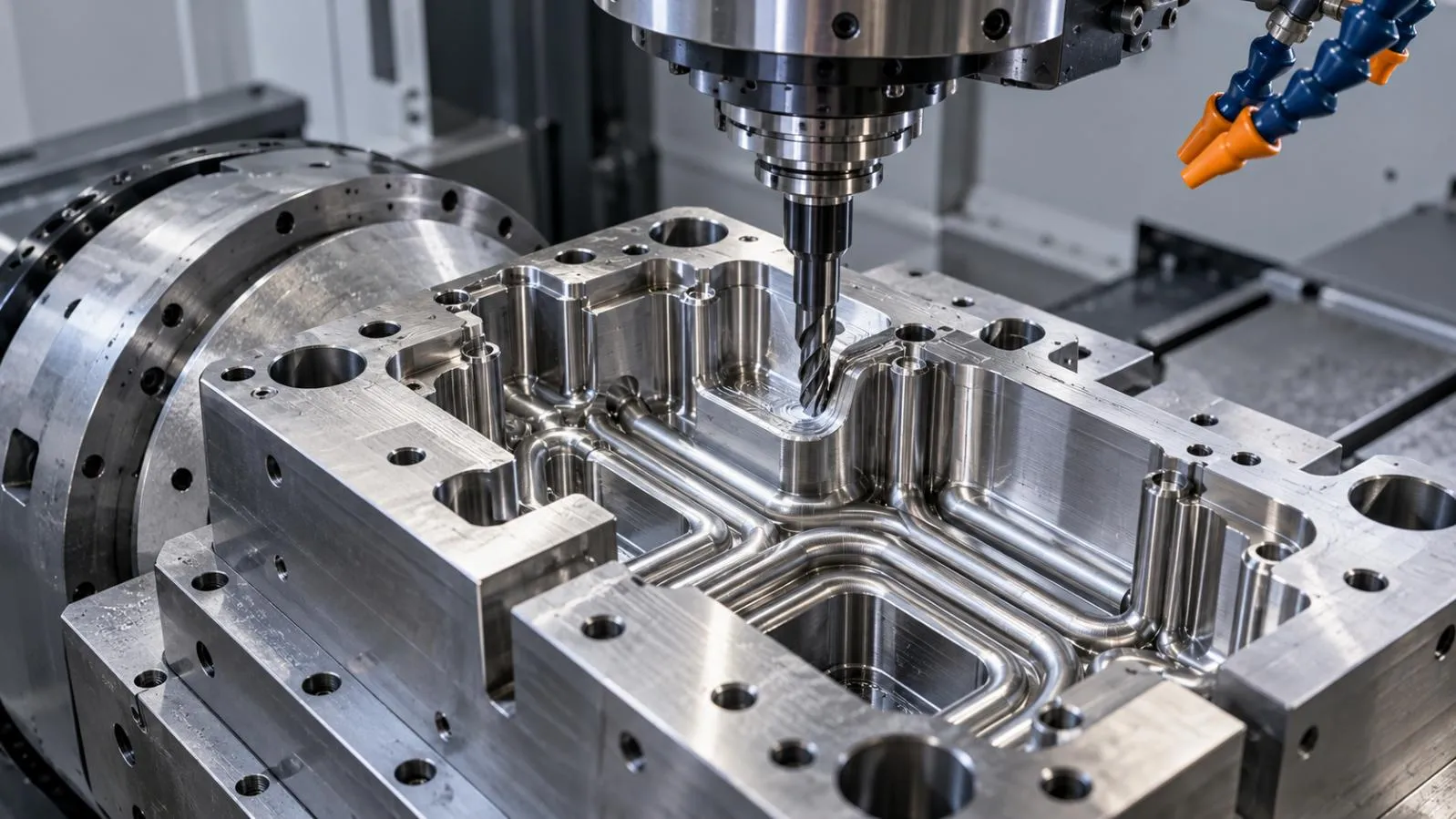
Table of Contents

- Is the Mold Geometry Actually Limiting Cooling?
- Which Cooling Modification Offers the Best Engineering Return?
- What Makes Conformal Cooling Inserts Difficult to Retrofit?
- Conventional Machining or Metal 3D Printing?
- How Can Cooling Performance Be Verified Before Production?
- When Does the Additional Investment Pay Off?


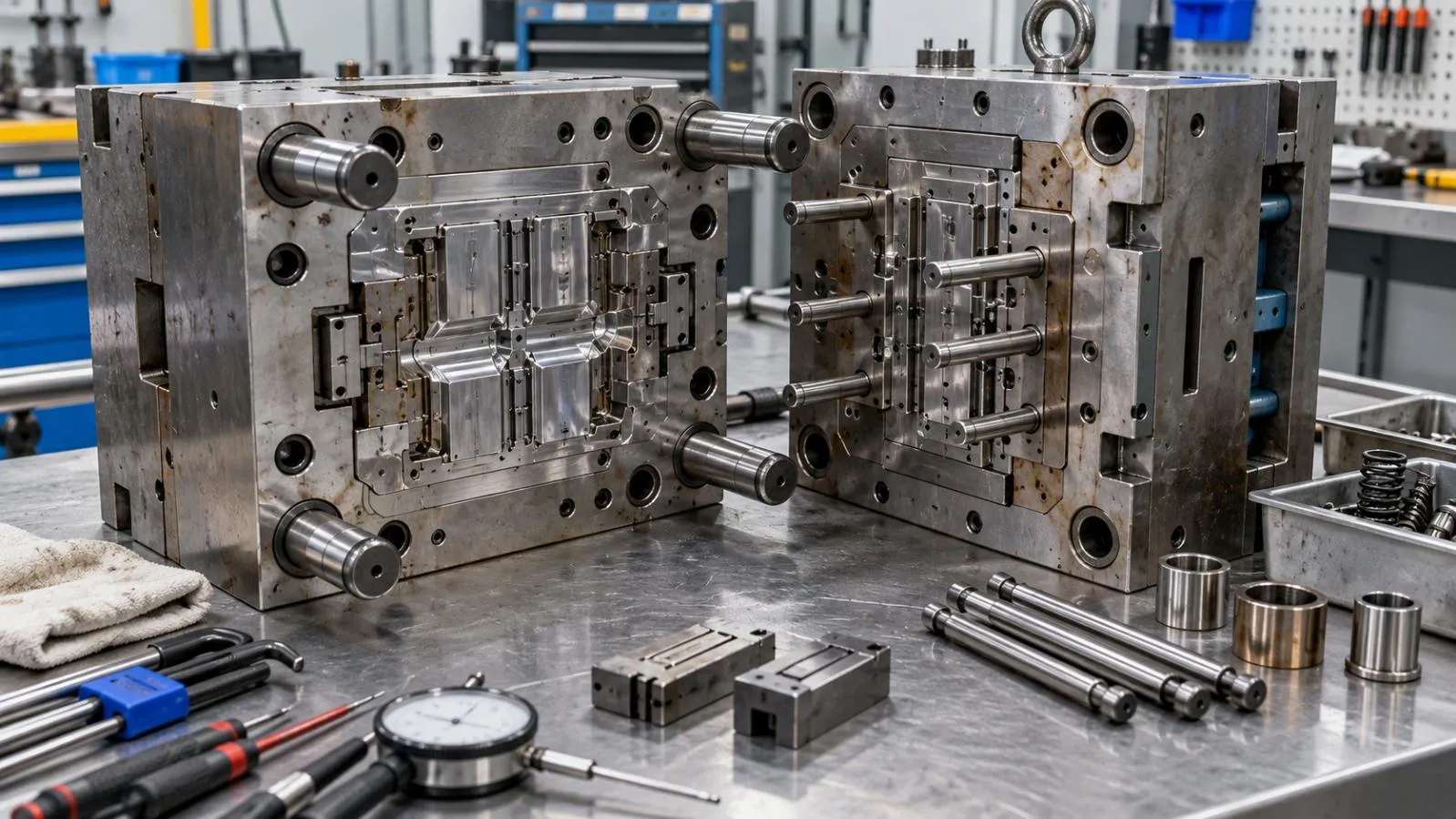
A deep-core injection mold can maintain the correct coolant temperature and still produce warped parts. The problem often lies between the cooling circuit and the cavity surface: heat accumulates around thick bosses or ribs where straight-drilled channels cannot reach effectively.
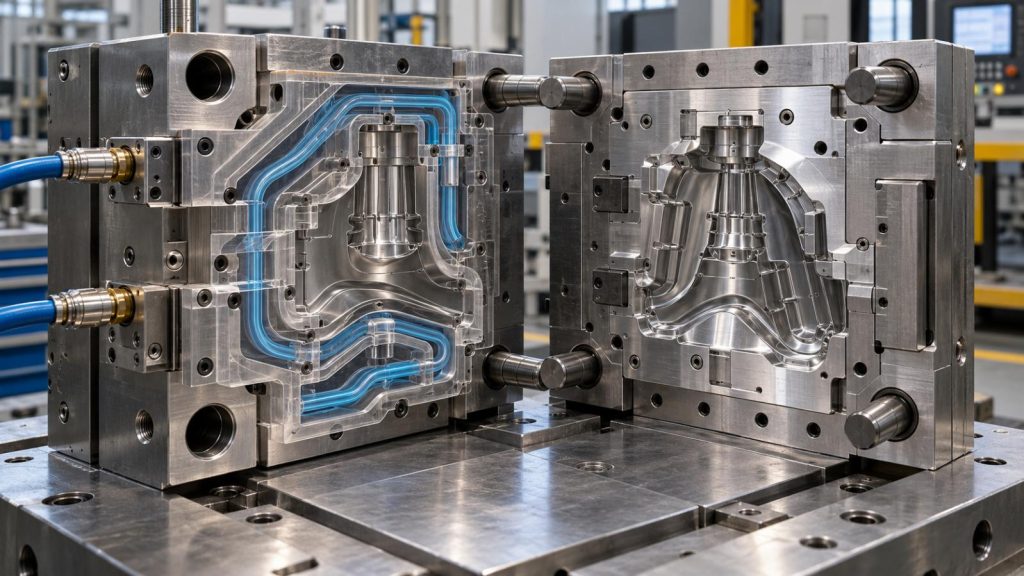
Extending cooling time may stabilize the part, but it also ties up machine capacity. Before committing to Injection Mold Modification, the tooling engineer needs to establish whether the constraint is poor coolant delivery, excessive heat conduction distance, or uneven part solidification.
Conformal cooling inserts can address the second problem. They are not necessarily the most economical answer to the other two.
Is the Mold Geometry Actually Limiting Cooling?
Cooling circuits remove heat through two linked mechanisms: conduction through the mold material and convection into the circulating coolant.
Conventional drilled channels keeps coolant a finite distance away from surface features of the mold. In an effort to reduce temperature differences on a mold surface, additional steel may be added to increase thermal resistance.
Conformal cooling channels include more sharp corners to better align with features of the mold. Variation in coolant flow and channel dimensions will determine how much temperature differences are improved.
Before making design changes to tooling that requires a significant time and monetary investment, we suggest the following operating conditions be considered.
•Coolant Flow: Blocked coolant channels will restrict flow and may cause hot spots. Design changes may be warranted to address the problem.
•Heat Removal: Persistent hot spots may be caused by ineffective design for heat removal and may lead to warpage.
•Solidification: Warpage may occur from inadequate design for heat removal and be made worse by limitations in packing.
It is good practice to consider other possible reasons for phenomena prior to making design changes. Low outlet coolant temperatures may be the result of several possible conditions including poor coolant flow and/or pickup.
Design changes may be justified if a design for cooling circuits limits the effectiveness of heat removal.
Which Cooling Modification Offers the Best Engineering Return?
The available space inside an existing tool often determines the practical solution.
| Modification method | Suitable condition | Main limitation |
| Channel cleaning or circuit balancing | Uneven flow or deposits in existing passages | Cannot correct inadequate channel placement |
| Baffles or bubblers | Deep cores accessible by drilling | Flow distribution and sealing require careful control |
| Additional drilled cooling passages | Sufficient steel thickness and tool access | Restricted by drilling direction and nearby components |
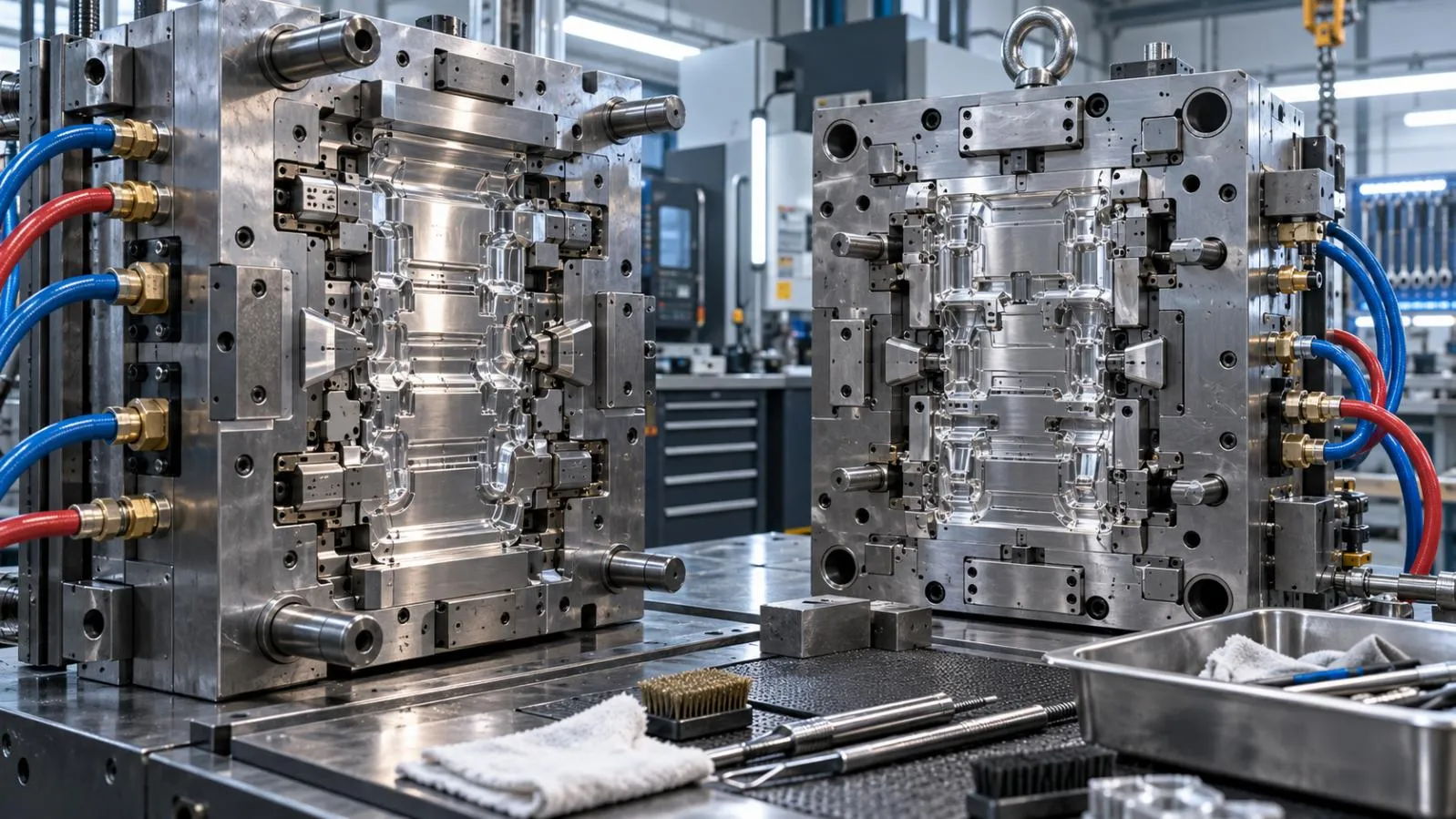
| Conformal cooling inserts | Complex cavity contours with persistent localized hot spots | Higher manufacturing cost and more demanding channel inspection |
For an accessible cylindrical core, a properly designed bubbler may provide sufficient cooling without replacing the insert.
Conformal cooling becomes more attractive when conventional channels leave significant thermal dead zones and further drilling would interfere with ejector pins, fasteners, or cavity geometry.
What Makes Conformal Cooling Inserts Difficult to Retrofit?
The main challenge is not drawing a channel that follows the cavity. It is fitting that channel into a mechanically reliable mold component.
Reducing the distance between a cooling passage and the molding surface lowers conductive thermal resistance. However, it also reduces the surrounding material available to withstand cavity pressure.
Channel diameter creates a compromise of its own. Larger channels decrease resistance to flow, but provide less space to support the piping. Smaller channels fit more easily in tight space and provide less opportunity for blockage. However, blockages in smaller channels create more damage to the piping.
Channel spacing, minimum remaining wall thickness, pressure drop, and insert stiffness must therefore be evaluated together.
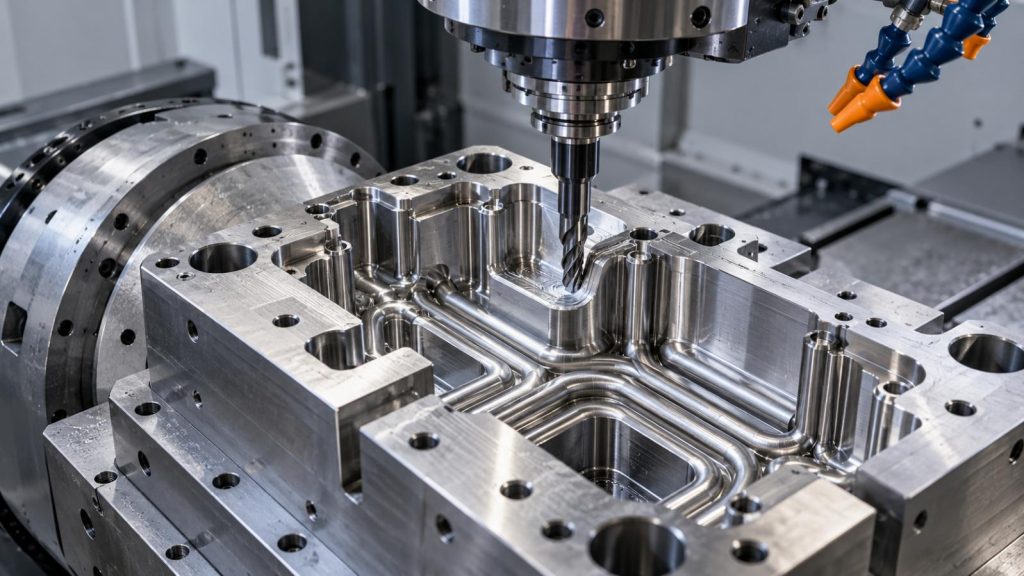
Retrofit design also needs to preserve the original mold's locating datums, ejector clearances, mounting interfaces, and cooling connections.
A thermally effective insert can still fail through:
•Fatigue cracking near thin channel walls
•Coolant leakage at poorly supported sealing interfaces
•Restricted flow caused by rough internal passages or trapped manufacturing residue
•Dimensional movement caused by thermal expansion differences between the insert and surrounding steel
These failure modes should be considered before committing to the replacement geometry.
Conventional Machining or Metal 3D Printing?
Conformal cooling is frequently associated with laser powder bed fusion (LPBF), which can produce enclosed, curved passages inaccessible to conventional cutting tools.
However, metal additive manufacturing is not automatically required for every cooling upgrade.
At Yijiang Technology, we use CNC milling to achieve ±0.01 mm and grinding and EDM to achieve ±0.005 mm. We have also offered the manufacturing of molds by machining mold cavities and other mold components with a manufacturing process precision of approximately ±0.005-0.01 mm.
A stainless steel mold manufactured by more conventional methods illustrates the capabilities of our CNC machining Center. This mold required customized cooling passages using five-axis CNC machining and high-precision grinding and deep-hole drilling. The tolerances for the mold passages were ±0.01 mm.
Processes such as 5-axis CNC machining can fabricate intersecting and converging features; however, fully enclosed, smoothly contoured passageways cannot be created by these methods.
LPBF provides for the fabrication of channels; however, finished inserts can vary in size and dimensions depending on the nature of fatigue testing and treatment of the components. The seam and location of inserts are generally finished by conventional machining.
The manufacturing route should be chosen according to channel accessibility, structural requirements, and inspection feasibility—not geometric complexity alone.
How Can Cooling Performance Be Verified Before Production?
Simulation is useful for rejecting poor designs before steel is cut, but predicted cycle-time savings should not be treated as production results.
A credible engineering review combines thermal analysis, coolant-flow evaluation, and structural assessment.
The assessment will consist of the following:
•Cavity Temperature Distribution: Does the updated insert reduced localized temperature peaks and eliminates over-cooling?
•Hydraulic Performance: Will the existing pump provide the required flow rate through the revised channel network?
•Mechanical Performance: Do the maximum material thicknesses, stresses and insert deflection fall within allowable limits?
•Part Quality: Will the proposed temperature distribution reduce distortion and warpage?
After these assessments, the modifications will be accepted.
Additionally, we perform mold modification, try out molding and manufacture precision molded components, as part of our in house mold making services. As part of our mold making services, we perform a series of tests including; pressure tests, leak tests, and flow rate tests of the coolant to evaluate whether or not the mold is ready to be sealed.
Production trials should use the same raw material and processed under defined conditions. Record cycle times, ejection temperatures, dimensional variation, warpage and defects. A reduction in cycle time is only beneficial if the part does not deform or develop new defects.
When Does the Additional Investment Pay Off?
The financial decision depends on the amount of machine time recovered over the remaining mold life.
For a fixed production quantity, the theoretical machine-hour saving can be estimated from:
Machine hours saved = Annual production quantity × Cycle-time reduction ÷ 3,600
This calculation assumes the reduced cycle is repeatable and that no other production stage becomes the limiting factor.
Buyers must also account for insert manufacturing, mold disassembly, installation, validation, downtime, and ongoing cooling-channel maintenance.
A high-volume mold with persistent localized cooling limitations may justify an advanced insert. A low-volume tool with adequate conventional cooling often will not.
Modification of an existing mold should begin with the simplest redesign to fulfill the production need.
At Yijiang Technology, we provide many related services from mold modification to precision machining, and customization of cooling components. Our team is available to evaluate your mold design, and provide insight on potential improvements to your cooling layout, and production plan.
FAQs
Q1. Does Yijiang Technology provide injection mold modification services?
Yes. We provide mold modification, repair, precision component machining, polishing, and replacement of worn mold parts.
Q2. Can Yijiang Technology improve existing injection mold cooling systems?
We can evaluate cooling-related tooling modifications and manufacture customized machined cooling components. Retrofit feasibility depends on the mold structure, available space, and cooling requirements.
Q3. Does Yijiang Technology manufacture conformal cooling inserts?
We provide precision mold machining and customized cooling components. Fully enclosed, metal 3D-printed conformal cooling inserts require project-specific manufacturing capability confirmation.
Q4. What machining tolerances can Yijiang achieve for mold modifications?
Our precision CNC milling capability is ±0.01 mm. Grinding and EDM can achieve ±0.005 mm on suitable features, subject to material, geometry, and inspection requirements.
Q5. What materials does Yijiang use for mold components and cooling modules?
We machine mold steels such as P20, 718, S136, and H13, as well as stainless steel and other engineering metals. Material selection depends on thermal, mechanical, and corrosion requirements.
- PREV: Null
- NEXT: Null

Yijiang is a professional custom manufacturing partner specializing in large-scale injection molding and precision mold development. We support global clients in automotive,
in large-scale injection molding and precision mold development. We support global clients in automotive,


Get a quote from the China’s #1 CNC Machining Services.
Ready to get started? Connect with us today!
 Talk to Our Team