Low Volume Injection Molding: Cost, Benefits & Process

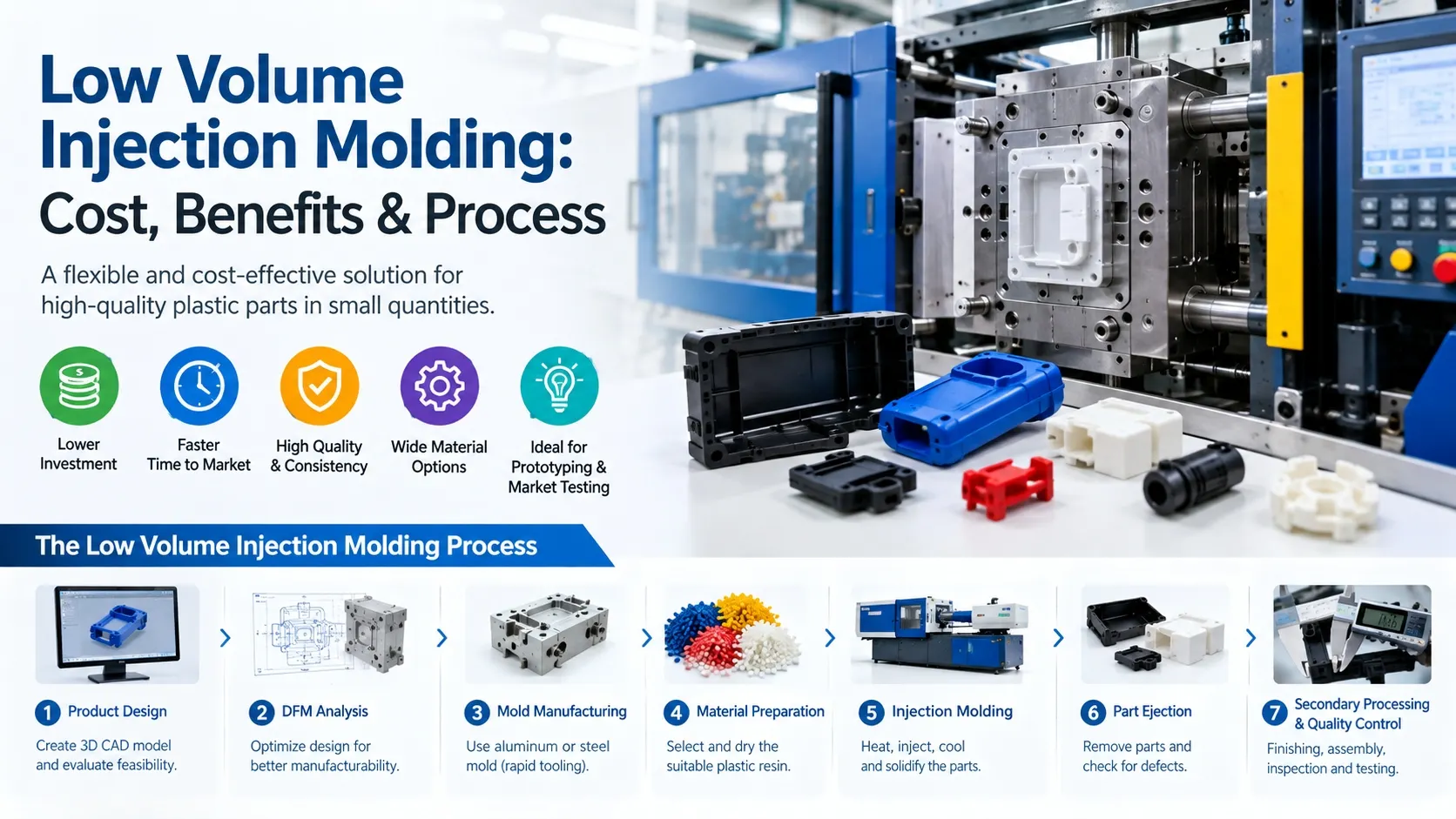
Table of Contents

- What Is Low Volume Injection Molding?
- How Much Does Low Volume Injection Molding Cost?
- Benefits of Low Volume Injection Molding
- Low Volume Injection Molding Production Process
- Low Volume Injection Molding vs. 3D Printing
- Applications of Low Volume Injection Molding
- How to Choose a Low Volume Injection Molding Manufacturer
- Conclusion


When companies require plastic parts in low quantities or high quality, but are unwilling to invest in the tooling and production investment of the high volume injection molding process, low volume injection molding is an effective manufacturing solution. It is often employed for prototypes, product testing, pilot production, custom-made parts, replacement parts, and product launches in the early phase.
Low volume injection molding is different from high volume injection molding; it deals with producing lower quantities, at a greater efficiency, and still maintaining the same part quality, dimensional and material stability.
This guide provides details on the cost, benefits, materials, production processes, applications and selection of the right manufacturer for low volume injection molding.
What Is Low Volume Injection Molding?
Low volume injection molding is a type of injection molding that is used to create relatively small volumes of plastic products. Production volumes can be dozens, hundreds or thousands depending on the project.
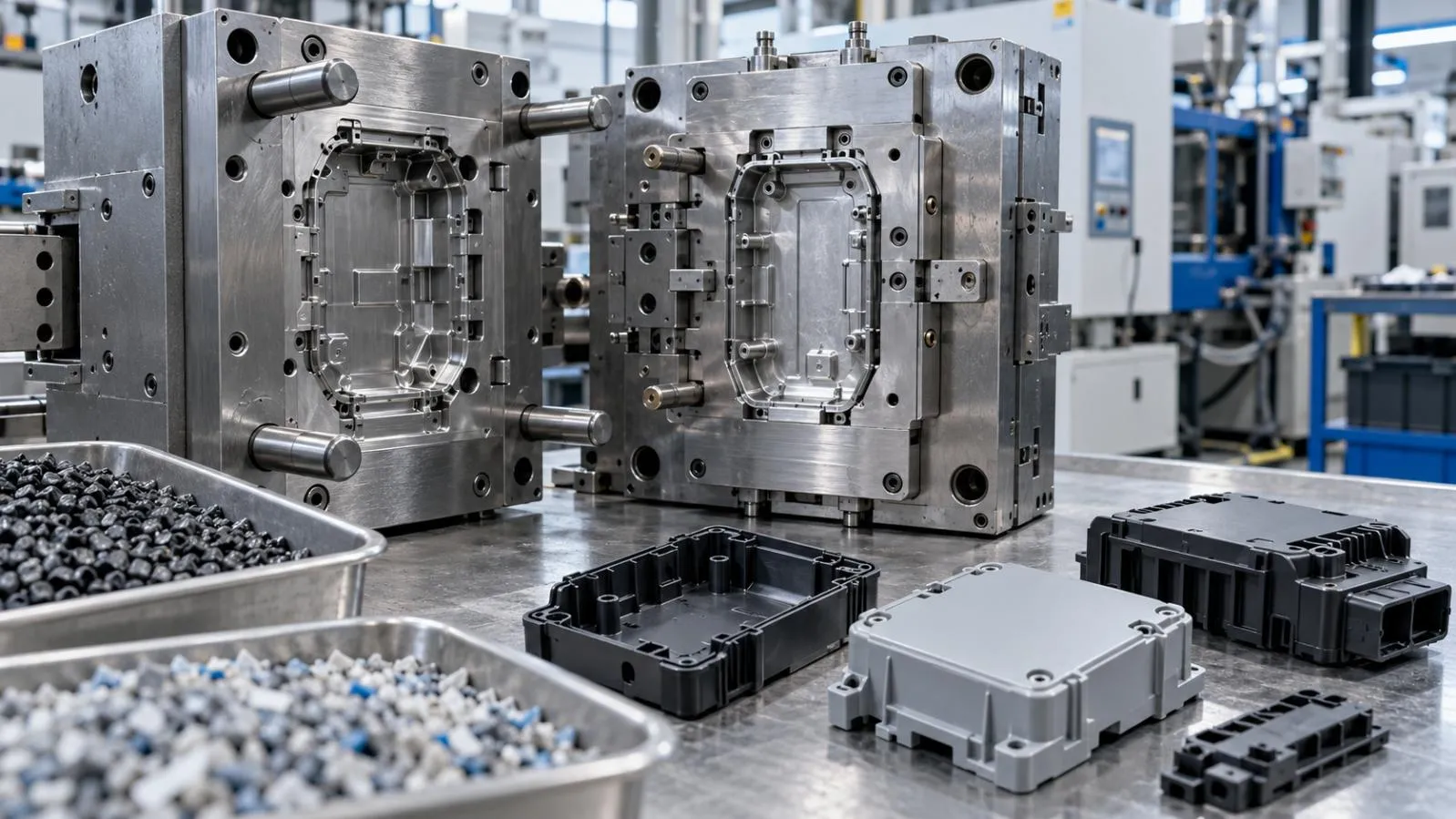
The basic process is similar to the conventional injection molding process. Plastic pellets are melted and pressed into a mold, cooled, and removed as finished products.
The only distinction is the scale of production and the tools strategy.
On a small scale, manufacturers can employ:
-
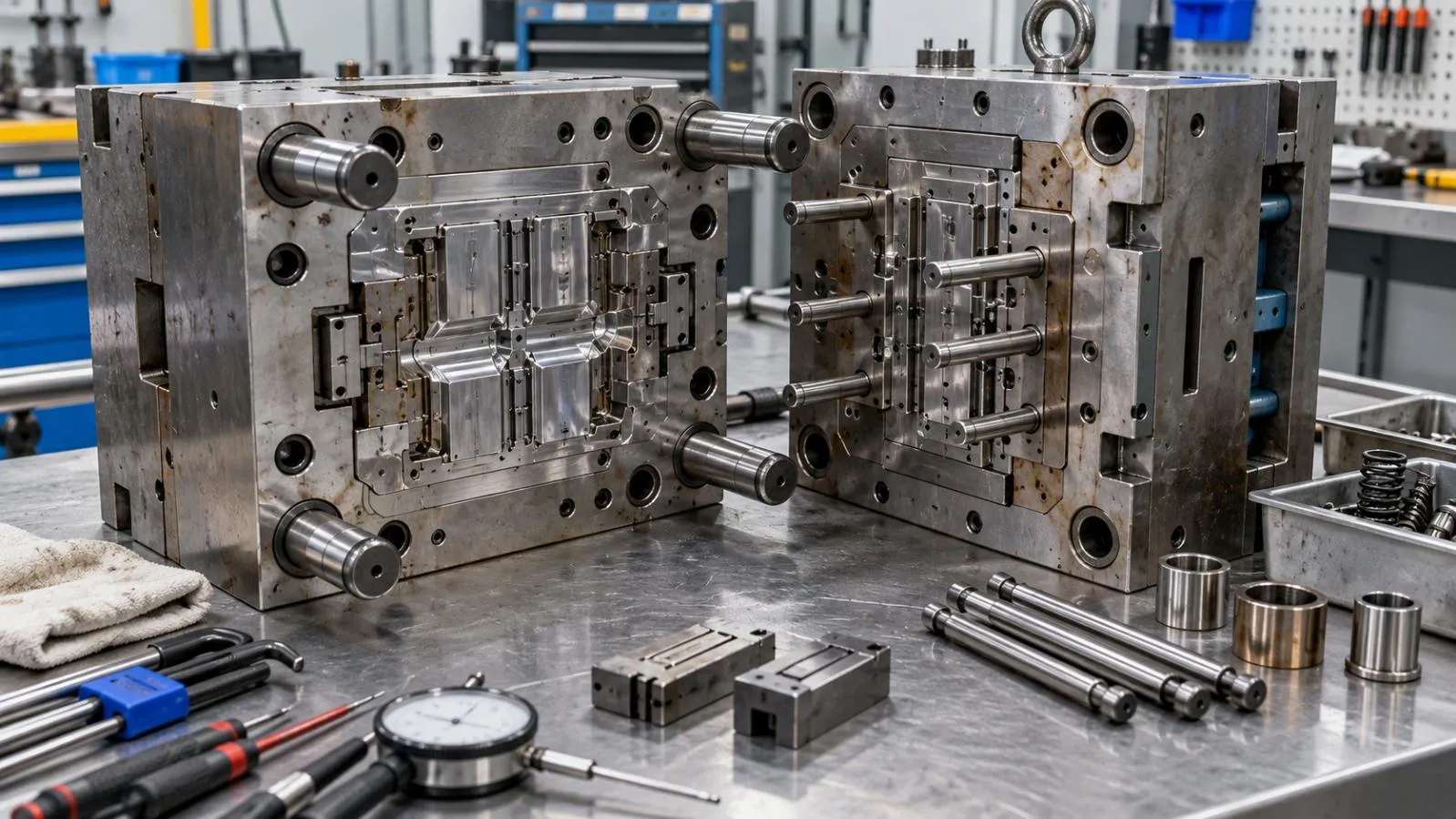
Aluminum injection molds
-
Soft tooling
-
Simplified mold designs
-
Modular tooling systems
-
Rapid tooling
-
Existing mold bases or inserts
These methods can minimize initial tooling expenses and development time.
How Much Does Low Volume Injection Molding Cost?
Low volume injection molding is not just about the parts produced, there are various factors that influence the cost.
Common expenses are:
1. Mold and Tooling Cost
One of the biggest up-front costs is most likely the cost of the tooling. Aluminum molds are frequently used in low volume production due to the fact that they can be produced in a shorter time and at a lower cost than the more complex hardened-steel molds.
Low volume injection molds can range in cost from several hundred dollars to several thousand dollars and if a multi cavity mold is required, the cost can be even higher.
2. Part Design
The cost of part manufacturing is directly related to part geometry. If the wall is thin, the cavity is deep, tolerances are tight, under cuts, threads or complicated surfaces will require other tooling features or secondary operations.
By designing the component so that it can be injection molded, it is possible to save on the overall project cost.
3. Material Selection
Common materials for low volume injection molding include:
-
ABS
-
Polypropylene (PP)
-
Polyethylene (PE)
-
Polycarbonate (PC)
-
Nylon (PA)
-
POM
-
TPU
-
TPE
-
PC/ABS
Engineering plastics with special mechanical, thermal, chemical, or flame-retardant properties generally cost more than standard commodity plastics.
4. Production Quantity
Although low volume molding has a lower upfront investment, the cost per part can be higher than high-volume production.
For example, producing 500 parts may have a higher unit cost than producing 50,000 parts because tooling, setup, machine time, and engineering costs are distributed across fewer units.
5. Surface Finishing and Secondary Operations
Additional processes can increase the total manufacturing cost, including:
-
Painting
-
Texturing
-
Polishing
-
Pad printing
-
Laser engraving
-
Ultrasonic welding
-
Insert molding
-
Assembly
For an accurate quotation, manufacturers typically need the 3D CAD model, material requirements, estimated quantity, tolerances, and surface finish specifications.
Benefits of Low Volume Injection Molding
Lower Initial Investment
One of the biggest advantages is reduced upfront tooling investment. Companies can manufacture functional parts without immediately investing in expensive production tooling.
This makes low volume molding particularly attractive for startups, small businesses, and companies testing new products.
Faster Time to Market
Rapid tooling and simplified mold designs can shorten the development cycle. Companies can move from CAD design to physical production faster than with many traditional manufacturing approaches.
Faster production is especially valuable when companies need to validate a product before a major commercial launch.
Production-Grade Materials
Unlike some 3D printing processes, injection molding allows manufacturers to use a wide range of production-grade thermoplastics.
This enables companies to test products using materials that closely match those planned for full-scale production.
Better Part Consistency
Injection molding can produce highly repeatable components with consistent dimensions and appearance.
This is important when testing product performance, assembly compatibility, durability, and customer acceptance.
Ideal for Market Testing
Low volume injection molding allows businesses to manufacture a limited quantity of finished products before investing heavily in mass production.
Companies can use these parts for:
-
Beta testing
-
Customer feedback
-
Certification
-
Field testing
-
Product demonstrations
-
Initial sales
-
Investor presentations
Low Volume Injection Molding Production Process
The production process generally follows several key stages.
Step 1: Product Design
The process begins with a 3D CAD model. Engineers evaluate wall thickness, draft angles, ribs, bosses, holes, undercuts, and other features.
Design for manufacturability (DFM) analysis can identify potential molding problems before tooling begins.
Step 2: DFM Analysis
The manufacturer reviews the design and provides recommendations for improving moldability.
Common considerations include:
-
Uniform wall thickness
-
Adequate draft angles
-
Proper gate locations
-
Ejection system design
-
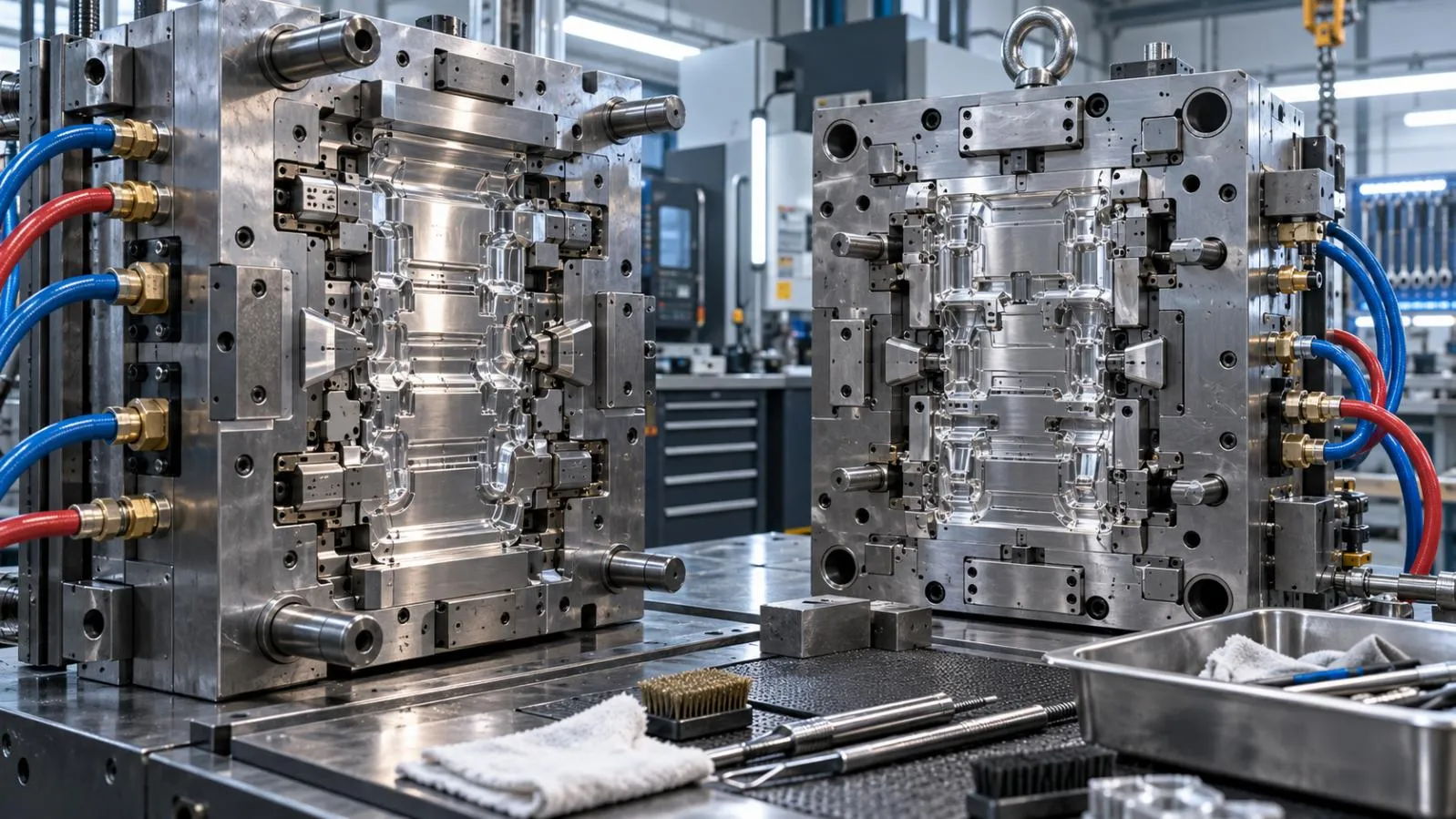
Cooling channel placement
-
Shrinkage compensation
Early DFM analysis can prevent expensive mold modifications later.
Step 3: Mold Design and Manufacturing
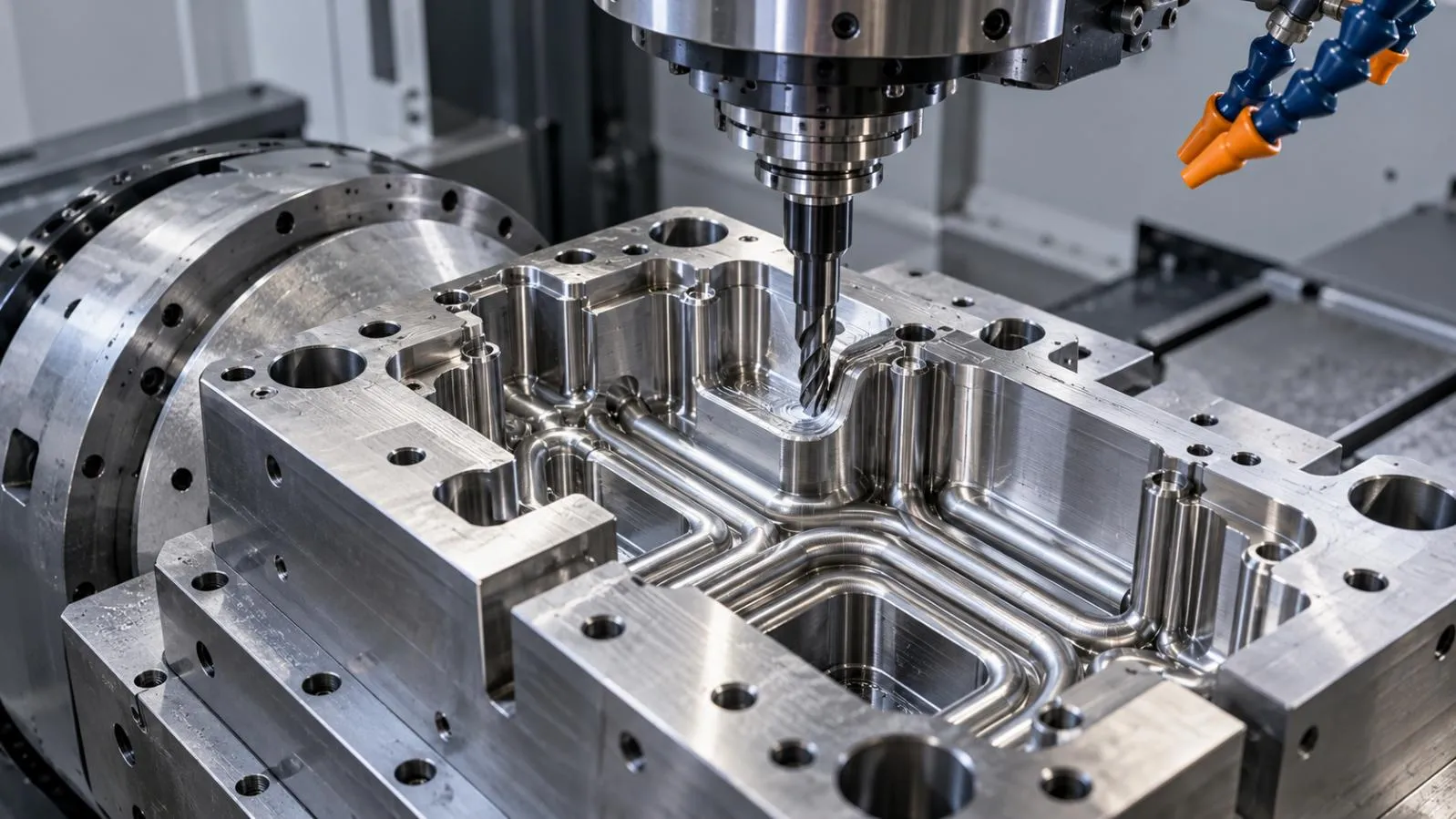
After design approval, engineers create the mold design. Depending on production volume and product requirements, the mold may be manufactured from aluminum or steel.
For low volume applications, aluminum tooling is often selected because it offers a balance between cost, speed, and durability.
Step 4: Material Preparation
Plastic resin is selected according to the application's mechanical and environmental requirements.
The material may need to be dried before molding, particularly hygroscopic materials such as nylon and polycarbonate.
Step 5: Injection Molding
The plastic pellets are fed into the injection molding machine, heated, and transformed into molten plastic.
The molten material is injected into the mold cavity under controlled pressure. The mold then cools the plastic until the part becomes solid.
Step 6: Part Ejection
After cooling, ejector pins or other mechanisms remove the molded part from the cavity.
The manufacturer then inspects the component for dimensional accuracy, cosmetic defects, flash, warpage, and other potential issues.
Step 7: Secondary Processing and Quality Control
Depending on the project, molded parts may undergo trimming, painting, printing, assembly, or other finishing operations.
Quality control can include dimensional inspection, visual inspection, material verification, and functional testing.
Low Volume Injection Molding vs. 3D Printing
Both technologies are useful for small production quantities, but they serve different purposes.
3D printing is often suitable for very early prototypes because it requires little or no tooling. However, material properties, surface finish, production speed, and dimensional consistency may differ from injection-molded parts.
Low volume injection molding becomes more attractive when companies need production-grade materials, consistent dimensions, realistic surface finishes, and multiple identical parts.
For example, a company developing a new consumer electronic device may use 3D printing for the first prototype, then transition to low volume injection molding for functional prototypes and pilot production.
Applications of Low Volume Injection Molding
Low volume plastic injection molding is widely used across multiple industries, including:
-
Consumer electronics
-
Medical devices
-
Automotive components
-
Industrial equipment
-
Robotics
-
Aerospace components
-
Electrical products
-
Sporting goods
-
Consumer products
-
Custom replacement parts
It is particularly valuable for products with uncertain market demand or specialized designs that do not initially require mass production.
How to Choose a Low Volume Injection Molding Manufacturer
Choosing the right manufacturer can have a major impact on cost, quality, and delivery time.
Look for a supplier with:
-
Injection molding expertise – Experience with similar materials and part geometries.
-
Engineering support – DFM analysis and mold design assistance.
-
Flexible tooling options – Aluminum, steel, rapid tooling, and modular solutions.
-
Quality control systems – Reliable dimensional and visual inspection processes.
-
Material selection – Access to appropriate engineering and commodity plastics.
-
Secondary services – Finishing, assembly, printing, and packaging when required.
-
Scalable production – The ability to increase production volume when demand grows.
A manufacturer with the ability to provide both prototype and production support can help companies to prevent unwarranted supplier changes throughout the product development process.
Conclusion
An appropriate compromise between tooling cost, quality of production, development time and flexibility of production is achieved through low volume injection molding. It also enables businesses to manufacture practical plastic parts in relatively small volumes without having to make the immediate investment in high-volume tooling.
For companies that demand plastic parts with reliability at low production volumes, low volume injection molding can be an efficient process, ranging from product development and market testing to pilot production and specialized manufacturing.
The 3D CAD file, material specification, estimated order quantity, part dimensions, tolerances, surface finish, and delivery requirements are the types of information manufacturers typically need to provide to estimate the cost of a low volume injection molding project. By having the correct project information and performing early DFM analysis, companies can determine ways to save money and create a more streamlined route from prototype to production.
- PREV: Null
- NEXT: Null

Yijiang is a professional custom manufacturing partner specializing in large-scale injection molding and precision mold development. We support global clients in automotive,
in large-scale injection molding and precision mold development. We support global clients in automotive,


Get a quote from the China’s #1 CNC Machining Services.
Ready to get started? Connect with us today!
 Talk to Our Team