Choosing a Plastic Molding Manufacturer for Large Plastic Parts


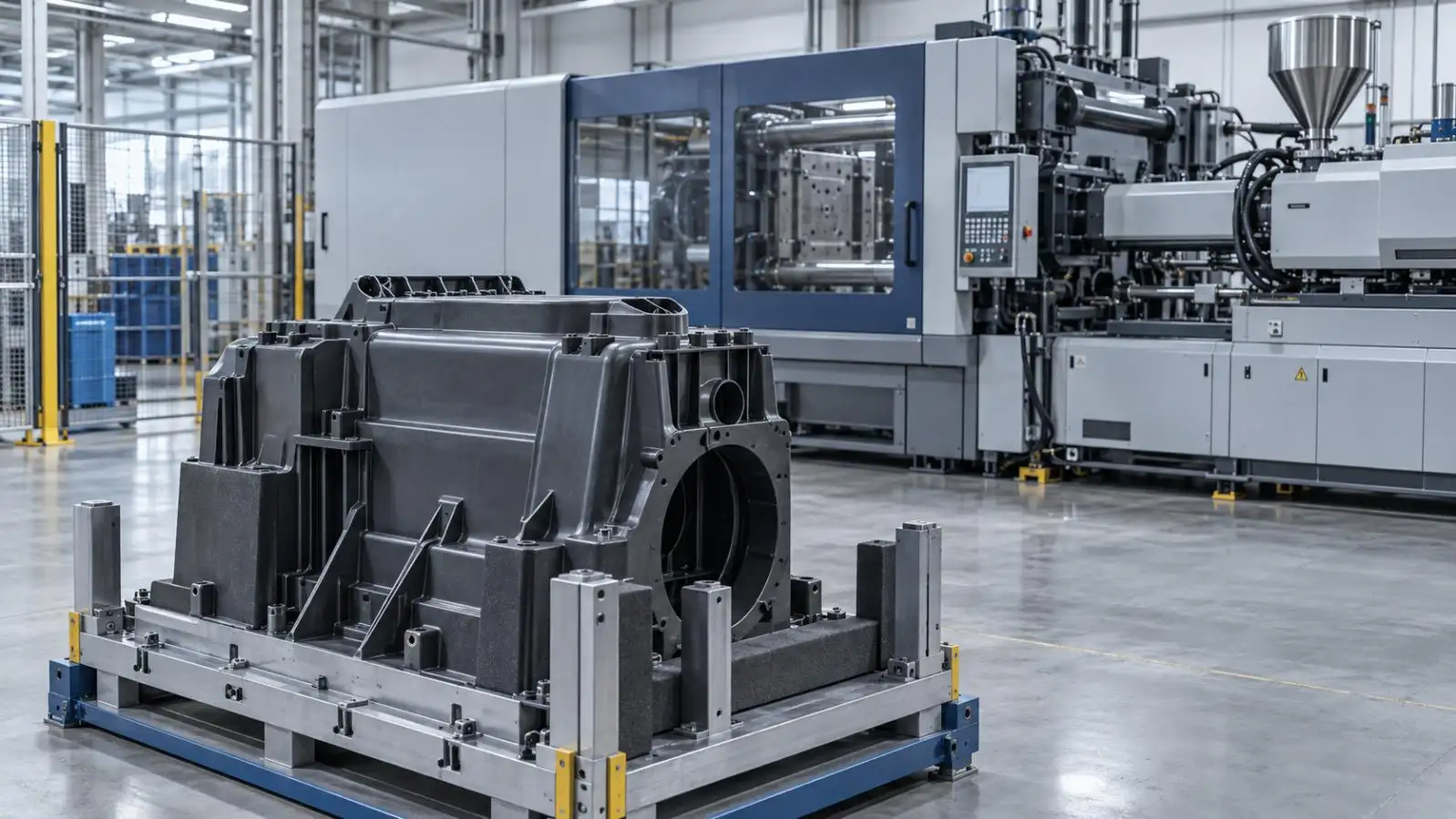

Large plastic parts must retain their shape during molding, cooling, handling, and assembly. An equipment cover may still fail inspection if its mounting bosses shift or if its perimeter distorts, even if the surface quality is acceptable.
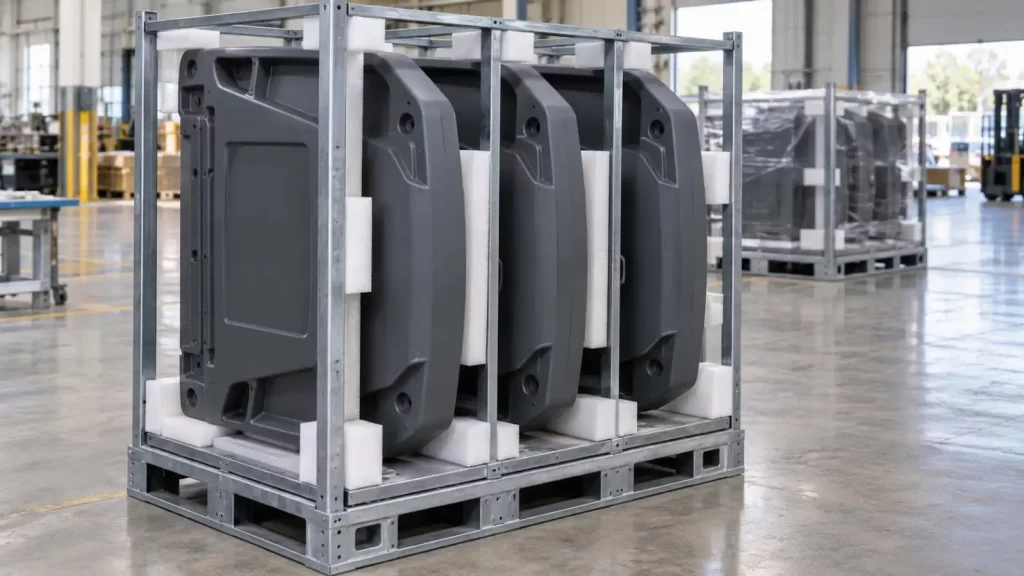
At Yijiang, we evaluate products and molds, as well as control production, in large-part manufacturing. When considering Plastic Molding Manufacturers, one must analyze the interrelated factors of: the adequacy of the equipment, design of the tooling, the choice of material, dimensional verification, the total cost, and the willingness to deliver.
1. Match Machine Capacity to the Complete Mold
A Plastic Molding Manufacturer should explain the proposed machine selection using your component geometry and resin requirements.
Clamping demand depends on projected area and cavity pressure. Injection pressure displayed at the machine is not automatically equivalent to cavity pressure. Machine selection must also account for the complete mold and its operating movements.
| Selection Factor | Engineering Review | Risk if Overlooked |
| Clamping capacity | Projected area, cavity pressure and operating margin | Flash or mold separation |
| Injection unit | Resin-specific shot volume, filling rate and plasticizing capacity | Short shots or unstable cycles |
| Mold installation | Tie-bar spacing, platen size, mold thickness and weight | Installation incompatibility |
| Opening clearance | Part depth, core withdrawal and robot access | Restricted demolding |
| Auxiliary systems | Cooling capacity, lifting and supported handling | Longer cycles or part damage |
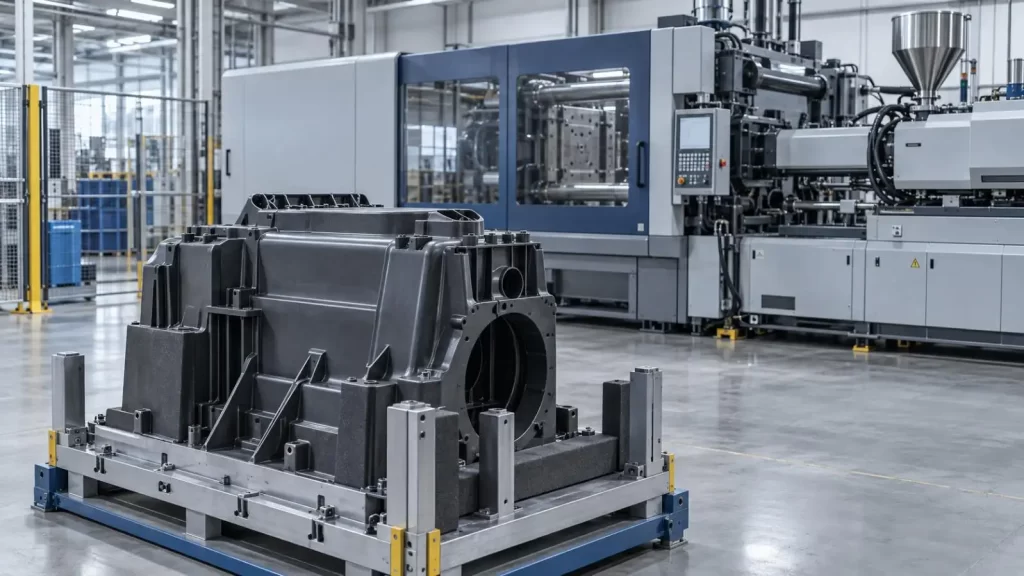
Our equipment includes Chen Hsong 2500T and DONGHUA 1500T machines. Yijiang's company profile reports 30+ injection molding machines and a 10,000+ m² facility.
2. Review Structural Design Before Cutting Steel
A good Plastic Molding Manufacturer is able to spot design changes that can still be cost effective.
Balance Wall Thickness and Stiffness
Wall thickness affects how much material is used and how long it takes for that part to cool. It can also cause sink marks and uneven shrinkage.
At design reviews, consider:
•Ribs and Bosses: They can provide support, but can lead to excessive material build up.
•Wall transitions: Fill and cool the part evenly.
•Corners: Use a radius to reduce stress concentration.
•Draft: The greater the depth of the part the more the surface can release.
When dealing with a large housing, ribs need to support mounting loads, but keep distortion of visible surfaces to a minimum.
Gate Placement Should Be Done Around Functional Requirements
Weld-lines and the direction of flow are determined by where the gates are placed. Using multiple gates can make the distance the flow front has to travel smaller, but can increase interactions between flow fronts.
Ask your Plastic Molding Manufacturer to explain:
•Where weld lines may form relative to loaded features.
•How air escapes from the last areas to fill.
•Whether distant sections can receive adequate packing.
•How gate marks affect appearance or subsequent assembly.
Coordinate Cooling and Ejection
Uneven cooling causes material to shrink unevenly. If components are ejected from the mold prior to sufficient rigidity being formed, additional distortion will occur.
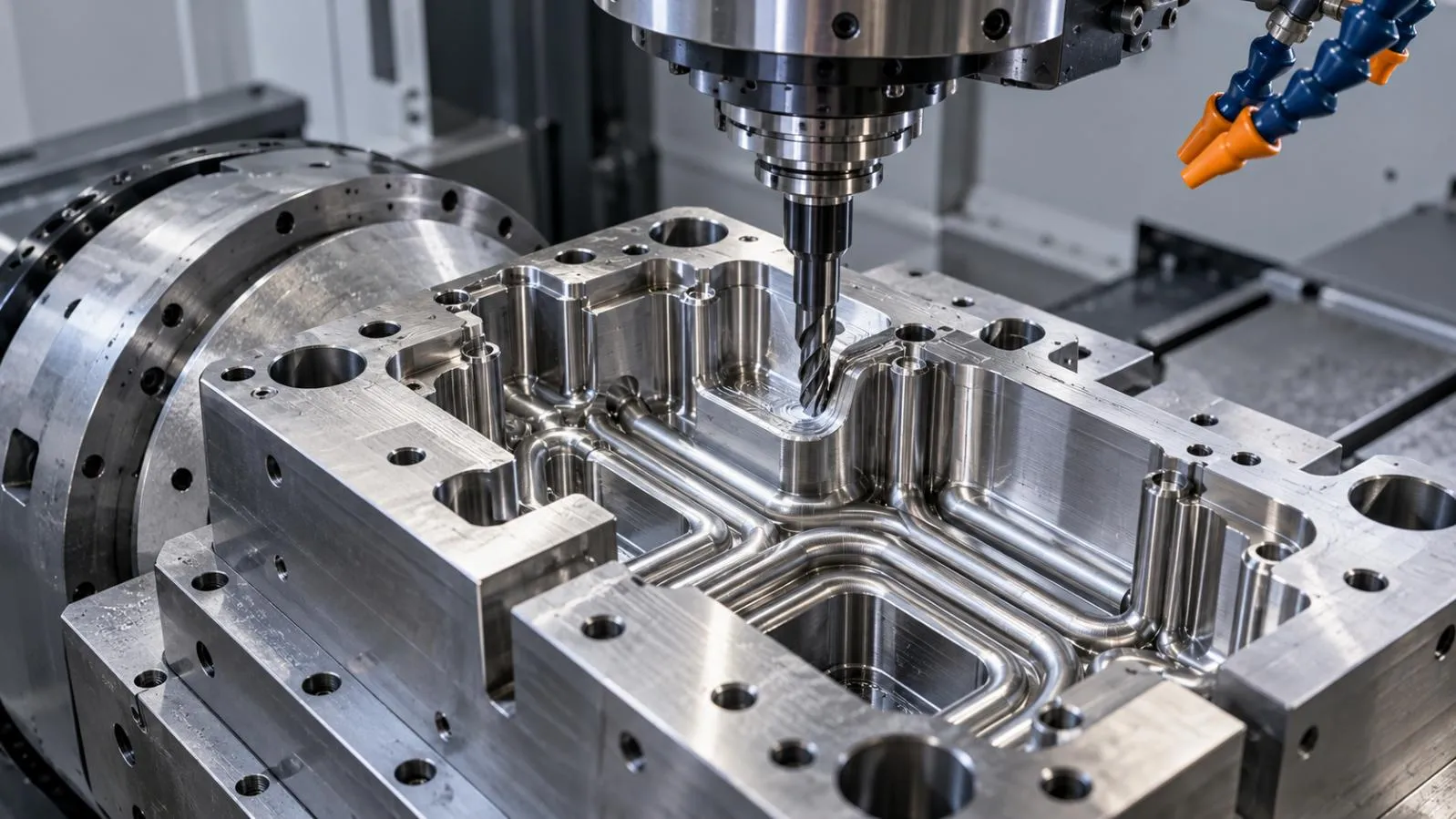
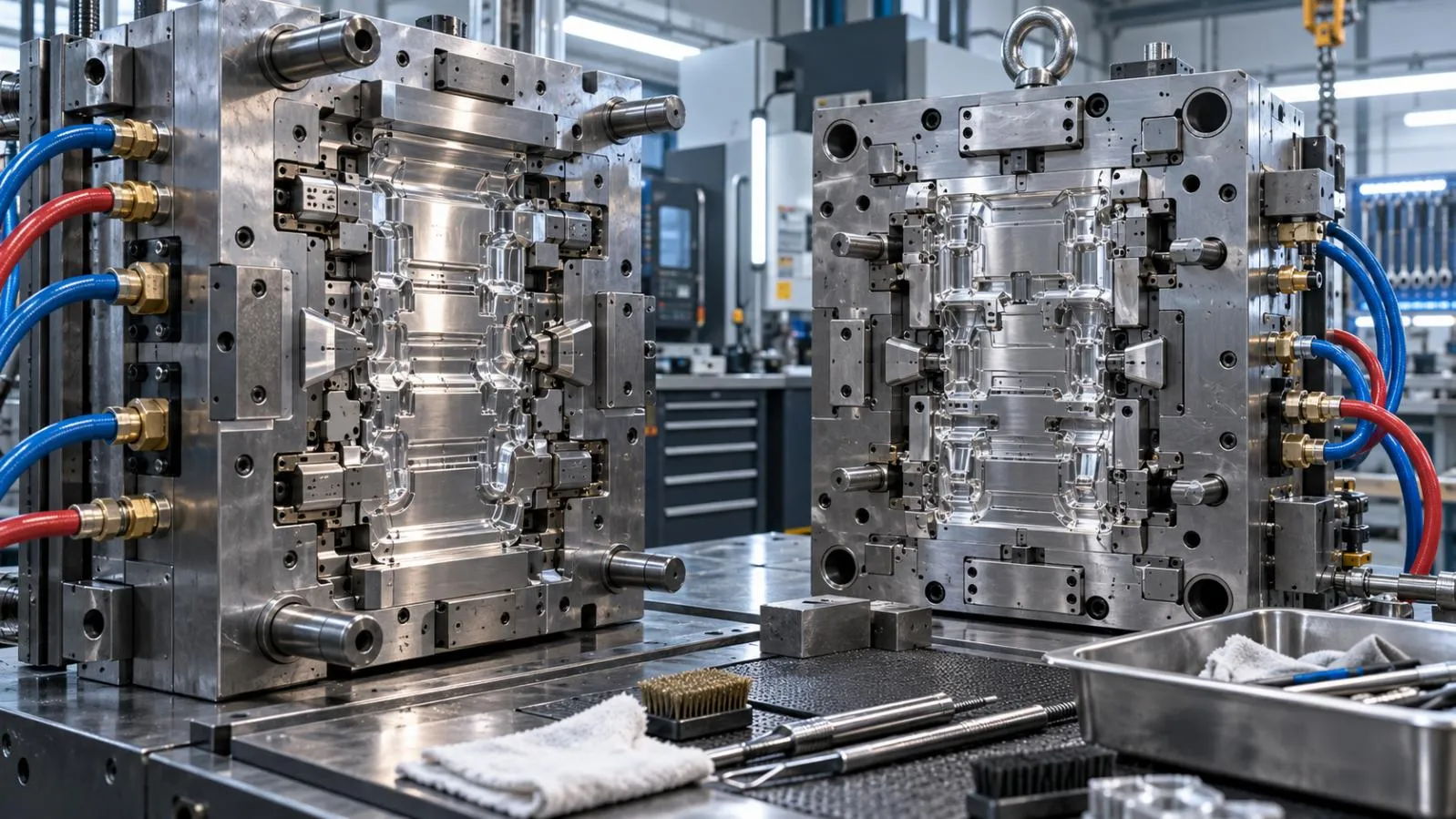
Our large-part service describes DFM analysis, high-rigidity molds, optimized runners, and balanced cooling systems. These design concepts deal simultaneously with filling, thermal balance, and dimensional stability. Yijiang's mold development approach
3. Choose Resin Grades Based on Service Loads
A Plastic Molding Manufacturer needs to understand the service load when considering the processing of a particular grade of material.
| Material Selection | Potential Advantage | Required Trade-Off |
| Unreinforced resin | Light weight and good surface appearance | High creep and thermal expansion, low stiffness |
| Fiber-reinforced resin | High stiffness under a direct load | Gap filling and surface appearance |
| Impact-modified resin | High impact resistance | Reduced stiffness and heat deflection temperature |
| Recycled-content grade | Low environmental impact | Feedstock variability and performance |
When considering outdoor covers, think about the UV and temperature variations; for load-bearing containers, consider the effect of sustained loadings. Think about the dimensional stability of mating surfaces/components due to moisture.
Material substitution should be considered a full technical review, as similar resins may result in different levels of shrinkage and fill difficulties.
4. Define Precision Through Measurable Acceptance Criteria
The local feature tolerances in the overall component also need to be considered when selecting a Plastic Molding Manufacturer.
Yijiang has a +/- 0.02 mm molding tolerance, while CNC has +/-0.01 mm. Large-part thickness control is +/-0.2 mm. These tolerances should be evaluated in the context of the feature size, material and the conditions in which they are measured.
•Inspection Condition: Describe as conditions of temperature and time for conditioning, and whether measurement is to be taken with support or in the free state.
•Trial Production Sampling: Analyze consecutive components produced under stable processing conditions.
•Functional Validation: Analyze assembly, loading, and exposure to the relevant environment.
A fixture would restrict a flexible panel, conceal, and compensate for panel distortion. Inspection methods should correlated with assembly and the actual drawing conditions.
5. Consider Total Cost and Delivery Risk
The quotation of a plastic molding company should be sufficient for comparing costs over the complete production program.
One-piece molding greatly reduces the number of parts and fastening, but also increases the tooling size and the packing volume. Split construction greatly reduces the tooling and packaging volume, but may increase the number of fastening, joining, and maintaining parts in proper alignment.
When comparing quotes, assume the following:
•Resin grade, annual requirement, and batch size.
•Tooling ownership, tooling maintenance, and tooling adjustments.
•Cycle time, yield, and additional operations.
•Sampling plan and inspection milestones.
•Packaging, volume restriction, and shipping and storage.
•Available capacity and backup arrangements.
Yijiang's integrated tooling, molding, and machining services facilitate integrated decisions for the different stages of development and production.
Discuss Your Large-Part Requirements With Yijiang
The right Plastic Molding Manufacturer connects each manufacturing decision to an agreed performance requirement.
Explore Yijiang's large and extra-large injection molding services and share your drawings, operating conditions, expected volumes, and critical tolerances. We can use these inputs to discuss equipment suitability, design priorities, and a practical validation plan.
FAQs
Q1. What Types of Large Plastic Parts Can Yijiang Manufacture?
Yijiang's large-part services cover automotive panels, equipment housings, logistics containers, and other oversized components. Project suitability depends on part geometry, material, tooling requirements, and available machine capacity.
Q2. Does Yijiang Provide Custom Mold Design for Large Parts?
Yes. Yijiang provides mold design and development, including mold structures, runner layouts, cooling circuits, and ejection systems tailored to large components.
Q3. Can Yijiang Help Improve a Design Before Tooling Begins?
Yes. Yijiang offers DFM analysis to review filling, cooling, warpage, and demolding risks before mold manufacturing.
Q4. What Injection Molding Equipment Does Yijiang List?
Yijiang offers more than 30 injection molding machines, including Chen Hsong 2500T equipment. Machine suitability should be confirmed against the proposed mold and shot requirements.
Q5. Which Materials Does Yijiang Support for Large Plastic Parts?
Yijiang offers PP, ABS, PC, PA, and modified materials. The appropriate grade requires review of the component's operating conditions and manufacturing requirements.
- PREV: Null
- NEXT: Null

Yijiang is a professional custom manufacturing partner specializing in large-scale injection molding and precision mold development. We support global clients in automotive,
in large-scale injection molding and precision mold development. We support global clients in automotive,


Get a quote from the China’s #1 CNC Machining Services.
Ready to get started? Connect with us today!
 Talk to Our Team