Top 10 Mold Making & Injection Molding Manufacturers: From Tooling to Production

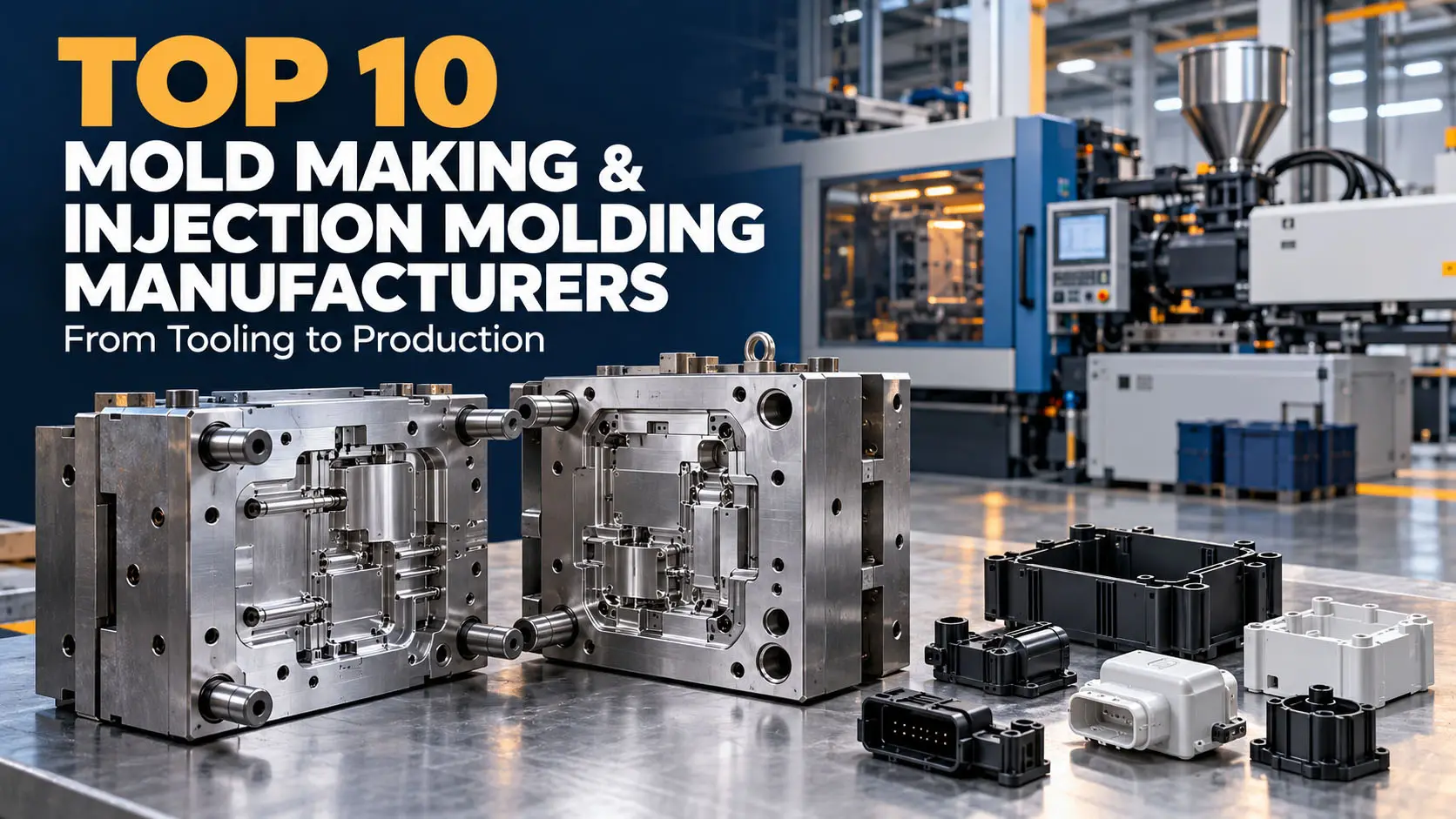
Table of Contents

- Mold Manufacturer vs. Injection Molding Manufacturer
- Quick Comparison: 10 Tooling and Injection Molding Suppliers
- 1. PTI Engineered Plastics — Tooling Connected to Product Development
- 2. The Rodon Group — Toolmaking for Recurring Production
- 3. EVCO Plastics — Mold Development and Production Qualification
- 4. Tessy Plastics — Tooling Developed Alongside Automation
- 5. Crescent Industries — Tooling Through Finished Components
- 6. Natech Plastics — Moldmaking and Qualification for Life Sciences
- 7. Rutland Plastics — Design and Tooling with UK Production
- 8. Accumold — Micro Tooling and Micro Molding
- 9. Rosti — Tooling Coordination Within Contract Manufacturing
- 10. Yijiang Technology — Custom Mold Development and Injection Molding
- In-House Toolmaking or Managed Tooling: What Should Buyers Prefer?
- A Practical Five-Stage Approval Plan
- Clarify Mold Ownership Before the First Payment
- Compare Tooling Cost and Production Cost Together
- What to Include in a Mold and Injection Molding RFQ
- Frequently Asked Questions
- Should I use the same company for moldmaking and injection molding?
- Does an injection molding company always make its own molds?
- What is the difference between prototype tooling and production tooling?
- How long does it take to build an injection mold?
- Can I move my mold to another manufacturer?
- How should I choose the best mold and injection molding manufacturer?
- Discuss Your Tooling and Production Project with Yijiang


A mold quotation tells you what a tool costs. It does not necessarily tell you whether that tool will deliver the parts your business needs.
Before choosing a mold making and injection molding manufacturer, you need to understand who will design the mold, who will build it, where it will run, and how production readiness will be demonstrated.
These responsibilities may sit within one factory, across several facilities, or between a molding company and specialist toolmakers.
This guide compares 10 companies offering mold development and injection molding capabilities. It also provides a practical framework for evaluating the handoff from tooling to repeat production.
The central sourcing question is: Who is accountable for the mold producing acceptable parts under the agreed production conditions?
Editorial disclosure: This guide is published by Yijiang Technology, which is included in the selection. The list is based on publicly described tooling and molding capabilities. It is an editorial shortlist, not an independently audited ranking of company size or manufacturing quality. Numbering is for navigation, and suggested project fits are editorial assessments.
Mold Manufacturer vs. Injection Molding Manufacturer
An injection mold manufacturer designs and builds the tool that forms a plastic component.
An injection molding manufacturer operates the production process that uses the tool to make plastic parts.
An integrated tooling and molding supplier coordinates both activities, potentially including design review, mold trials, process development, inspection, maintenance, and assembly.
However, “integrated” does not automatically mean every operation happens in the same building. For example, Rosti describes a network of specialist toolmakers, while PTI publishes in-house toolmaking capabilities. Both arrangements require project-specific clarification. Rosti’s tooling approach · PTI’s tooling overview
Quick Comparison: 10 Tooling and Injection Molding Suppliers
| Company | Publicly described capabilities | Project focus to investigate |
|---|---|---|
| PTI Engineered Plastics | In-house tooling, design support, molding, and validation | Engineering-intensive product development |
| The Rodon Group | Mold design, toolmaking, and automated molding | Established designs with recurring production demand |
| EVCO Plastics | Mold design, building, trials, qualification, and molding | Programs requiring coordinated tooling and production sites |
| Tessy Plastics | Precision tooling, molding, automation, and assembly | Components linked to automated manufacturing |
| Crescent Industries | Mold design, tooling, process development, and molding | Projects requiring coordinated production and post-processing |
| Natech Plastics | In-house moldmaking, qualification, and injection molding | Medical and diagnostic product development |
| Rutland Plastics | Design, moldmaking, molding, and additional operations | UK sourcing from concept through production |
| Accumold | Micro tooling and micro molding | Miniature parts and demanding small features |
| Rosti | Tooling coordination, molding, and contract manufacturing | Programs involving specialist tooling and broader production support |
| Yijiang Technology | Mold development, machining, trials, and injection molding | China-based sourcing for custom tooling and plastic parts |
The company profiles below link to the supporting official sources. Confirm the actual manufacturing locations and scope before awarding a project.
1. PTI Engineered Plastics — Tooling Connected to Product Development
PTI Engineered Plastics describes an in-house tooling operation supported by design-for-manufacturing review, injection molding, and secondary operations. Its published tooling scope extends from prototype tools to multi-cavity production molds. Official tooling and molding capabilities
Potential project fit: Components requiring engineering collaboration before the tooling specification is finalized.
What to evaluate: Ask how the proposed tool supports your initial quantity, anticipated design changes, and later production requirements.
Question to ask: “Will this tool support our expected production program, or should we budget for replacement tooling as demand grows?”
2. The Rodon Group — Toolmaking for Recurring Production
The Rodon Group lists mold design and building, toolmaking, injection molding, product testing, packaging, and fulfillment among its in-house services. Its published manufacturing approach emphasizes automation. Official company capabilities
Potential project fit: Established part designs with recurring demand that can justify a dedicated tooling and production approach.
What to evaluate: Review cavity count, maintenance expectations, and the commercial effect of changes in annual demand.
Question to ask: “How would the tooling and unit-price proposal change if our actual volume were lower than forecast?”
3. EVCO Plastics — Mold Development and Production Qualification
EVCO Plastics describes mold design, mold building, trials, qualification, maintenance, and transfer programs. Its published overseas tooling approach includes molds built and sampled in China, with final production approval completed at the manufacturing facility. Official tooling and mold-building services
Potential project fit: Programs in which tooling and production may take place at different locations.
What to evaluate: Establish responsibility for resolving differences between initial mold trials and production-site results.
Question to ask: “Which acceptance activities take place at the toolmaking site, and which must be repeated at the production facility?”
4. Tessy Plastics — Tooling Developed Alongside Automation
Tessy Plastics combines precision tooling and injection molding with automation design, complex assembly, and contract manufacturing. Its service scope includes engineering and design-for-manufacturability support. Official company capabilities
Potential project fit: Components whose tooling, part handling, inspection, and assembly need to be developed together.
What to evaluate: Ask when automation requirements become part of the mold design and who approves those interfaces.
Question to ask: “How will the tool, part-removal system, inspection equipment, and assembly process be tested together?”
5. Crescent Industries — Tooling Through Finished Components
Crescent Industries describes a development sequence covering mold design, tool building, process development, injection molding, and post-processing. Its additional services include assembly, kitting, and decoration. Official manufacturing services
Potential project fit: Projects that need a coordinated path from tooling to a finished or assembled component.
What to evaluate: Check that acceptance criteria cover downstream operations as well as the molded part.
Question to ask: “Which dimensions and functional checks will be verified after all secondary operations are complete?”
6. Natech Plastics — Moldmaking and Qualification for Life Sciences
Natech Plastics publishes in-house moldmaking capabilities covering development tools, multi-cavity production molds, sampling, qualification, inspection, and maintenance. Its tooling offering connects with injection molding for medical and diagnostic applications. Official moldmaking services
Potential project fit: Projects where tooling decisions must support an organized development and qualification program.
What to evaluate: Define the required records and approval activities before the tool build begins.
Question to ask: “What sampling, inspection, and process-qualification deliverables are included in the tooling price?”
7. Rutland Plastics — Design and Tooling with UK Production
Rutland Plastics offers design support, prototyping, moldmaking, injection molding, and additional services such as machining and assembly. It also addresses projects involving existing tools and additional production capacity. Official service overview
Potential project fit: Buyers evaluating UK manufacturing for a new component or an existing molding program.
What to evaluate: Ask how the proposed tooling approach reflects production demand, maintenance, and possible design changes.
Question to ask: “What would you change in the tool specification if this project moved from initial orders to sustained production?”
8. Accumold — Micro Tooling and Micro Molding
Accumold specializes in micro molding and tooling for miniature components. Its published applications include medical products, microelectronics, polymer optics, and other demanding small-part markets. Official company capabilities
Potential project fit: Parts whose smallest features require specialized tooling, handling, and measurement.
What to evaluate: Discuss the inspection method alongside the tooling proposal.
Question to ask: “How will you verify the smallest critical features, and how will those measurements be linked to mold acceptance?”
9. Rosti — Tooling Coordination Within Contract Manufacturing
Rosti offers injection molding and broader contract manufacturing support. Its molding capability page describes working with a network of toolmakers, making the project’s tooling route an important point to clarify. Official molding and tooling overview
Potential project fit: Programs requiring coordinated tooling expertise, production, and additional manufacturing services.
What to evaluate: Identify the proposed toolmaker, production site, and organization responsible for changes or repairs.
Question to ask: “Who approves the mold design, who owns corrective actions after trials, and how will we receive progress updates?”
10. Yijiang Technology — Custom Mold Development and Injection Molding
Yijiang Technology describes mold design and development services involving CNC machining, EDM, assembly, trials, and inspection. Its wider service offering includes custom injection molding, allowing buyers to discuss tooling and part production within the same project scope. Mold design and development · Injection molding services
Potential project fit: Buyers evaluating a China-based supplier for custom molds and plastic components.
What to evaluate: Request a written tooling proposal tied to the actual part drawing, material, order quantity, and inspection requirements.
Question to ask: “Which moldmaking and production operations will be completed in-house, and what evidence will demonstrate that the tool is ready for production?”
In-House Toolmaking or Managed Tooling: What Should Buyers Prefer?
Evaluate the proposed arrangement against your project rather than treating either model as automatically superior.
| Arrangement | What to investigate | Evidence to request |
|---|---|---|
| In-house moldmaking | Available toolroom capacity and relevant technical experience | Equipment, personnel, comparable projects, and build schedule |
| Specialist external toolmaker | Coordination between the toolmaker and molding facility | Named toolmaker, approved specifications, and trial responsibilities |
| Tooling and molding at different sites | Compatibility and acceptance at the final production site | Machine requirements, transfer plan, and production-site trial criteria |
A supplier should explain the actual route your tool will follow. A general statement such as “one-stop manufacturing” is not a substitute for that information.
A Practical Five-Stage Approval Plan
The following is a proposed buyer checklist. Adapt it to the product, industry, and project requirements.
Stage 1: Approve the Part and Tooling Assumptions
Before mold design proceeds, document:
- The approved drawing revision.
- Resin grade and permitted alternatives.
- Critical dimensions and functional requirements.
- Cosmetic surfaces and acceptance criteria.
- Initial quantity and expected lifetime demand.
- Open design risks and agreed actions.
Ask for written design-for-manufacturability feedback rather than relying only on a quotation.
Stage 2: Approve the Mold Concept
Request a review of:
- Cavity count and layout.
- Mold materials and key purchased components.
- Gate, runner, cooling, and ejection arrangements.
- Proposed production-machine compatibility.
- Maintenance access and replaceable wear components.
- Assumptions affecting cycle time and tool life.
Record the reasons behind major decisions so that later changes can be assessed against the original plan.
Stage 3: Review Trial Results
Request samples produced with the agreed material, along with the relevant inspection results and trial conditions.
Keep a written list of open issues, their owners, and the next verification step.
Treat a successful sample as evidence to review—not automatic authorization for volume production.
Stage 4: Confirm Production Readiness
Agree on the evidence needed to release the process, such as a documented trial run, repeatability checks, functional testing, or customer-specific approval requirements.
EVCO, for example, describes mold trials and qualification as part of establishing repeatable molding parameters; Natech similarly identifies qualification before production. EVCO qualification approach · Natech development process
Stage 5: Agree on Maintenance and Change Control
Document who will maintain the tool, how problems will be reported, and when customer approval is required for a change.
Also agree on which records and spare components must remain available throughout the production program.
Clarify Mold Ownership Before the First Payment
Ask the supplier to address the following in the written commercial proposal:
| Topic | Question to resolve |
|---|---|
| Ownership | Who owns the mold, inserts, and dedicated fixtures? |
| Design records | Which drawings, CAD files, and revisions will be supplied? |
| Storage | Where will the tool be stored, and are storage charges possible? |
| Maintenance | Which activities are included, and which are separately charged? |
| Repairs | Who approves and pays for repairs under different circumstances? |
| Transfer | What documentation, fees, and release conditions apply? |
| End of production | What happens to the tool when orders stop? |
Do not infer these arrangements from the word “tooling” on an invoice. Ask for a clear written scope.
Compare Tooling Cost and Production Cost Together
A lower mold price may be attractive, but the decision should consider the expected production program.
A useful starting calculation is:
Estimated program cost = Tooling investment + Part production cost + Other agreed project costs
Consider this simplified hypothetical comparison:
| Item | Proposal A | Proposal B |
|---|---|---|
| Tooling investment | $18,000 | $28,000 |
| Price per part | $1.20 | $1.05 |
| Production quantity | 100,000 | 100,000 |
| Tooling plus part cost | $138,000 | $133,000 |
Proposal B costs $10,000 more in tooling but $5,000 less across the stated quantity.
Under these assumptions, the additional tooling investment is recovered after approximately 66,667 parts:
$10,000 ÷ $0.15 = 66,667 parts
These figures illustrate the calculation, not market pricing. Validation, maintenance, delivery, financing, and other differences must be added where relevant. The proposals must also meet the same technical requirements.
What to Include in a Mold and Injection Molding RFQ
Send every shortlisted supplier the same information:
- 3D CAD files and a revision-controlled drawing.
- Material grade, color, and surface requirements.
- Critical dimensions and product functions.
- Initial order quantity and annual demand forecast.
- Expected program duration.
- Required inspection and approval records.
- Secondary operations and assembly requirements.
- Delivery destination and target dates.
- Tool ownership and transfer expectations.
- A request to identify assumptions and exclusions.
Ask for separate pricing for tooling, trials, production parts, secondary operations, and other services. This makes it easier to compare equivalent offers.
Frequently Asked Questions
Should I use the same company for moldmaking and injection molding?
An integrated supplier can coordinate tooling and production responsibilities. Separate specialists may also be suitable. In either case, identify who is responsible for compatibility, trials, corrections, and final production approval.
Does an injection molding company always make its own molds?
No. Some build molds in-house; others coordinate specialist toolmakers or use a combination of approaches. Ask where your specific mold will be designed, built, sampled, and maintained.
What is the difference between prototype tooling and production tooling?
The terms describe the intended use of the tool, but they do not define a complete specification. Ask about expected production quantity, tool construction, maintainability, material compatibility, and validation requirements.
How long does it take to build an injection mold?
The schedule depends on the design, tool complexity, available capacity, purchased components, trials, and approval requirements. Request a milestone schedule that separates design approval, construction, first trials, corrections, and production release.
Can I move my mold to another manufacturer?
A transfer depends on the agreed commercial terms, tool condition, documentation, and compatibility with the receiving factory. Confirm the release arrangements and have the receiving manufacturer review the tool before scheduling production.
How should I choose the best mold and injection molding manufacturer?
Compare relevant project experience, the proposed tool design, production capability, approval plan, and total program cost. Favor clear evidence and accountable project management over broad claims about precision or speed.
Discuss Your Tooling and Production Project with Yijiang
Selecting a manufacturing partner begins with defining what your mold must deliver.
Share your part drawings, material requirements, expected quantities, critical dimensions, and target schedule with Yijiang to discuss mold development and injection molding within one project scope.
- PREV: Null
- NEXT: Null

Yijiang is a professional custom manufacturing partner specializing in large-scale injection molding and precision mold development. We support global clients in automotive,
in large-scale injection molding and precision mold development. We support global clients in automotive,


Get a quote from the China’s #1 CNC Machining Services.
Ready to get started? Connect with us today!
 Talk to Our Team