Medical Plastic Injection Molding Trends Shaping Medical Device Manufacturing in 2026

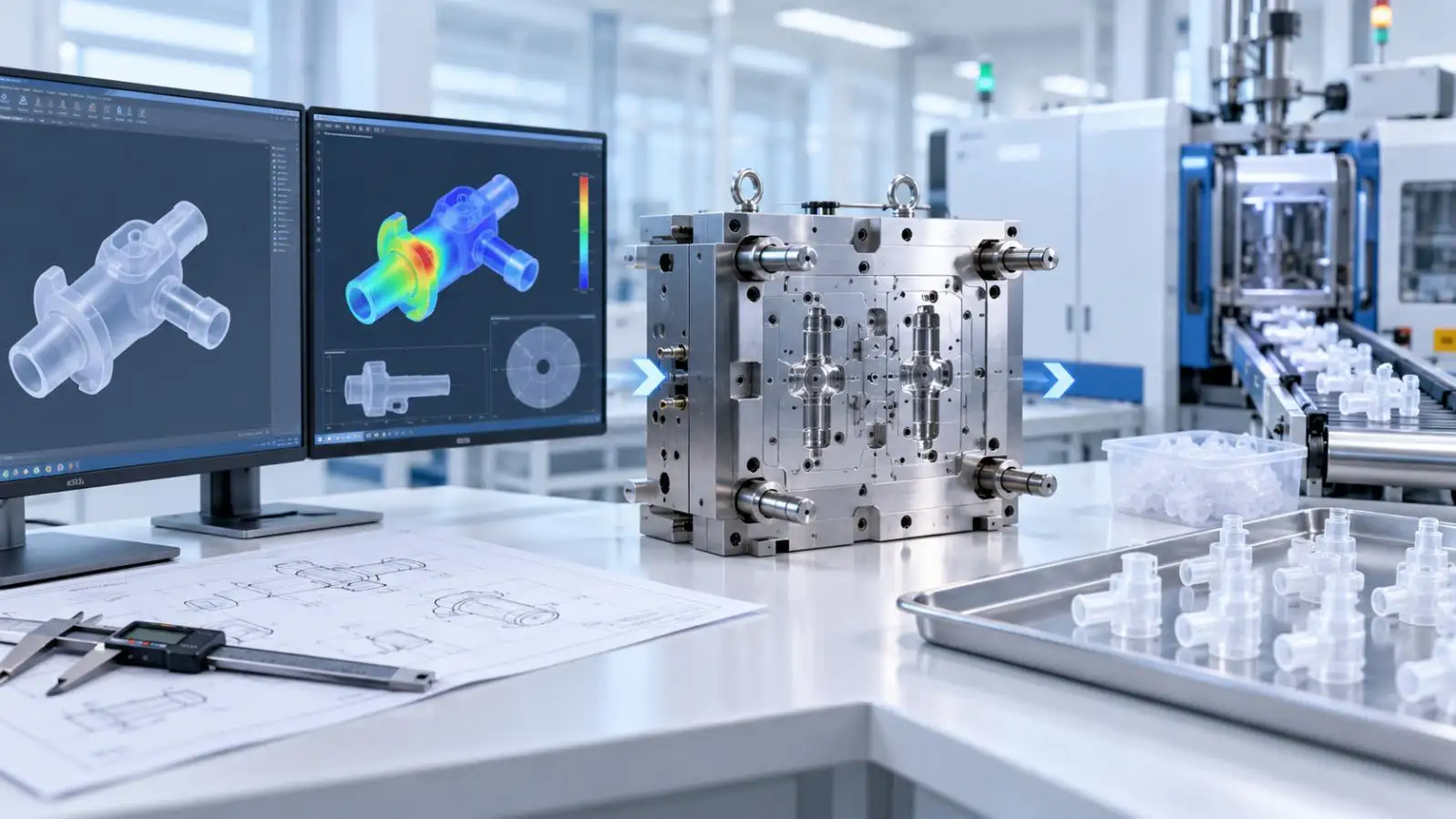
Table of Contents

- 1. Miniaturization Increases Precision Needed in Medical Plastic Injection Molding
- 2. Material Selection Is Becoming More Application-Specific
- 3. Process Consistency Is Becoming the Core of Medical Injection Manufacturing
- 4. Quality Management and Validation Are Critical Decision Factors in 2026
- 5. DFM Is Moving Earlier Into Medical Product Development
- 6. Balancing Efficiency and Quality in Medical Plastic Injection Molding
- Yijiang's Approach to Medical Plastic Injection Molding Development


Medical device manufacturing is entering a stage where Medical Plastic Injection Molding is no longer evaluated only by molding capability or production volume. For device developers, the critical questions have shifted toward: Can the material meet application requirements? Can the tooling maintain dimensional consistency? Can the process remain stable during long-term production? Can design decisions reduce manufacturing risks before tooling begins?
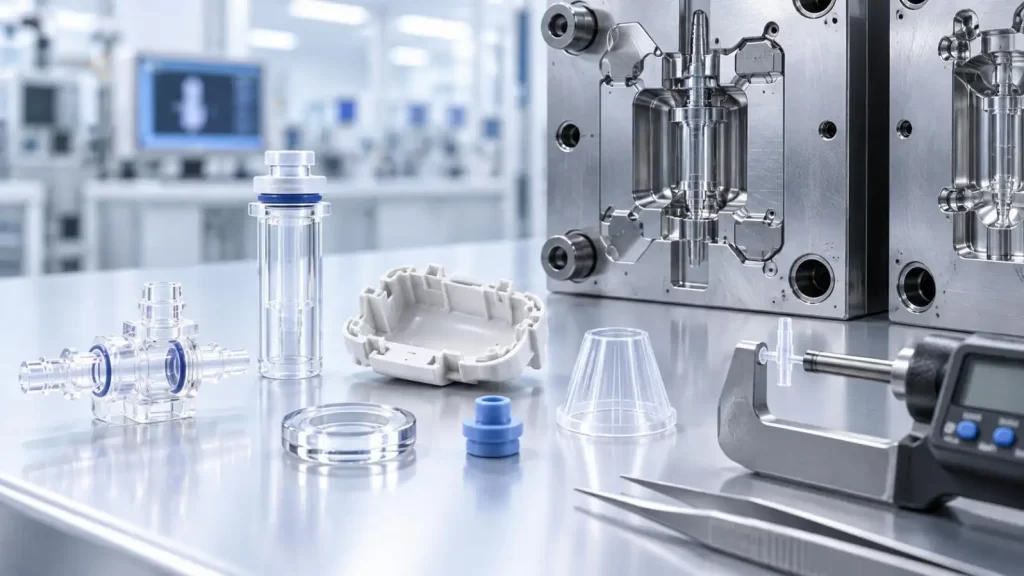
We observe some key engineering trends in Medical Plastic Injection Molding for 2026, including:
• Precision for smaller and more complex components
• Choosing materials based on application
• Maintaining stability and traceability of the production process
• Design for Manufacturing (DFM) process engagement happens early
• Balance of quality, cost, and production efficiency
For medical OEMs, all of the above patterns shift the focus from "making a plastic part" to "creating a reliable manufacturing process".
1. Miniaturization Increases Precision Needed in Medical Plastic Injection Molding
As medical devices get smaller, they tend to house more functions. An example of such devices is wearable medical devices, cartridge systems, fluid connectors, diagnostic housings and many others. These components require greater precision in control of the following:
• Critical dimensions
• Sealing interfaces
• Assembly interfaces
• Surface quality
• Part-to-part consistency
Though defining the smallest possible tolerance is not precision molding, identifying specific dimensions within a medical device that would impact the performance of the medical device most affects the success of the Medical Plastic Injection Molding process.
For example:
| Component Feature | Manufacturing Concern | Engineering Focus |
| Sealing area | Leakage risk | Dimensional stability and warpage control |
| Snap-fit structure | Assembly reliability | Material flexibility and tolerance control |
| Optical window | Visual performance | Surface finish and molding consistency |
| Thin-wall section | Filling difficulty | Gate design, flow balance, venting |
Yijiang approaches precision injection molding through mold design optimization, DFM review, and process evaluation. Based on its published injection molding capabilities, Yijiang supports dimensional control down to ±0.02 mm depending on part geometry, material characteristics, and project requirements.
The practical goal is not only high precision, but repeatable precision during continuous production.
2. Material Selection Is Becoming More Application-Specific
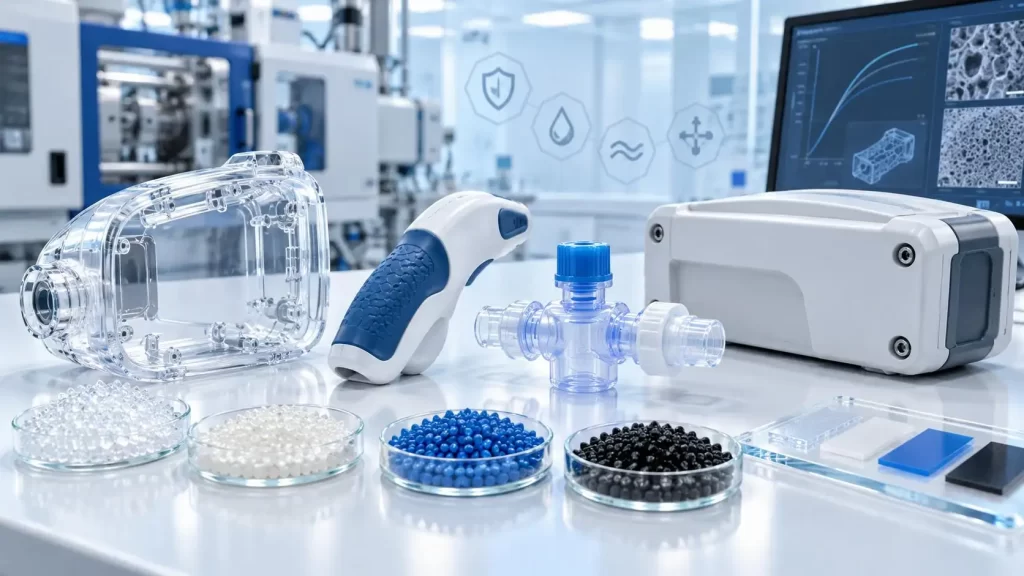
In Medical Plastic Injection Molding, component functionality largely depends on material performance. The resin varies with the anticipated use of the component, cleaning process, method of sterilization, and the component's exposure during its service life.
Engineers assess:
• Chemical resistance,
• Mechanical strength,
• Transparency,
• Temperature resistance,
• Sterilization,
• Long-term dimension stability.
Different medical applications place differing demands on the materials:
| Application | Required Performance | Key Material Considerations |
| Diagnostic equipment housing | Strength and durability | Impact resistance, chemical exposure, dimensional stability |
| Transparent medical components | Optical clarity | Resin transparency, surface quality, flow marks |
| Flexible medical grips | Comfort and elasticity | Material bonding and mechanical durability |
| Fluid handling components | Chemical resistance | Media compatibility and long-term stability |
At Yijiang, material selection is done in tandem with part design and molding conditions. The obligatory material should always be the resin grade that meets the application requirements and test specifications, even if the general material properties support the selection.
3. Process Consistency Is Becoming the Core of Medical Injection Manufacturing
As medical products increase production volumes, consistency of processes becomes as important as molding speed.
A process for Medical Plastic Injection Molding must account for multiple variabilities. These variabilities include, but are not limited to:
• Injection pressure
• Mold temperature
• Cooling time
• Drying conditions
• Maintenance
• Frequency of inspection
Automation uses a variety of techniques to improve repeatability including:
• Automated part handling
• Vision inspection
• Data collection
• Tracking of batches
Increasing automation has tradeoffs, such as designing a multi-cavity mold, which improves output. However, this can pose challenges depending on the balance of:
• Cavity filling
• Differences in mold wear
• Inspection of parts
The optimal balance depends upon the quantity of parts, their complexity, and the requirements for quality.
4. Quality Management and Validation Are Critical Decision Factors in 2026
For medical device manufacturers, supplier evaluation is increasingly focused on process reliability rather than only sample approval.
A qualified Medical Plastic Injection Molding process should answer three different questions:
1. Can the part be produced correctly?
This involves:
• Mold capability
• Material processing
• Dimensional inspection
2. Can production remain stable?
This is brought about by:
• Process monitoring
• Defect control
• Constant process conditions
3. Can the process satisfy customer validation criteria?
This may involve:
• IQ (Installation Qualification)
• OQ (Operational Qualification)
• PQ (Performance Qualification)
• Change management records
Yijiang strives to facilitate engineering communication while products/services are being developed and help customers analyze the feasibility of the requested tools, molds and the production of the required parts. Specific medical validation requirements are associated with the classification of the product and the expectations of the regulating authorities.
5. DFM Is Moving Earlier Into Medical Product Development
The most notable change in the Medical Plastic Injection Molding field is the importance of early manufacturing participation.
A design that performs well in a CAD simulation may still create production challenges.
Common DFM review concerns are:
• Uneven wall thickness
• Insufficient draft angle
• Poorly designed ejection
• Poor gate placement
• Complicated assembly
• Unmanaged tolerance stack
Early DFM review helps designers and manufacturers take better informed decisions when they are about to make an investment in tooling.
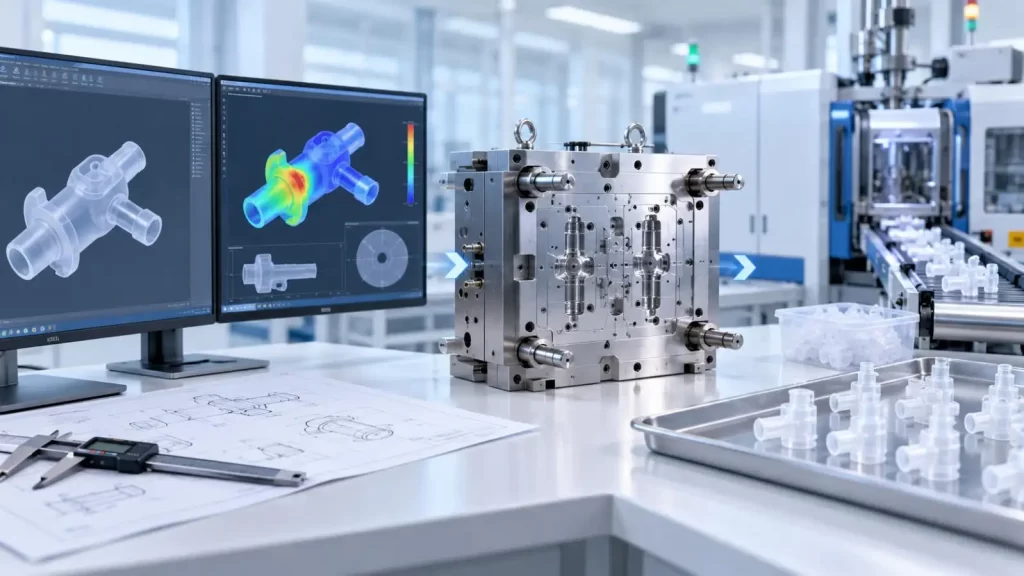
Yijiang integrates:
• 3D design review
• DFM feedback
• Mold design
• Tooling development
• Tooling assessment
This integrative approach helps in identifying molding risks well in advance and in easing the transition from prototype to production.
6. Balancing Efficiency and Quality in Medical Plastic Injection Molding
The assumption that a lower manufacturing cost auto-correlates with a shorter product cycle time is not entirely accurate in medical applications. In medical applications, process stability is most important and not maximum production speed.
Manufacturers need to balance:
| Optimization Target | Potential Benefit | Possible Risk |
| Faster cycle time | Higher output | Increased defects if process window is reduced |
| More cavities | Lower unit cost | Higher mold balancing requirements |
| Reduced material usage | Lower consumption | Possible strength reduction |
| Fewer components | Easier assembly | More complex tooling |
The best manufacturing strategy considers total production performance rather than a single cost factor.
Yijiang's Approach to Medical Plastic Injection Molding Development
With more than 30 injection molding machines and a clamping force range from 50 to 2500 tons, Yijiang provides injection molding solutions covering prototype development, tooling, trial production, and volume manufacturing.
Its published capabilities include:
• Precision injection molding with dimensional control up to ±0.02 mm depending on project conditions
• Plastic injection molding
• Insert molding
• Overmolding solutions
• Mold design and manufacturing support
• DFM analysis before production
These capabilities allow medical device teams to begin discussing manufacturability, tooling, and production at an early stage.
Conclusion
For Medical Plastic Injection Molding, the future is where design engineering, materials science, tooling, and process control become more integrated. For 2026, winning medical manufacturing is about producing components and developing stable and repeatable production systems.
Analyzing design specifications and choosing the right materials while addressing tolerances and the manufacturing process early on should decrease the risks associated with the development process and increase how ready the production process is.
To understand more about how Yijiang looks at the development of injection molding, tooling, and production support, you can review the capabilities and then call about your specific project that outlines the parts, materials, and whether or not manufacturing is involved.
FAQs
Q1. What Medical Plastic Injection Molding services does Yijiang provide?
Yijiang offers full services for injection molding, from mold design to production. Their services include plastic, insert, and overmolding.
Q2. What is the levels of precisions can Yijiang achieve for injection molded parts?
Yijiang's injection molding service can achieve dimensions controlled to ±0.02mm, depending on part geometry, material, and service requirements. The final tolerances are determined by the part function and the conditions under which it is made.
Q3. How many injection molding machines does Yijiang have?
Yijiang has more than 30 injection molding machines with clamping forces from 50 to 2,500 tons, which can be used for parts of different sizes and for different production requirements.
Q4. Is it possible for Yijiang to make changes to medical plastic part designs to improve them for production?
Yes, Yijiang offers design services for medical plastic parts. They can perform a 3D design review and DFM analysis to help find issues related to part design, such as wall thickness, draft angles, gating, ejection, and assembly.
Q5. Can Yijiang perform overmolding and insert molding?
Yes, Yijiang can perform overmolding and insert molding. Both of these techniques can help create parts with multiple materials or components with less overall parts, which can increase the functionality of the final product.
- PREV: Null
- NEXT: Null

Yijiang is a professional custom manufacturing partner specializing in large-scale injection molding and precision mold development. We support global clients in automotive,
in large-scale injection molding and precision mold development. We support global clients in automotive,


Get a quote from the China’s #1 CNC Machining Services.
Ready to get started? Connect with us today!
 Talk to Our Team