Large Plastic Housing Injection Molding: Controlling Warpage and Assembly Gaps

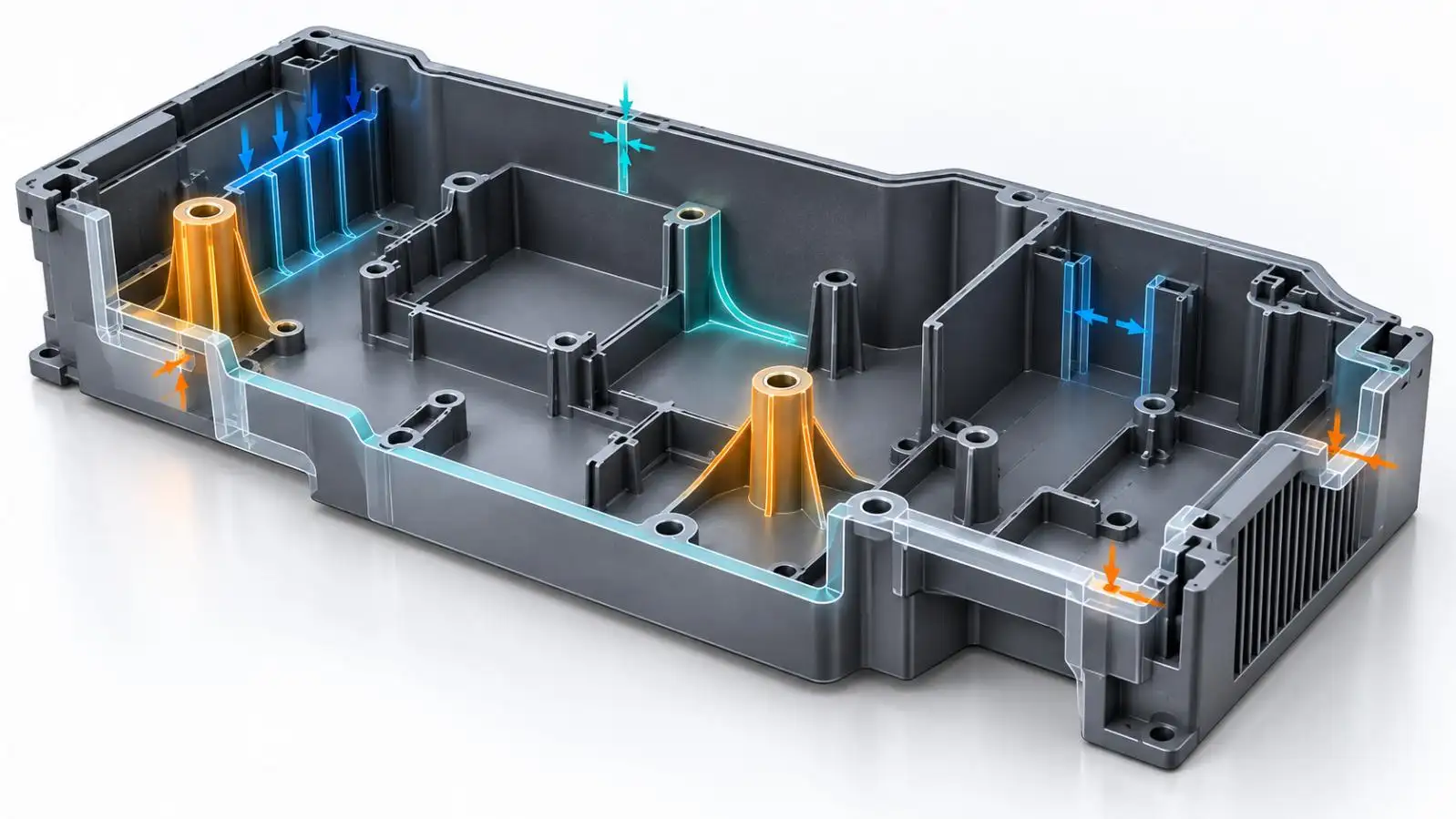
Table of Contents

- Understand the Mechanisms Behind Housing Warpage
- Diagnose Assembly Gaps Before Selecting a Correction
- Design Large Plastic Housing Injection Molding Parts Around Assembly Requirements
- Potential Tooling, and Process Solutions for the Root Cause
- Validate Production Consistency
- Yijiang's Manufacturing and Design Support


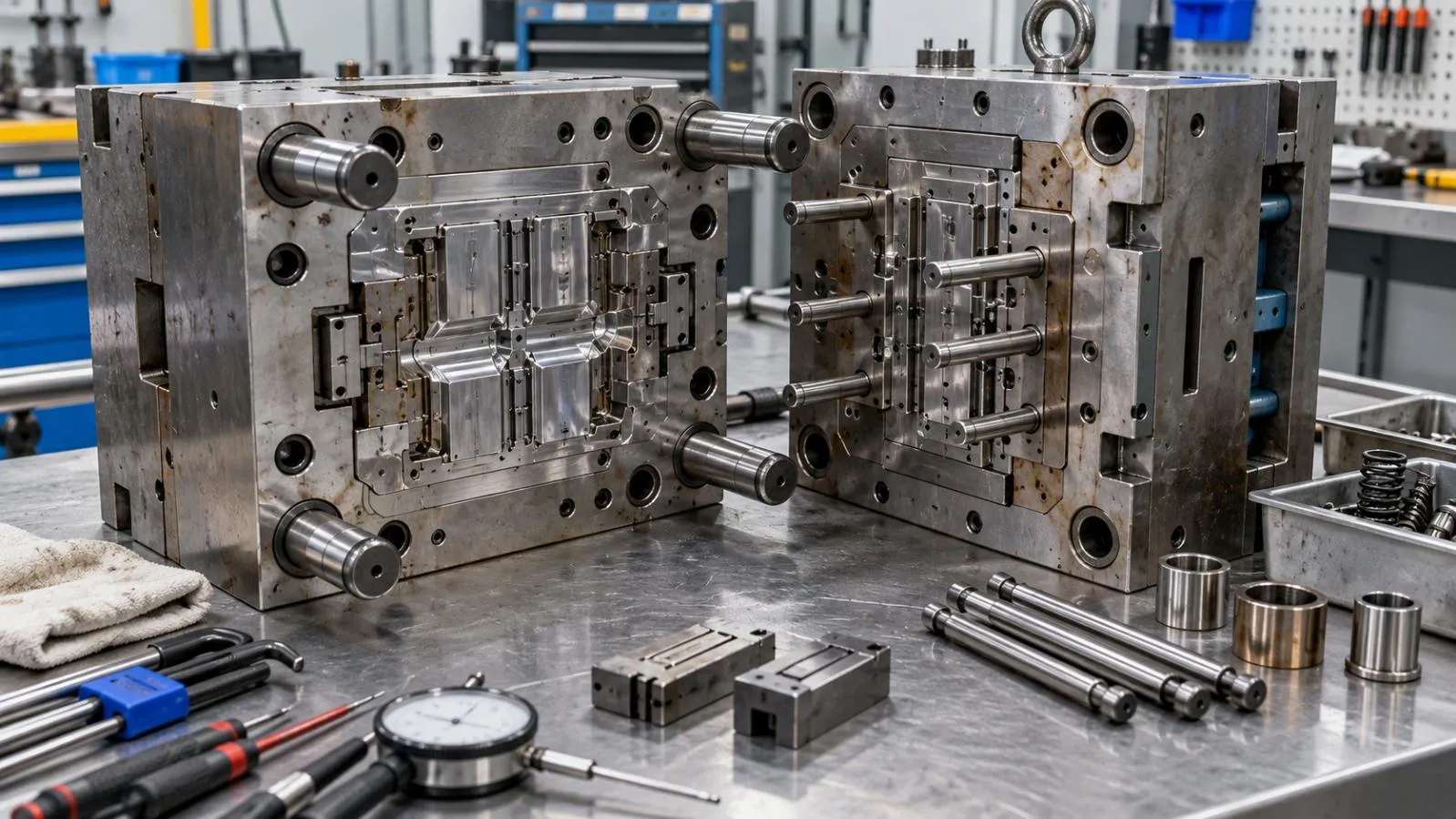
In Large Plastic Housing Injection Molding, an uneven assembly seam can originate in the molded housing, its mating component, or the fastening arrangement. Correcting the mold before separating these causes can add tooling cost without resolving the fit problem.
At Yijiang, our approach combines design, mold, process and assembly control. Our goal is a flat first sample that can be repeated as a production part with defined fit and functionality.
Understand the Mechanisms Behind Housing Warpage
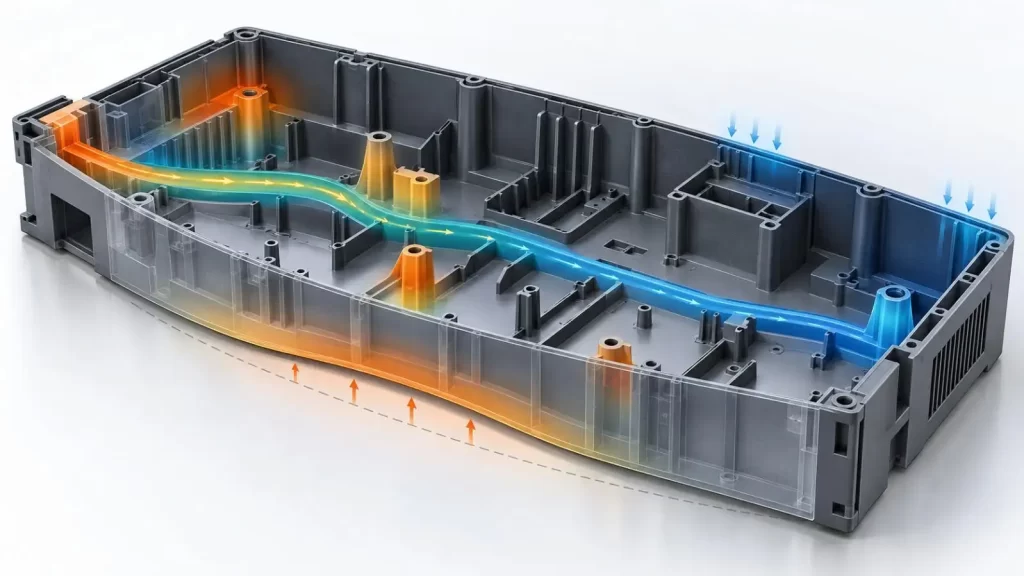
Warpage starts at components where there are variating levels of residual stress and contraction. This is more evident on larger panels, greater lengths of flow, deeper sidewalls and concentrated mounting features.
Differential Shrinkage and Packing
Thick sections which cool and solidify at a different rate from adjoining thin sections cause large differential shrinkage. Remote sections of a component can also suffer from inadequate packing due to pressure losses over long flow paths.
An increase of holding pressure above the machine packing in some cases, may help to “over pack” the area. Consideration should be given to the location of the gate, size of the gate, wall thickness, and how long the mold was packed for.
Cooling Imbalance and Material Orientation
Temperature differences between the core and cavity can produce through-thickness shrinkage differences. Local hot spots around bosses and deep features further distort the housing.
Glass-fiber reinforcement introduces another consideration: shrinkage differs along and across fiber orientation. Higher stiffness does not automatically produce lower warpage. Autodesk identifies differential shrinkage, cooling, and orientation as distinct contributors to molded-part deflection. Autodesk technical guidance
Diagnose Assembly Gaps Before Selecting a Correction
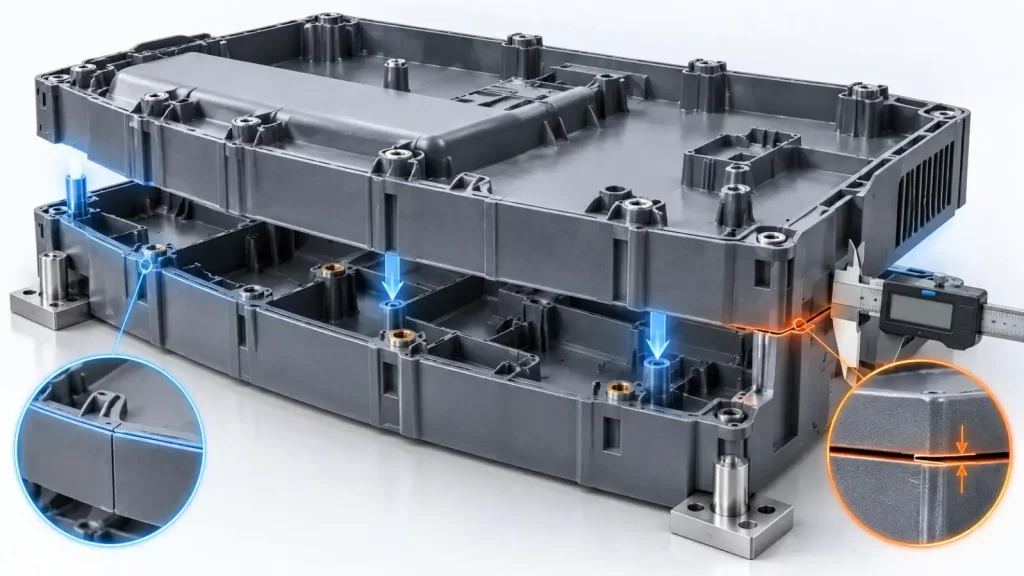
For Large Plastic Housing Injection Molding, compare the component before fastening, during assembly, and after conditioning.
| Symptom | Working Hypothesis | Verification | Correction Direction |
| Long edge bows before assembly | Cooling or shrinkage imbalance | Measure free-state profile using defined supports | Review cooling, packing, and geometry |
| Acceptable individual parts produce excessive gaps | Tolerance accumulation or datum mismatch | Analyze the mating-part dimensional chain | Reallocate tolerances and align datums |
| Seam changes during tightening | Boss-height mismatch or local flexibility | Control torque and fastening sequence | Revise mounting features or assembly method |
| Fit changes after storage or heating | Post-shrinkage, moisture, or thermal expansion | Repeat measurements after specified conditioning | Review material and movement allowance |
Treat these as testable hypotheses. Similar-looking defects can have different causes.
Design Large Plastic Housing Injection Molding Parts Around Assembly Requirements
Control Thickness Without Creating Weak Panels
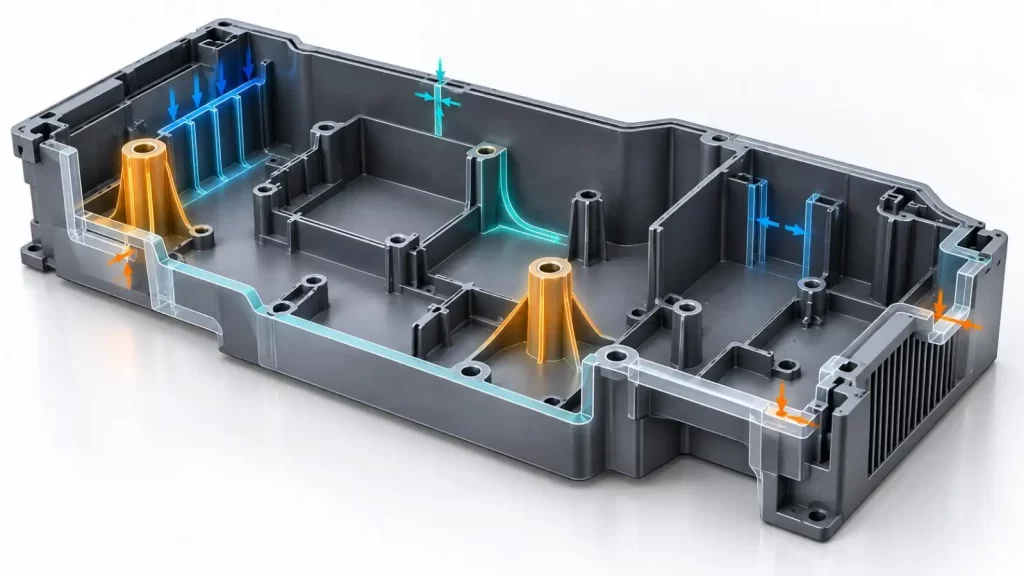
Use reasonably uniform nominal walls, gradual transitions, and cored mounting bosses. Position ribs to support actual loads and critical mating edges.
Simply thickening a rib can introduce a hot spot and increase differential shrinkage. Evaluate rib geometry against stiffness, filling, cooling, and appearance requirements.
Separate Gap, Flushness, and Profile Requirements
A single overall dimensional tolerance cannot describe housing fit.
We need:
•Datums: Datums are the things that locate the housing during both inspection and installation.
•Surface Profile: Variations that are allowed along critical mating edges.
•Gap: The space between two adjacent elements.
•Flushness: Height differences that are relative to a seam.
•Seating Surfaces: Boss heights, and hole positions.
For a simple linear stack, worst-case tolerance analysis is utilized. Statistical methods assume a process is self-contained with known distributions, as well as other elements.
Criteria for Selection of Materials by Grade and Service
Shrinkage, stiffness, impact resistance, moisture absorption, and the operating temperature range should be considered for resin grades.
In the case of plastic contacting metal, differential expansion must be considered. Where movement is permitted, slots, or attachments that are not fixed to a frame, can accommodate the movement. Sealing interfaces must be controlled.
Potential Tooling, and Process Solutions for the Root Cause
Large Plastic Housing Injection Molding requires process adjustments with defined objectives.
| Control | Engineering Purpose | Verification and Limitation |
| Gate and runner layout | Improve filling and packing distribution | Check weld lines, pressure loss, and orientation |
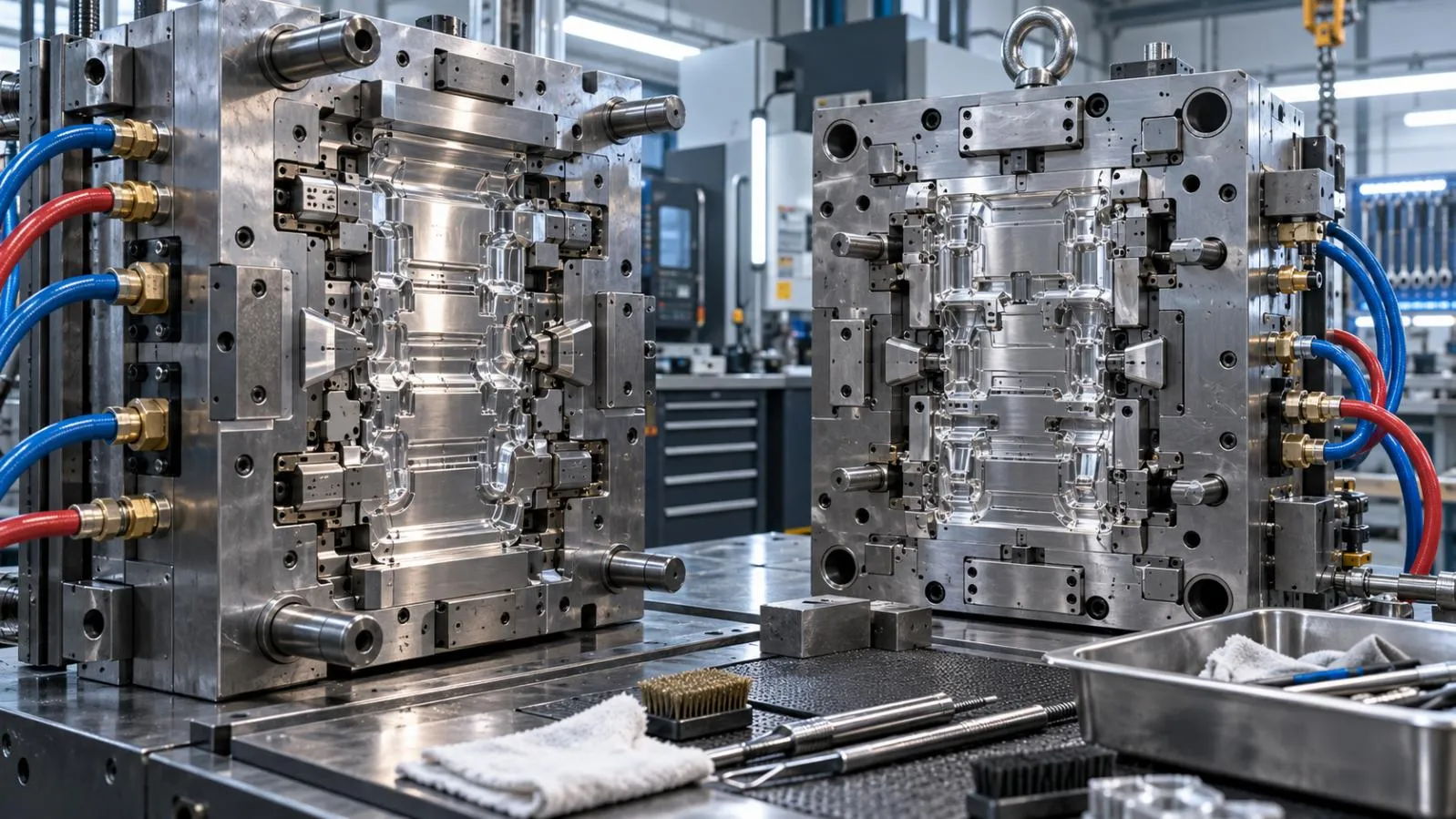
| Cooling circuit balance | Reduce regional and core-to-cavity temperature differences | Check actual flow and temperatures; longer cooling alone may not remove imbalance |
| Packing profile | Compensate shrinkage before gate freeze | Use part-weight stabilization to support gate-freeze assessment; weight alone does not prove uniform packing |
| Ejection and handling | Limit distortion while the housing remains warm | Check release forces, support locations, and transfer conditions |
| Process simulation | Compare filling, cooling, and deformation alternatives | Validate predictions against trial measurements |
Avoid using screw tightening to pull a distorted housing into acceptance. Doing so can introduce sustained stress, uneven gasket compression, and sensitivity to creep.
Validate Production Consistency
A repeatable measurement method is essential in Large Plastic Housing Injection Molding.
•Define conditioning time, temperature, humidity, support points, and measurement datums.
•Inspect both free-state geometry and the specified assembled condition.
•Record gap and flushness at repeatable locations.
•Sample across relevant production periods and material batches.
•Confirm that packaging and stacking do not deform warm or unsupported panels.
Before reporting process capability, establish measurement-system suitability and process stability. An acceptable average gap can conceal excessive variation.
Yijiang's Manufacturing and Design Support
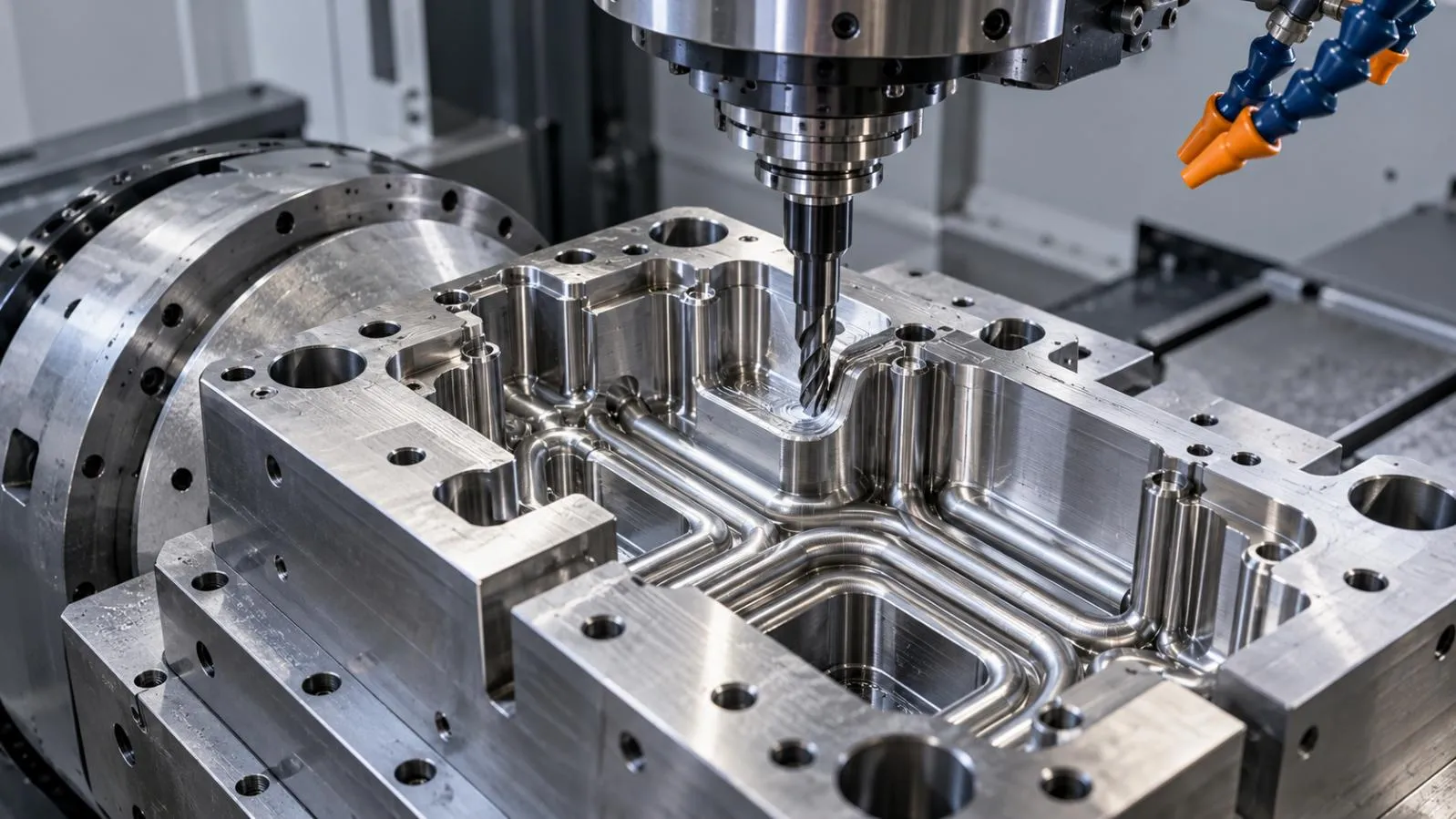
At Yijiang, we provide DFM review, high-rigidity mold development, optimized runners, balanced cooling, parameter control, and dimensional and assembly inspection.
Our large-part capabilities include:
| Parameter | Value | Interpretation |
| Maximum part length | 2,500 mm | Subject to project feasibility |
| Part weight range | 5–120 kg | Dependent on geometry, material, and tooling |
| Thickness control | ±0.2 mm | A thickness figure, not a universal profile or assembly-gap tolerance |
These figures describe our capabilities; project acceptance criteria require a drawing-specific review. Yijiang large and extra-large injection molding capabilities
For your next Large Plastic Housing Injection Molding project, share your housing drawings, mating-part geometry, resin requirements, and target gaps with Yijiang. We can review the design and manufacturing priorities early, helping establish a practical path toward consistent assembly fit.
FAQs
Q1. What types of large plastic housings does Yijiang offer?
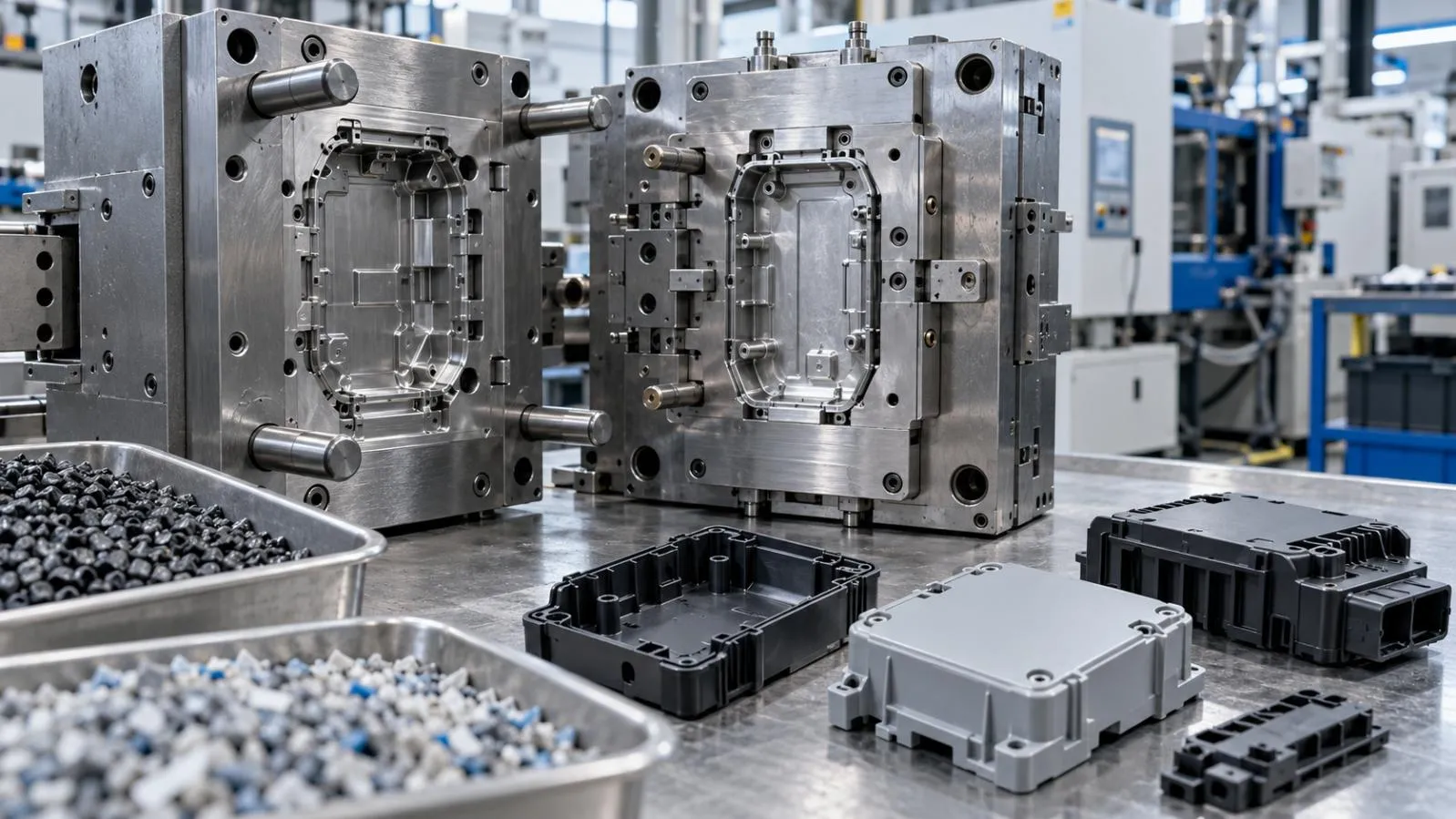
Yijiang supports applications including large TV housings, industrial equipment casings, protective covers, and automotive components. Project suitability depends on part geometry, material, tooling requirements, and production volume.
Q2. What size and weight ranges does Yijiang offer for large injection-molded parts?
Yijiang offers a maximum part length of 2,500 mm and a part weight range of 5–120 kg. These figures require project-specific evaluation and should not be interpreted as achievable simultaneously for every design.
Q3. What manufacturing precision does Yijiang specify for large plastic housings?
Yijiang offers ±0.2 mm thickness control for its large-part service. Those requirements should be agreed against the product drawing.
Q4. How does Yijiang address warpage in Large Plastic Housing Injection Molding?
Yijiang describes an approach combining high-rigidity molds, optimized flow layouts, balanced cooling, and controlled molding parameters. The appropriate correction depends on whether deformation originates from geometry, material behavior, cooling, packing, or demolding.
Q5. Can Yijiang review a housing design before mold manufacturing?
Yes. Yijiang offers DFM review to identify potential filling, cooling, warpage, and demolding risks. Providing mating-part geometry and critical assembly requirements helps make the review more useful.
- PREV: Null
- NEXT: Null

Yijiang is a professional custom manufacturing partner specializing in large-scale injection molding and precision mold development. We support global clients in automotive,
in large-scale injection molding and precision mold development. We support global clients in automotive,


Get a quote from the China’s #1 CNC Machining Services.
Ready to get started? Connect with us today!
 Talk to Our Team