Injection Mold Design Services for Multi-Cavity Molds: Achieving Balanced Filling


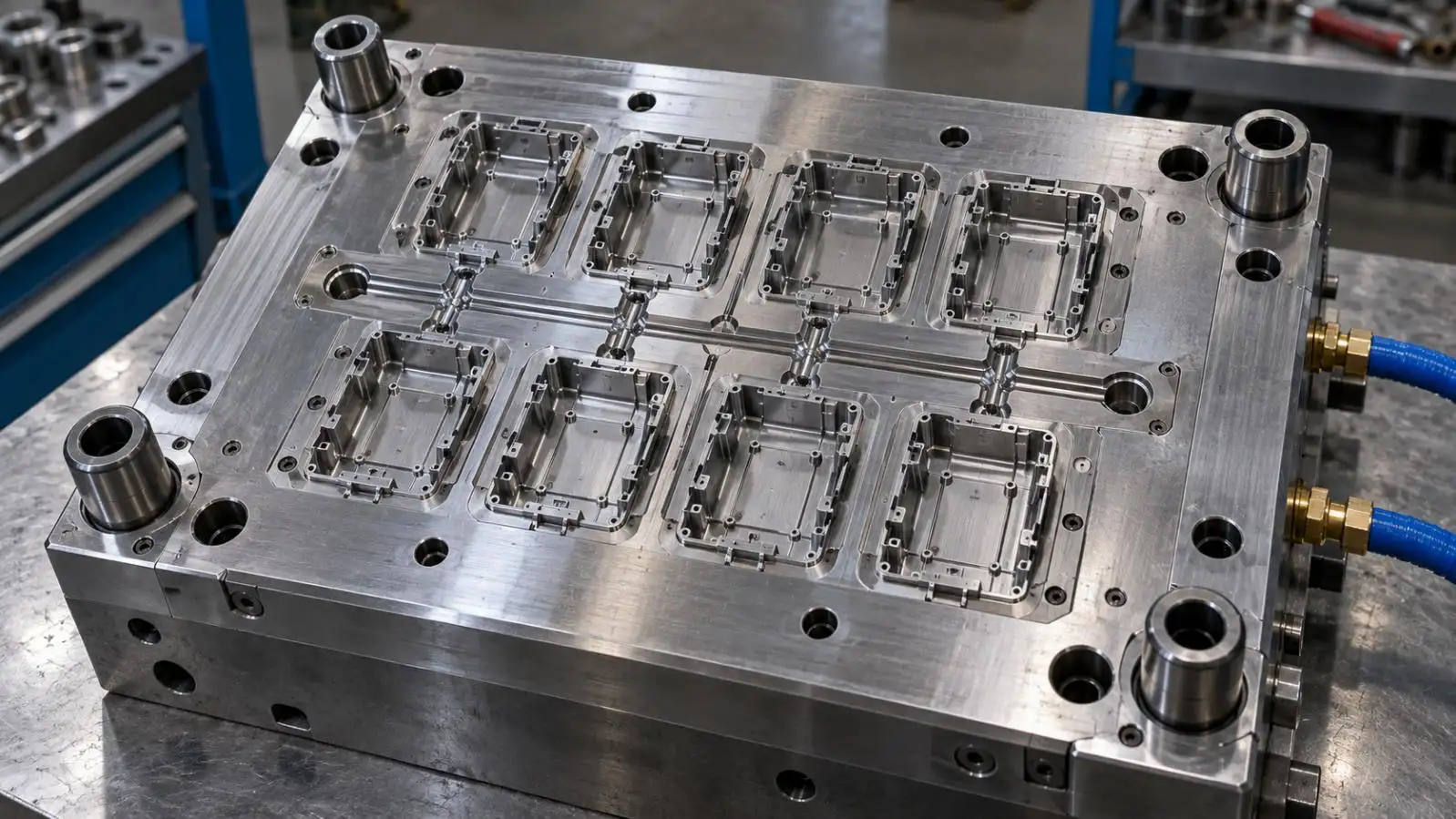

Multi-cavity molds produce multiple parts per shot. One of the issues with this is inconsistent quality. One cavity may short-shot. In that case, another cavity will get flash or excess stress or even dimensional drift.
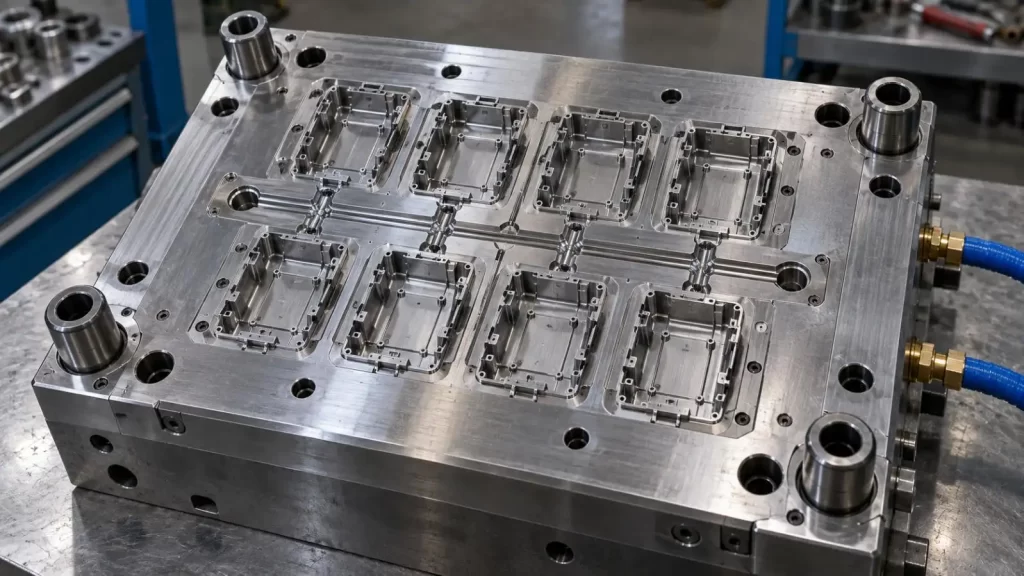
Yijiang integrates mold development with manufacturing and testing. With multi-cavity molds, Injection Mold Design Services tackles three issues together. The three are: balanced filling, controlled packing and consistent cavity-to-cavity quality. The number of cavities is economical only when the number of parts produced is also increased.
Establishing Cavity Count and Machine Requirements
Calculate Acceptable Output
An initial capacity estimate is:
Good parts/hour = cavities × 3,600 ÷ cycle time in seconds × utilization × yield
Adding cavities can increase tooling cost, shot size, cooling demand, and maintenance. The economic comparison should therefore include cycle time and scrap, rather than assuming that twice the cavities will double usable output.
Check the Complete Machine Envelope
Injection Mold Design Services should consider the following during part design:
•Shot Capacity: The volume of parts and cold-runner, leaving sufficient margin for normal operation.
•Injection rate and pressure: Sufficient to fill the mold in the required time.
•Plasticizing capacity: Resin to be recovered in the cycle.
•Clamping demand: Total projected area and the anticipated cavity pressure.
•Physical fit: Platen dimensions, tie-bar spacing, mold height, and ejection stroke.
Clamping force alone does not establish compatibility. Identical-part molds and family molds also require different analysis: dissimilar family-mold components may have substantially different flow resistance and packing requirements.
Distinguishing Geometric Balance from Melt Balance
Equal-length and equal-diameter runners help balance nominal flow resistance. They do not guarantee that all cavities receive melt at the same temperature or viscosity.
Uneven heating in the shear zone results in uneven melting, causing asymmetric filling on a runner. This can create filling behavior that is the opposite of expected behavior from a symmetric filling design at branches. Shear-induced unevenness is documented by Autodesk.
Professional Injection Mold Design Services should learn to differentiate between:
•Filling Balance: Stages in the filling process of all cavities.
•Packing Consistency: Pressure transmission to every cavity before freezing of the gate.
•Product Consistency: Quality of produced goods from all cavities.
•Molds can have similar filling times and different packing and shrinkage.
Comparing Runner and Gate Systems
Injection Mold Design Services will have to select the balancing system based on the resin and economic considerations and the requirements of the component.
| Strategy | Engineering Purpose | Main Trade-Off | Verification |
| Geometrically balanced runners | Balance flow length and nominal resistance | May have melt-state differences | Flow behavior and filling sequence |
| Runner or gate resizing | Adjusts local flow resistance | Shear, gate freeze, and packing | Pressure loss and dimensions |
| A hot runner system | Decreases runners and controls melt flow | Investment, maintenance, and residence-time concerns | Nozzle temperatures and filling uniformity |
| Melt-distribution optimization | Addresses melt unevenness caused by branches | Requires design work specific to the material | Reliability during process variation |
Hot runners do not ensure balance because manifold design, temperature control, and the behavior of the resin still matters, as documented by Mold-Masters.
Gate selection also offers some influence over the final product. The position of the gate helps to control flow length, weld lines, and appearance. Also, gate cross-section and land length help to control pressure loss and freeze-off. An increase in gate size can adversely affect packing.
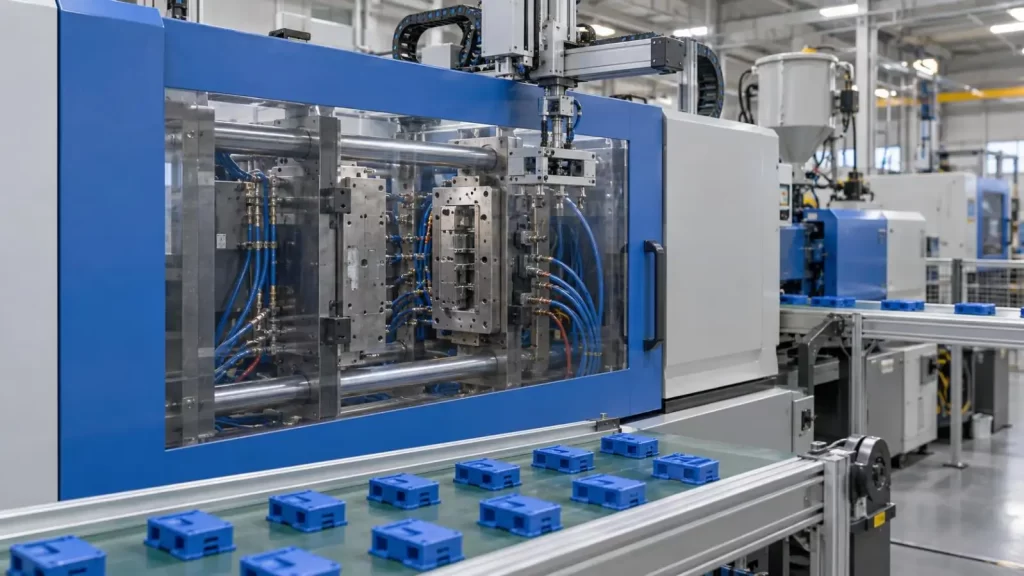
Integrating Cooling, Venting, and Material Data
Thermal Consistency
When considering cavity-region temperatures and coolant flow, uniform heat removal cannot be guaranteed with identical controller settings. Tempthered cooling can create local variations in flow, shrinkage, and the release characteristics of the part.
Venting and Tooling Consistency
Review last-to-fill area and potential air traps. The dimensions of the vents have to be adequate for the resin and operating conditions. Adequate access for maintenance must be designed into the vents. Gate wear, blocked vents and variation of the inserts can create imbalance after the parts are produced.
Grade-Specific Material Behavior
When providing Injection Mold Design Services, the recommended resin grade and type of reinforcement, if any, should be indicated. Generic names of materials cannot describe the behavior of the resin, viscosity, shrinkage and its temperature sensitivity. The drying and conditioning of the resin should be consistent with the trials.
Validating Balance with Cavity-Level Evidence
Simulation is a design tool; acceptance requires evidence from the manufactured mold.
| Stage | Required Evidence | Engineering Decision |
| Simulation | Filling, pressure, temperature, packing, and cooling results | Identify risks before machining |
| Short-shot study | Cavity-numbered filling progression with packing influence controlled | Evaluate actual flow distribution |
| Packing study | Part weight versus hold time, assessed by cavity | Investigate gate sealing and packing differences |
| Dimensional inspection | Critical dimensions, warpage, and appearance by cavity | Confirm drawing compliance |
| Process-window trial | Repeated results across agreed settings | Assess production robustness |
The velocity-to-pressure transfer point deserves particular attention: early-filling cavities may already be pressurized while lagging cavities remain incomplete.
Finished-part weight alone cannot prove balanced filling. Any reported imbalance percentage should identify its calculation, sampling conditions, and acceptance criteria. Injection Mold Design Services should deliver design assumptions, tooling specifications, agreed analysis, trial records, and documented corrections.
Yijiang's Design-to-Production Capabilities
At Yijiang, we connect 3D-file review and DFM where needed with mold design, manufacturing, and initial trials. Our injection molding capabilities include:
•30+ injection molding machines.
•50–2500 tons of clamping force.
•Tolerance capability of ±0.02 mm.
•Rapid tooling and production-mold support.
These resources help in the development and construction of tools and machines for designing product geometry. The provided ±0.02 mm figure is indicative of a capability. Tolerances are determined after verification of the specific resin, the geometry and the size of the feature, and the type of inspection used.
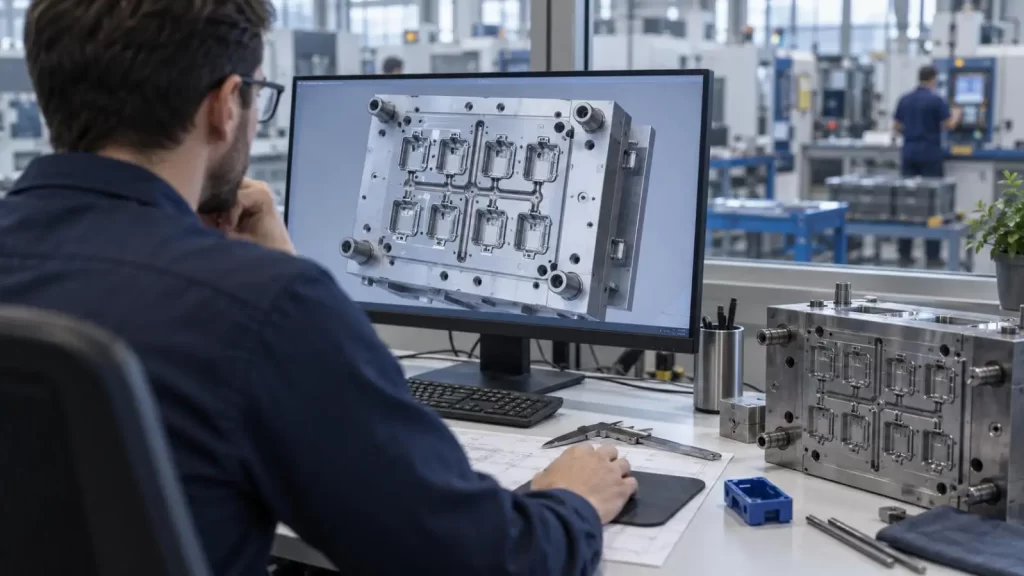
The objective of our Injection Mold Design Services is to ensure uniform output from every cavity. Please send your 3D files, resin grade, critical tolerances, and production quantity to Yijiang for discussing a feasible approach to mold development and validation.
FAQs
Q1. What do Yijiang's Injection Mold Design Services include?
Yijiang's published workflow includes 3D-file review, DFM analysis where needed, mold design and manufacturing, initial molding trials, and production. Project-specific deliverables should be defined during the technical review.
Q2. What information should I provide for a multi-cavity mold inquiry?
Share your 3D CAD files, resin grade, critical dimensions, tolerance requirements, annual demand, and expected order quantities. Include existing machine specifications and appearance requirements where available.
Q3. Can I discuss a multi-cavity mold project with Yijiang?
Yes. You can submit your component design and production targets for review. Confirm the proposed cavity count, runner system, balancing analysis, and trial requirements with Yijiang before approving the tooling scope.
Q4. What manufacturing precision does Yijiang offer?
Yijiang offers a tolerance capability of ±0.02 mm. Achievable tolerances depend on the resin, part geometry, feature dimensions, and molding conditions, so critical requirements need project-specific confirmation.
Q5. What injection molding equipment does Yijiang have?
Yijiang has more than 30 injection molding machines with clamping forces ranging from 50 to 2500 tons. Machine selection should also consider shot capacity, injection rate, mold dimensions, and plasticizing requirements.
- PREV: Null
- NEXT: Null

Yijiang is a professional custom manufacturing partner specializing in large-scale injection molding and precision mold development. We support global clients in automotive,
in large-scale injection molding and precision mold development. We support global clients in automotive,


Get a quote from the China’s #1 CNC Machining Services.
Ready to get started? Connect with us today!
 Talk to Our Team