Home » High-Tonnage Plastic Injection Molding with Recycled Plastics: Opportunities and Processing Challenges
High-Tonnage Plastic Injection Molding with Recycled Plastics: Opportunities and Processing Challenges


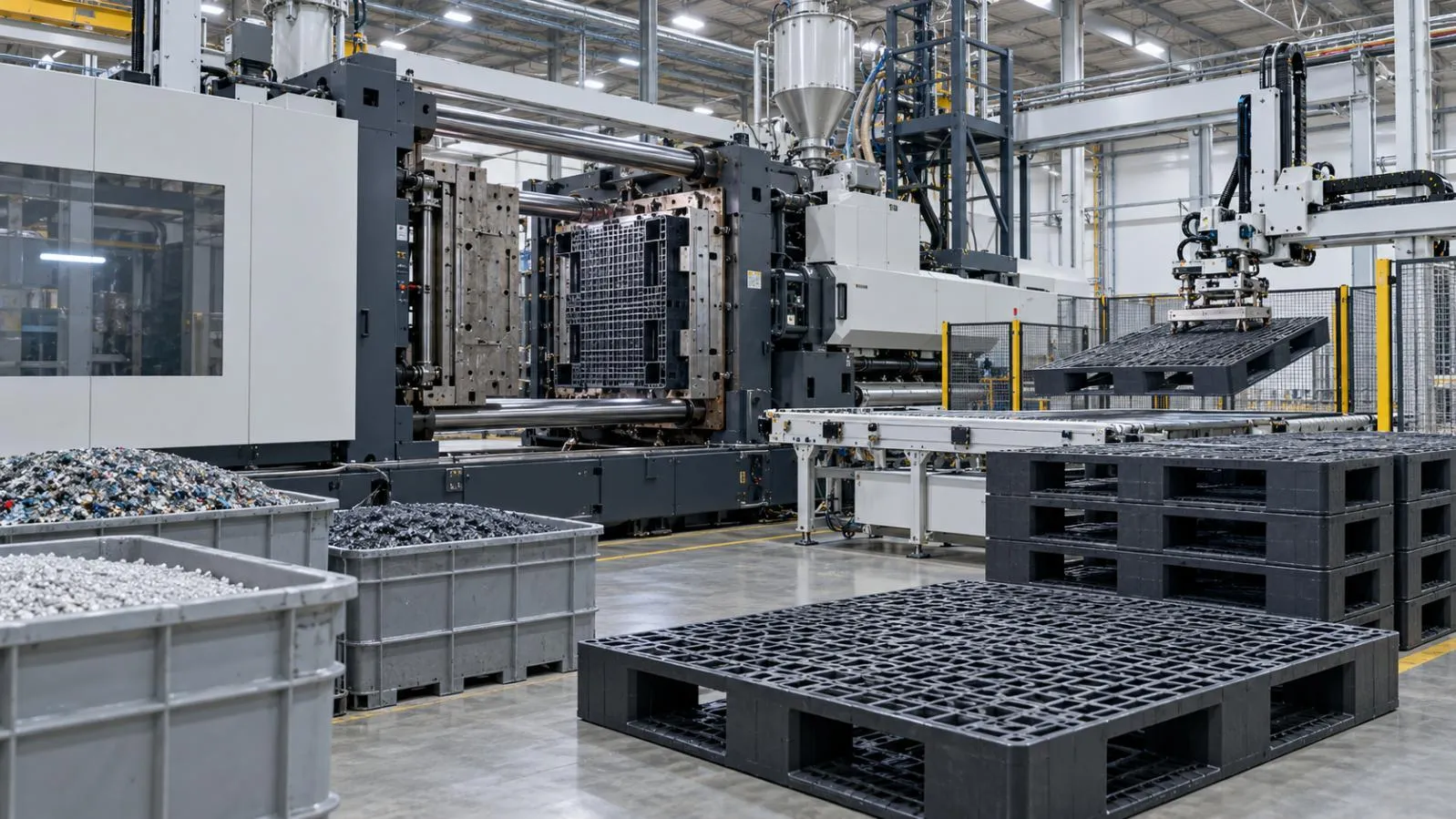

A recycled polypropylene pallet passes its first molding trial, but the next resin batch produces warped corners and partially filled reinforcing ribs. Injection pressure increases, part weight fluctuates, and the original processing settings no longer produce acceptable parts.
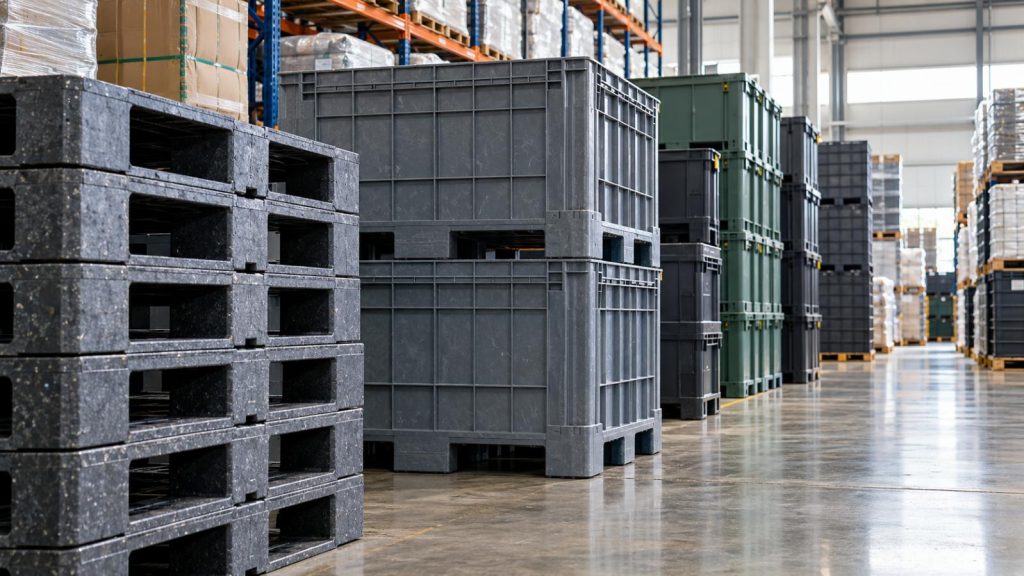
Such problems expose a critical limitation of High-Tonnage Plastic Injection Molding with recycled plastics: sufficient clamping force does not guarantee consistent filling, packing, or dimensional stability.
For large industrial components, recycled resin must be evaluated as part of the complete molding system—not simply substituted for virgin material.
Which Recycled Plastics Are Suitable for Large Injection-Molded Parts?
Industrial pallets, storage containers and equipment housings can be fabricated with rPP or rHDPE.
Even with their potential use in these components, a final material decision depends on the service conditions of the part and uniformity of feedstock.
Of the two materials, PIR is more consistent. Because it is sourced from controlled production streams, a supplier may be able to provide more information on processing. On the other hand, PCR may be more of a lot-to-lot variability, and differences in processing, if any, may not be detectable.
These differences can be significant.
Using rPP as an example, the presence of certain charge materials in a PCR charge can negatively affect the morphology and mechanical properties of rPP.
In components:
•Mechanical: This includes fatigue and fracture.
•Physical: This includes the limits of shrinkage, residual stress and assembly/mating tolerances.
•Environmental: Service and use conditions.
A recycled polymer blend may be unacceptable for pallet trucks, but may be acceptable for other components of a pallet.
Why Melt Flow Rate Alone Cannot Predict Moldability
Melt flow rate (MFR) is commonly used to screen recycled polyolefins. However, two batches with similar MFR values can behave differently inside a large injection mold.
MFR testing is done in a controlled environment. Actual injection molding contains variations of cooling, pressure, and shear rate. MWD, the polymer's composition, and fillers effect the test results. Improving MFR increases the polymer's ability to flow, but may decrease the polymer's mechanical properties.
Thermal degradation may increase MFR and reduce impact strength.
For High-Tonnage Plastic Injection Molding, it is necessary to test the materials beyond what is provided by the supplier's MFR.
| Potential Production Defects | Material Concern | Verification Method |
| Short Shots | Variable melt viscosity | MFR testing and rheology |
| Weak Weld Lines | Mixed polymer fractions | FTIR, DSC, mechanical testing |
| Shrinkage and Warpage | Variable mineral content | Ash and Density measurements |
| Embrittlement and Loss of Ductility | Oxidation and Thermal Degradation | Impact and other mechanical tests and thermal testing |
| Splay and Molecular Weakness | Moisture content, recycled resins | Determination of moisture content, and drying |
Apparent differences in MFR should not indicate changes in the polymer. The differences may be due to deficiencies in the testing procedure.
How Do Recycled Resins Affect High-Tonnage Mold Design?
Large projected areas, extended flow lengths, and uneven wall sections make material variability particularly difficult to control.
Clamping Force Versus Filling Pressure
Required clamping force depends primarily on projected cavity area and the cavity-pressure distribution during filling and packing.
A machine rated for higher tonnage may prevent mold opening, but it cannot correct inadequate melt delivery or poorly balanced gates.
A higher filling pressure is often needed for recycled resin. As a result, the mold may experience more separating force. Flash can occur when the local pressure in the cavity is greater than the effective clamp load.
When considering machine options, shots size and required injection pressure, flow, and the size of the platen must be factored in addition to the projected area of the mold (not just the weight of the mold).
Gate Location and Weld Line Strength
Because of long flow lengths, pallets and large housings are often formed with multiple gates.
Weld lines are formed where flowing plastics meet and may be strengthened by sufficient melt temperatures. Using rerecycled material may compromise the strength of the joints.
Gate location should be analyzed in relation to the location of the most stress in the part, including corners, ribs and attachment features.
Mold-filling simulation can identify likely weld-line locations and pressure requirements. Physical molding trials remain necessary because recycled-feedstock behavior may differ from the material model used in simulation.
Shrinkage and Cooling Imbalance
In semicrystalline polymers such as PP and HDPE, cooling history and crystallization influence shrinkage.
Broad surfaces connected to thick ribs may cool unevenly, leaving residual stresses and producing distortion after ejection.
Packing pressure cannot fully compensate once a gate freezes. Increasing holding time beyond effective pressure transmission may only extend the cycle.
Mold cooling layout, gate freeze time, wall-thickness transitions, and resin-specific shrinkage behavior must be evaluated together.
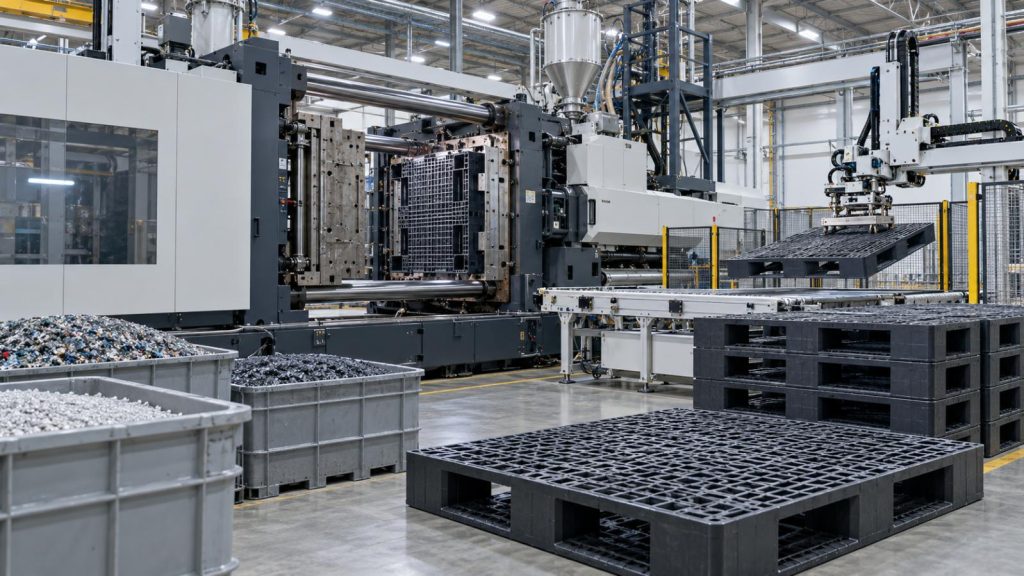
Which Processing Adjustments Create New Risks?
Operators may respond to incomplete filling by raising melt temperature or increasing injection speed. Increasing melt temperature reduces the viscosity of the material, but repeated thermal cycling of the material, as is common in recycled material, may promote degradation. Also, injection of the material at a higher speed may lead to increased shear heating and pressure in restricted areas.
Back pressure and screw speed may promote thermal and mechanical stress on the material.
It is better to explore ways to reduce the variability of materials and to establish stable processing windows.
Useful measurements include actual melt temperature, fill time, peak injection pressure, cushion stability, part weight, and cavity-pressure profiles where sensors are available.
How Should Buyers Verify Production Consistency?
A successful prototype made from one recycled-resin batch does not establish production capability.
Qualification should cover representative batches, including material at the proposed specification limits.
A typical validation will include the following:
• Decide on the material limits. Identify the type of polymer, amount of recycled content, if any, MFR, limits on contamination, and relevant mechanical properties.
• Define the processing limits. Perform fill-only studies. Evaluate the response of the process to packing. Identify the processing window.
• Assess the finished process. Examine critical dimensions of the part. Evaluate weld line formation and part function. Perform necessary corrections on the part.
• Evaluate capability of the process. Assess process variability by utilizing a different lots of resin, with all other process variables maintained constant.
• Determine the cost of the accepted part. Evaluate the total cost of ownership (TCO) of the part including scrap, sorting, inspection, and test (IT) validation.
The price of the resin does not cover the true cost of the part.
Standard test methods of ASTM are described in ASTM D638 for tensile tests and ASTM D256 for impact tests. For testing other mechanical properties, ASTM standards should be consulted.
The allowable amount of recycled content should be determined by these tests.
Evaluating High-Tonnage Manufacturing with Yijiang Technology
As reported by Yijiang Technology, 50-2,500 ton injection molding equipment, large-part molding and mold design are part of their service offering.
When considering large-part molding, evaluation should include the expected volume of the part, the material to be used, and the requirements by which the part will be accepted. Capability of processing various recycled materials should be evaluated on a case by case basis.
To discuss Large Part molding, contact Yijiang Technology.
FAQs
Q1: Does Yijiang Technology offer high-tonnage plastic injection molding?
Yes. Yijiang Technology operates injection molding equipment with clamping forces ranging from 50 to 2,500 tons.
Q2: Can Yijiang Technology manufacture large plastic components?
Yes. Its large-part molding capabilities cover applications such as automotive bumpers, battery trays, and oversized equipment housings.
Q3: Does Yijiang Technology support recycled plastic injection molding?
Yijiang's published capabilities do not establish a specific recycled-resin production program. Recycled PP or HDPE requirements should be reviewed with its engineering team.
Q4: What information is needed to evaluate recycled plastic molding feasibility?
Buyers should provide part drawings, resin specifications, recycled-content targets, dimensional tolerances, mechanical requirements, and expected production volumes.
Q5: Does Yijiang Technology provide custom mold design for large parts?
Yes. Yijiang provides custom mold design, tooling development, precision machining, and mold trial services.
- PREV: Null
- NEXT: Null

Yijiang is a professional custom manufacturing partner specializing in large-scale injection molding and precision mold development. We support global clients in automotive,
in large-scale injection molding and precision mold development. We support global clients in automotive,


Get a quote from the China’s #1 CNC Machining Services.
Ready to get started? Connect with us today!
 Talk to Our Team