End-to-End Injection Molding Services: Prototype to Production

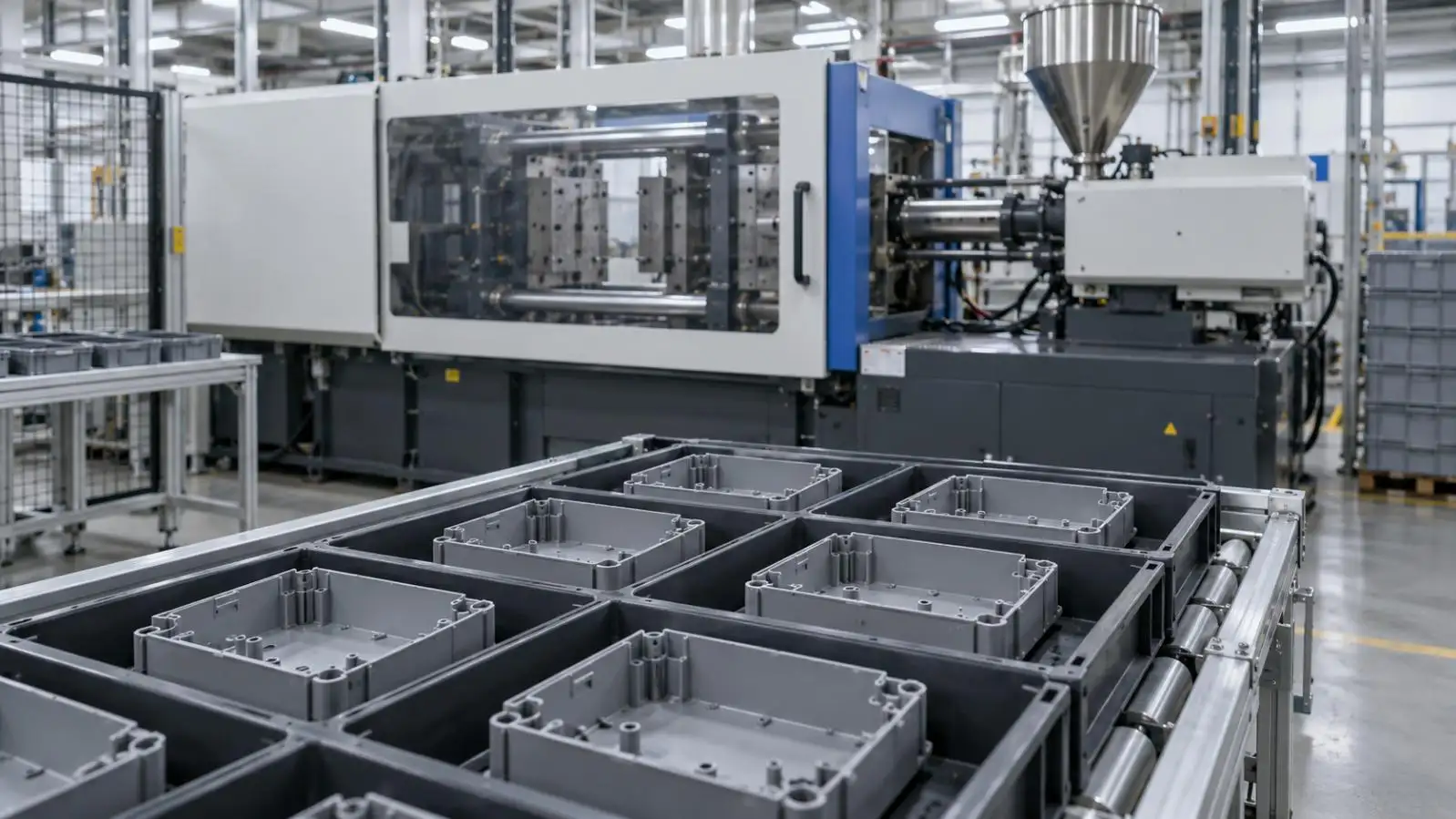
Table of Contents

- 1. Separate Prototype Approval From Production Approval
- 2. Close DFM Issues Before Tooling Release
- 3. Lock the Material Specification and Tooling Route
- 4. Establish a Process Window During Mold Trials
- 5. Match Manufacturing Precision to the Application
- 6. Control the Ramp-Up and Complete the Delivery Chain


Prototypes can sometimes make it through assembly checks even if they contain significant issues that will for sure happen during mass production. One example is shrinkage which can depend on the final grade of resin used. Uneven cooling can also happen if a mold is too large. Parts can also shift after conditioning if they are molded to the specified dimensions.
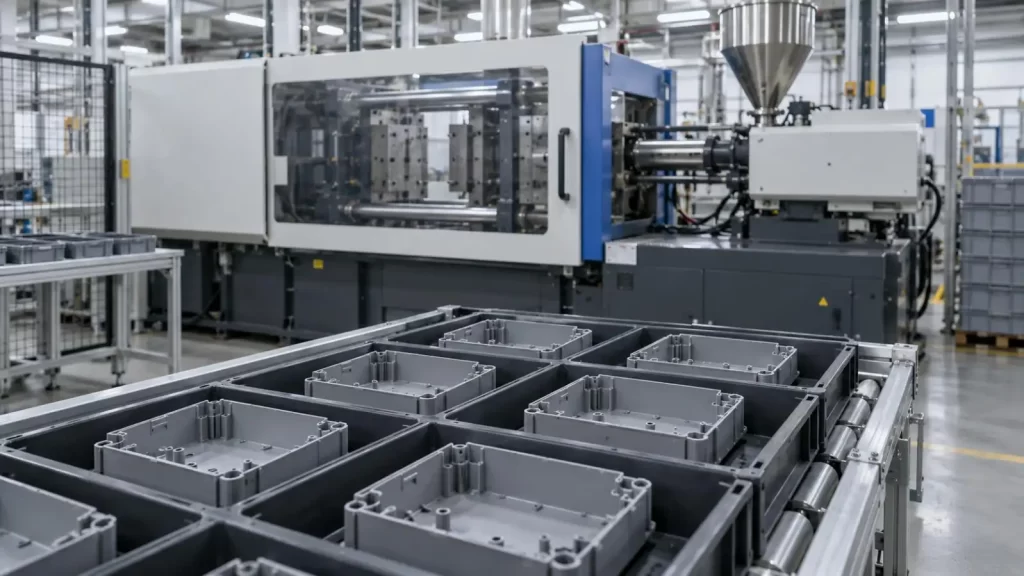
At Yijiang, our Injection Molding Services provide design review, tooling, trials, production, and finishing services all under one roof. Our focus is on establishing a manufacturing process which is always within the specified acceptance limits.
1. Separate Prototype Approval From Production Approval
The first question is what the prototype actually validates.
| Decision Dimension | Prototype Evidence | Production Evidence Required |
| Geometry and assembly | Selected samples fit | Fit remains consistent across production variation |
| Material performance | Prototype material meets initial needs | Final resin grade meets service conditions |
| Manufacturing process | Printing, machining, or trial molding works | Intended mold and equipment produce repeatable results |
| Dimensional quality | Individual measurements pass | Critical dimensions remain stable across cycles and cavities |
| Economics | Sample cost and timing are acceptable | Tooling amortization, yield, cycle time, and finishing support the target cost |
For End-to-End Injection Molding Services, these distinctions determine the validation plan. A CNC-machined prototype cannot establish molding shrinkage. A single-cavity trial cannot demonstrate balance in a multicavity production mold.
2. Close DFM Issues Before Tooling Release
Review Geometry Against Molding Behavior
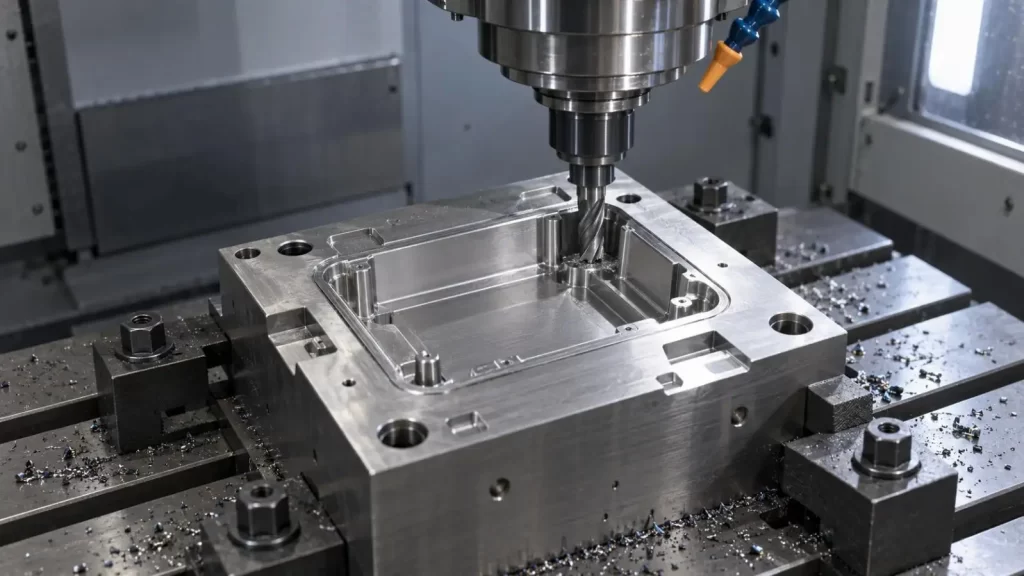
Our process consists of reviewing 3D files, performing a DFM analysis where necessary, and creating a process plan. We provide rapid and production molds.
A successful DFM review resolves:
• Wall transitions: Reduce local material accumulation to reduce sink and reduce uneven cooling.
• Ribs and bosses: Compromise between stiffness and loads and thickness of the section.
• Draft and texture: Consider ejection and draw direction, as well as texture depth.
• Gate position: Consider the packing and gate vestige, as well as the weld line and the flow path.
• Undercuts: Consider tooling cost and maintenance against slides and lifters or geometry changes.
Define Functional Datums and Tolerances
Identify the surfaces that locate the part in its assembly. Then specify critical dimensions from those datums.
For a door trim panel, mounting-point alignment and overall distortion may matter more than uniformly tight tolerances on every surface. End-to-End Injection Molding Services should carry these functional priorities into tool design and inspection.
3. Lock the Material Specification and Tooling Route
"ABS" or "nylon" is incomplete. What resin grade, reinforcement, colorant, allowed regrind, and what conditioning requirements are also necessary.
There are many factors that can be changed such as shrinkage, moisture, flow, stiffness, and appearance. Approve substitutions through a designated approval process.
| Decision Factor | Prototype or Bridge Tooling | Production Tooling |
| Design Maturity | Sufficient to resolve remaining design questions | Best supported by stable geometry and requirements |
| Demand Uncertainty | Reduces initial investment risk | Requires a credible volume and lifecycle estimate |
| Output Requirement | Assess cycle time and tool-life limits | Design cooling, cavitation, and durability for sustained output |
| Future Changes | Confirm modification options prior to purchase | Consider use of inserts for expected changes |
The break-even point is determined by total economics. tooling investment, expected acceptable-part output, maintenance, and modification risk should be considered, not the quoted piece price, alone.
4. Establish a Process Window During Mold Trials
End-to-End Injection Molding Services should convert mold trial results to documented production conditions.
A process window is the accepts range for a certain part. This can be justified by:
• Filling: Short shots, flow imbalance, weld lines, and trapped air.
• Packing: Sink, flash, part weight, and dimensional response.
• Cooling: Ejection distortion, cycle time sensitivity, and part distortion.
• Repeatability: Consecutive shots and cavity specific measurements.
A gate-seal study establishes the optimal gate weight/sealing time balance. This helps to determine the process window and establish the holding time.
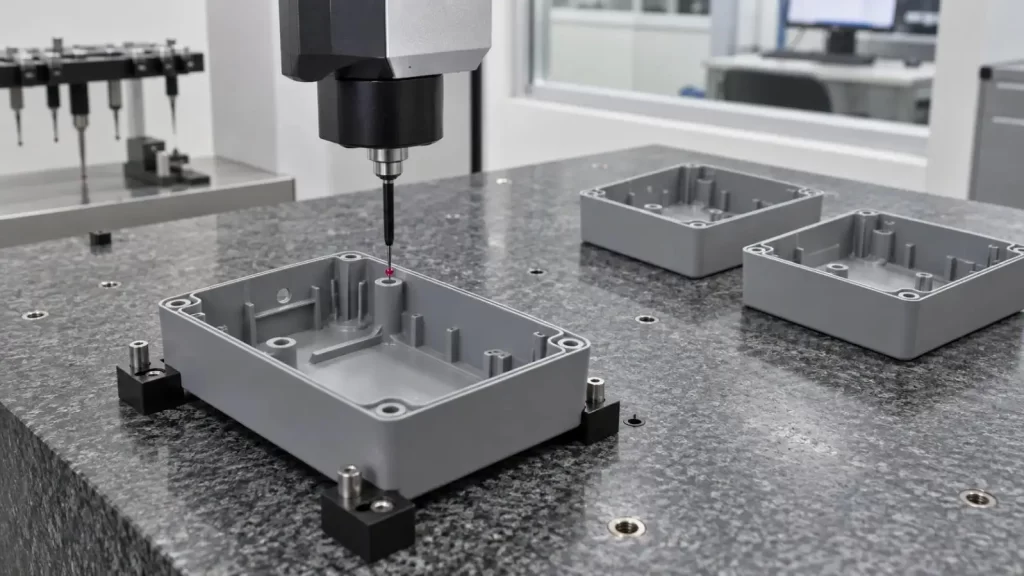
Dimensional reports and assembly testing are the best methods to evaluate appearance. Appearance can be communicated through photographs and videos; however, these methods do not evaluate dimensional limits.
Dimensional reports and assembly testing, along with appearance, can be used to attain approval, as well as agreement on the sampling performed.
5. Match Manufacturing Precision to the Application
Yijiang provides the following capabilities:
| Yijiang Capability | Data | Project-Level Interpretation |
| Dimensional tolerance | ±0.02 mm | Confirm achievable tolerance for each critical feature |
| Injection molding equipment | 30+ machines | Match the mold to suitable equipment and available capacity |
| Clamping force | 50–2500 tons | Evaluate alongside shot capacity, projected area, and mold dimensions |
| Large-part application | 100-inch TV housings | Assess filling, cooling, handling, and distortion control |
These figures describe our manufacturing capabilities; acceptance limits must reflect the specific material and geometry. Our listed applications also include door inner trim panels and battery underbody shields.
For End-to-End Injection Molding Services, precision must be demonstrated under agreed measurement and conditioning conditions.
6. Control the Ramp-Up and Complete the Delivery Chain
Prior to ramping up production, the following must be determined:
• Quality controls: Critical characteristics, inspection levels, cavity identification and action plans.
• Material controls: Grade verification, drying instructions, and batch tracking.
• Tool maintenance: Vent cleaning, coolant system checks and tool wear.
• Downstream capacity: Finishing, inspection, packaging and shipping readiness.
Our process flows with trim, paint or screen, inspection, packaging and delivery.
Integration can help minimize handoff errors; however, customers should verify subcontracted operations, revision control, mold ownership and contingency planning.
Plan the Next Validation Step With Yijiang
Engineering decisions and release criteria must be clearly defined in order to scale up a process. To do this, please provide Yijiang your drawings, material specifications and estimated volumes to help us define the path from prototype approval to reliable and reproducible production.
FAQs
Q1. What Do Yijiang’s End-to-End Injection Molding Services Include?
Yijiang’s services cover design review, mold development, trial molding, production, post-processing, inspection, packaging, and delivery. Buyers should confirm the specific deliverables and acceptance requirements for each project.
Q2. Can Yijiang Help Improve a Part Design Before Mold Manufacturing?
Yes. Yijiang reviews 3D files and provides DFM analysis when needed. This stage helps identify manufacturing concerns involving wall thickness, draft, gates, and other features before tooling begins.
Q3. Does Yijiang Support Both Prototype and Production Molds?
Yes. Yijiang lists support for rapid and production molds. The appropriate tooling route depends on design maturity, expected quantities, required tool life, and the likelihood of future modifications.
Q4. What Injection Molding Tolerances Does Yijiang Offer?
Yijiang publishes a tolerance capability of ±0.02 mm. Buyers should confirm achievable tolerances for individual features because material shrinkage, geometry, nominal dimensions, and measurement conditions influence the final result.
Q5. What Is Yijiang’s Injection Molding Machine Capacity?
Yijiang reports more than 30 injection molding machines with clamping forces ranging from 50 to 2500 tons. Equipment selection also requires checking shot capacity, mold dimensions, material requirements, and part geometry.
- PREV: Null
- NEXT: Null

Yijiang is a professional custom manufacturing partner specializing in large-scale injection molding and precision mold development. We support global clients in automotive,
in large-scale injection molding and precision mold development. We support global clients in automotive,


Get a quote from the China’s #1 CNC Machining Services.
Ready to get started? Connect with us today!
 Talk to Our Team