


 Home »


Aluminum Medical Equipment Base Plate
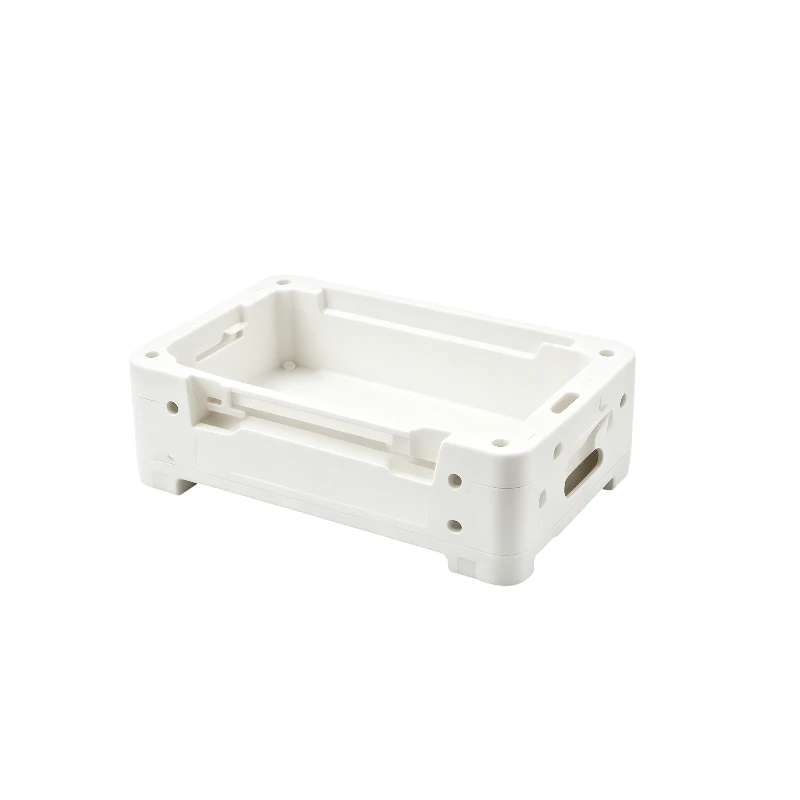
This aluminum alloy medical base plate is a high-precision structural component designed for medical equipment, diagnostic instruments and laboratory devices. Made of high-grade medical aluminum alloy and processed via precision CNC milling, it features complex multi-layer cavity and hole structures. It offers excellent dimensional stability, corrosion resistance and biocompatibility, providing stable mounting and positioning support for precision medical components.
- Machining Process: Precision CNC milling, multi-hole drilling, deburring
- Material: Medical-grade Aluminum Alloy (6061-T6, customizable)
- Accuracy: ±0.01 mm
- Surface Finish: Electropolishing / Passivation optional
- Feature: High flatness, corrosion-resistant, cleanroom compatible
 Get Free Quote


Precision Platform for Medical Device Assembly
The aluminum medical equipment base plate forms a stable mounting platform for diagnostic instruments, laboratory systems and precision medical assemblies. CNC milling creates stepped levels, recessed cavities, mounting holes and locating features within a single structural component. These machined details help control the position of sensors, motion units, optical parts and electronic modules during equipment assembly.
Aluminum keeps the structure lighter than a comparable steel plate while retaining the rigidity required for supported components. Careful stock removal and controlled clamping help limit distortion across broad surfaces and thin sections. Key dimensions can be maintained within ±0.01 mm when the geometry, datum arrangement and inspection conditions support the specified tolerance.
Multi-Level Cavities and Accurate Mounting Features
Medical equipment platforms often contain intersecting hole patterns, cable paths, recessed areas and several mounting heights. Multi-axis milling provides access to these features while maintaining their relationship to the primary datum surfaces. Threads, counterbores, dowel holes and component seats can be machined in coordinated operations to reduce cumulative positioning error.
Flatness and hole location receive close attention because small deviations may affect instrument calibration, linear motion or enclosure fit. Inspection may cover surface flatness, cavity depth, hole position, thread condition and perpendicularity. Coordinate measuring equipment can verify complex feature relationships that conventional gauges cannot fully capture.
Surface treatments may improve resistance to cleaning agents, disinfectants and routine handling. Treatment selection depends on the specified aluminum grade, appearance requirements and exposure conditions. Deburring and edge finishing remove sharp transitions around openings and machined pockets, supporting safer handling during assembly and maintenance.
Core Advantages & Applications
Common Applications
- Medical Diagnostic Equipment: Base plates for imaging, testing and diagnostic instruments
- Laboratory Automation: Structural platforms for automated analysis and testing systems
- Surgical Instruments: Mounting bases for precision surgical tools and equipment
- Life Science Devices: Support plates for biotech and pharmaceutical processing equipment
Final inspection compares the finished aluminum medical equipment base plate with the approved dimensional record. Checks focus on functional datums, mounting interfaces and treated surfaces, helping the component enter equipment assembly with less fitting work and more consistent part placement.
Specification Table
| Parameter | Details |
| Material | 6061-T6 Medical-grade Aluminum Alloy (other grades available upon request) |
| Machining Process | Precision CNC milling, multi-hole drilling, deburring |
| Dimensional Tolerance | ±0.01 mm (custom precision available) |
| Surface Finish | Electropolishing, passivation (Optional) |
| Flatness Tolerance | ≤0.02 mm (customizable) |
| Size Range | Custom per customer drawings |
| Quality Control | CMM dimensional inspection, flatness test, cleanliness verification |
Recommended Case Studies

Start Your Project Inquiry
our information is kept confidential and reviewed directly by our engineering team. We typically respond within 1 business day with practical technical feedback.


